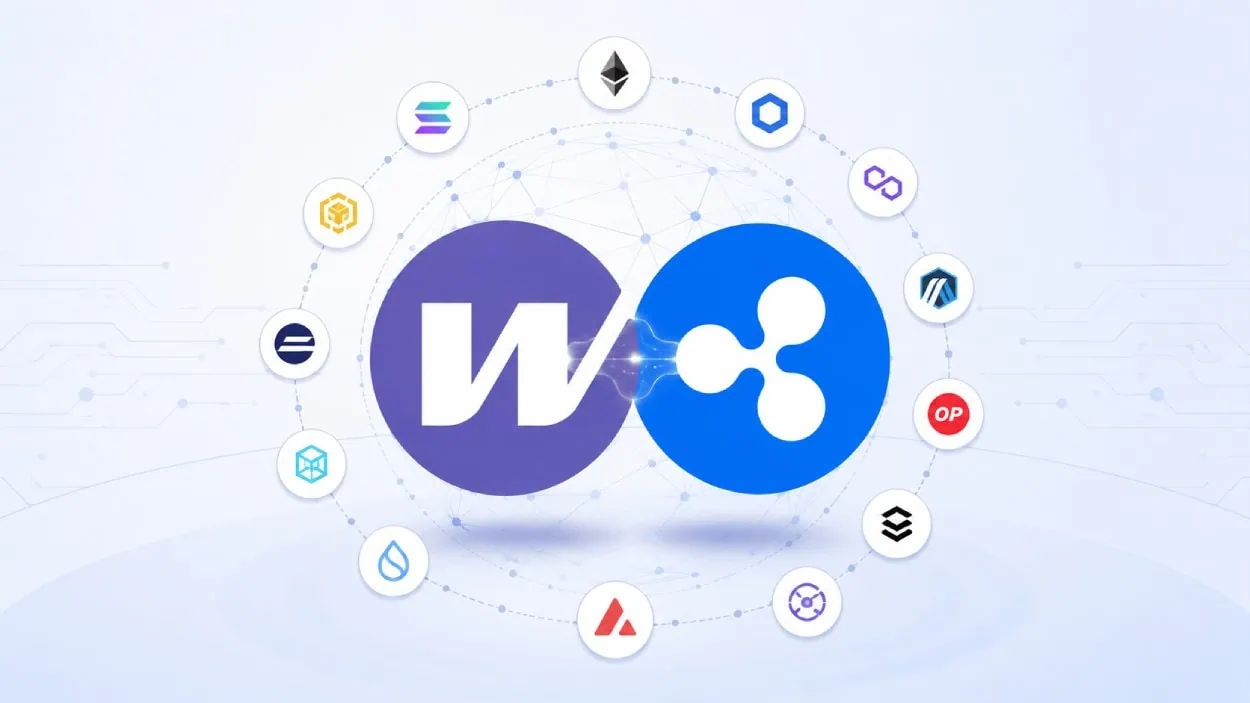






Ripple’s RLUSD stablecoin has expanded to more than 40 blockchain networks through a new integration with Wormhole, bringing the regulated digital dollar closer to Ethereum’s decentralized finance ecosystem while increasing utility across the XRP Ledger.
Key Takeaways
- Ripple’s RLUSD is now available across 40+ blockchain ecosystems through Wormhole’s Native Token Transfers technology.
- The expansion includes major Ethereum scaling networks such as Base, Optimism, Ink, and Unichain, along with the XRPL EVM Sidechain.
- RLUSD’s market capitalization has grown to approximately $1.72 billion, making it one of the largest stablecoins in the market.
- The move strengthens connections between XRP Ledger infrastructure and Ethereum DeFi, while supporting payments, tokenization, liquidity, and institutional finance use cases.
What Happened?
Ripple has expanded the reach of its regulated stablecoin, RLUSD, through an integration with cross chain interoperability protocol Wormhole. The partnership enables RLUSD to move natively across more than 40 supported blockchain networks, eliminating the need for wrapped versions of the asset.
The development marks one of Ripple’s most significant infrastructure upgrades for RLUSD since the stablecoin launched, positioning it as a multi network liquidity solution for both crypto native users and institutional participants.
$RLUSD is institutional-grade infrastructure for payments and tokenization.
— Ripple (@Ripple) June 4, 2026
Through @wormhole’s Native Token Transfers (NTT), $RLUSD can now move natively across multiple blockchain ecosystems, supporting cross-border payments, institutional on/off-ramps, and tokenization use… https://t.co/aRQkwBJnEd
RLUSD Goes Multichain With Wormhole
At the center of the expansion is Wormhole’s Native Token Transfers (NTT) framework. The technology allows RLUSD to operate natively across supported blockchains while maintaining a consistent asset standard across networks.
This approach helps reduce liquidity fragmentation, a common issue in blockchain ecosystems where multiple wrapped or synthetic versions of the same asset can exist. By enabling native transfers, users, developers, and institutions can access the same RLUSD across different networks, improving capital efficiency and simplifying cross chain activity.
Ripple said the infrastructure is designed to support a wide range of applications, including international payments, institutional onboarding and offboarding, treasury management, and tokenized asset settlement.
The company stated:
Ethereum DeFi and XRP Ledger Move Closer Together
One of the most notable aspects of the rollout is RLUSD’s deployment on the XRPL EVM Sidechain.
The integration creates a bridge between the XRP Ledger ecosystem and Ethereum’s developer environment. Developers can continue using familiar Ethereum tools such as Solidity smart contracts, MetaMask wallets, and existing DeFi infrastructure while remaining connected to XRP Ledger liquidity and settlement capabilities.
The development could create new opportunities for:
- Decentralized exchanges
- Lending protocols
- Tokenization platforms
- Cross-chain payment systems
- Liquidity management solutions
By lowering technical barriers between the two ecosystems, Ripple is attempting to make it easier for developers to build applications that leverage both Ethereum and XRP Ledger infrastructure.

RLUSD Growth Continues Beyond Infrastructure
The Wormhole integration arrives as RLUSD continues to gain traction in both crypto and traditional finance markets.
According to the latest figures, the stablecoin has reached a market capitalization of approximately $1.72 billion, placing it among the largest stablecoins globally.
Ripple has also expanded RLUSD’s international presence through partnerships with Turkish cryptocurrency platforms BiLira, Bitexen, and Bitlo, allowing users and institutions in Turkey to access the stablecoin for payments and settlement activities.
Meanwhile, Mastercard recently introduced continuous settlement capabilities using RLUSD on the XRP Ledger, providing another real world use case for the asset.
Additional adoption may come from Evernorth Holdings, which has announced plans to use RLUSD for institutional decentralized finance applications and tokenized real world asset initiatives built on the XRP Ledger.
Growing Demand for Regulated Stablecoins
RippleX, the development team supporting the XRP Ledger ecosystem, said the growing number of RLUSD integrations reflects increasing demand for regulated stablecoins that can operate across multiple blockchain environments.
As institutions continue entering digital asset markets, many are seeking solutions that combine regulatory compliance with interoperability. Rather than relying on isolated liquidity pools, firms increasingly want assets capable of moving seamlessly across networks.
Ripple believes XRP and RLUSD can work together across supported ecosystems to facilitate liquidity provisioning, settlement, collateral management, payment processing, and cross chain transfers.
The company has also expanded its University Blockchain Research Initiative by adding Istanbul Technical University, supporting blockchain research and educational programs involving RLUSD.
CoinLaw’s Takeaway
In my experience, the biggest challenge facing stablecoins is not creating another digital dollar, but making that dollar useful across multiple blockchain ecosystems. I found Ripple’s Wormhole integration noteworthy because it addresses a real infrastructure problem: fragmented liquidity.
The combination of RLUSD’s regulatory focus, Wormhole’s interoperability technology, and Ethereum DeFi access through the XRPL EVM Sidechain could help Ripple compete more effectively in the stablecoin market. If adoption continues to grow, RLUSD may become an important bridge connecting traditional finance, XRP Ledger infrastructure, and decentralized finance applications across multiple networks.