A gas fee is the transaction cost paid to validators on the Ethereum network to compensate for the computational energy required to process and confirm operations on the blockchain.
Key Takeaways
- Gas fees are denominated in gwei (one billionth of an ETH) and vary based on network demand, transaction complexity, and block space availability.
- Since EIP-1559 (August 2021), Ethereum gas fees have been split into a base fee (burned) and an optional priority tip (paid to validators).
- Simple ETH transfers cost approximately 21,000 gas units, while complex smart contract interactions (DeFi swaps, NFT mints) can consume 200,000+ gas units.
- Layer 2 networks like Arbitrum, Optimism, and Base reduce gas fees by 90-99% by processing transactions off the main Ethereum chain.
- The base fee burn mechanism has removed over 4 million ETH from circulation since EIP-1559, making Ethereum potentially deflationary during high-usage periods.
How Do Gas Fees Work?
1. Gas Measures Computational Effort
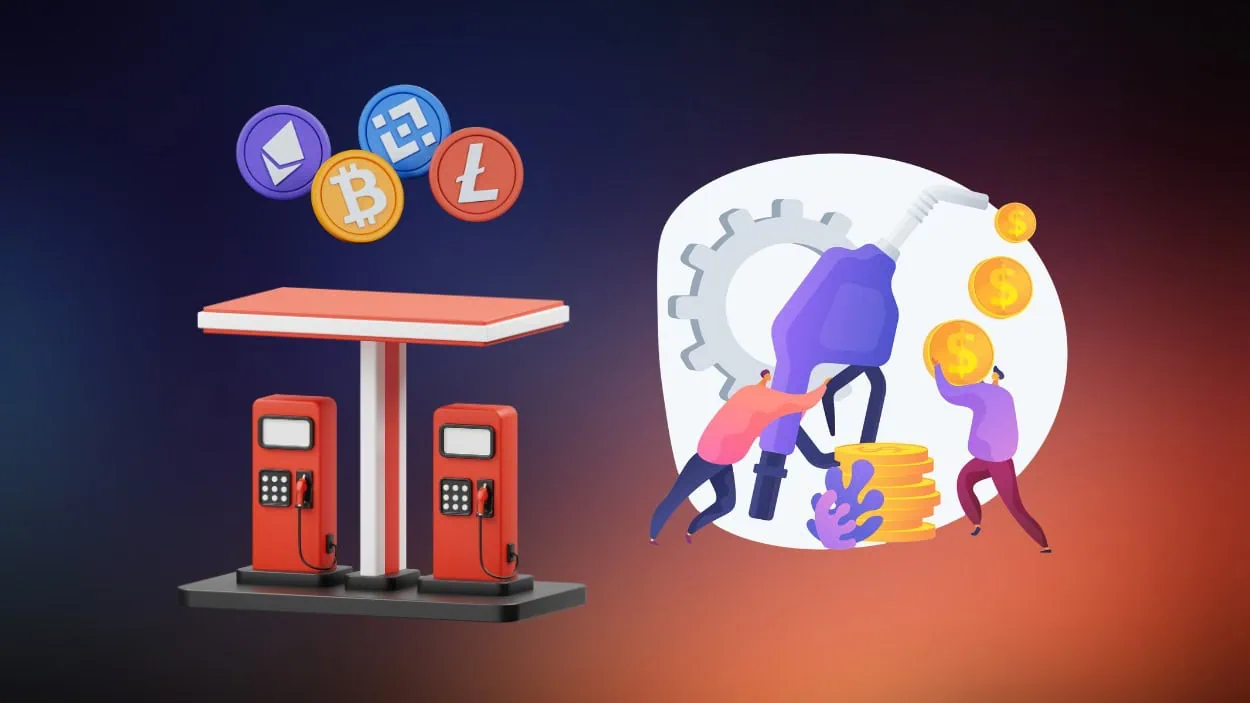
Gas is to Ethereum what fuel is to a car. Every operation the Ethereum Virtual Machine (EVM) performs costs a specific amount of gas. A simple transfer between wallets costs 21,000 gas. A token swap on Uniswap costs roughly 150,000 gas. Deploying a new smart contract can cost 1,000,000+ gas. The more complex the operation, the more computational work the network performs, and the more gas it consumes.
Think of gas units as the distance on a taxi meter. The meter ticks up based on how far you travel (how complex your operation is). The gas price is the rate per kilometer (how much you pay per unit of gas). Your total fare (total gas fee) equals the distance times the rate.
2. EIP-1559 Base Fee and Priority Tip
Before August 2021, Ethereum gas fees used a simple auction: users bid for block space, and miners picked the highest bids. This created unpredictable fee spikes. EIP-1559 replaced this with a two-part system:
- Base fee: Set algorithmically by the protocol based on how full the previous block was. If the block is more than 50% full, the base fee increases. If less than 50% full, it decreases. This base fee is burned (permanently removed from circulation).
- Priority tip (maxPriorityFeePerGas): An optional tip paid directly to the validator to incentivize faster inclusion. During congestion, higher tips get transactions processed sooner.
The total gas fee formula is: (Base Fee + Priority Tip) x Gas Used. Users also set a maxFeePerGas cap, and any difference between the max fee and the actual cost is refunded.


3. Layer 2 Solutions Reduce Costs
Layer 2 rollup networks batch hundreds of transactions into a single submission to the Ethereum mainnet, dramatically reducing per-transaction gas costs. A token swap that costs $5-$50 on mainnet Ethereum might cost $0.01-$0.10 on Arbitrum or Optimism. These networks inherit Ethereum’s security guarantees while offering fees that make small transactions economically viable.
| Operation | Gas Units (approx.) | Mainnet Cost (at 30 gwei) | Layer 2 Cost (Arbitrum) |
| ETH transfer | 21,000 | $1.50-$3.00 | $0.01-$0.05 |
| ERC-20 token transfer | 65,000 | $4-$8 | $0.02-$0.10 |
| Uniswap swap | 150,000 | $10-$20 | $0.05-$0.20 |
| NFT mint | 200,000 | $15-$30 | $0.08-$0.30 |
| Smart contract deployment | 1,000,000+ | $50-$150+ | $0.50-$2.00 |
Source: Etherscan Gas Tracker, L2Fees.info
Why Do Gas Fees Matter?
Gas fees determine who can afford to use Ethereum. During the 2021 NFT boom, simple transactions routinely cost $50-$200, pricing out users with smaller portfolios. This economic barrier drove significant user migration to alternative chains like Solana and Polygon, and accelerated the development of Layer 2 solutions.
The EIP-1559 burn mechanism introduced a new dynamic to Ethereum’s economics. During periods of high network usage, more ETH is burned in base fees than is issued to validators as new supply. This makes Ethereum’s supply deflationary during peak demand, a property that Bitcoin’s fixed-issuance model does not share. Our data coverage across DeFi and exchange statistics shows that gas fee trends serve as a real-time proxy for ecosystem activity: high fees signal high demand, low fees signal quiet periods.
Pros, Cons, and Risks
Advantages
- Spam prevention: Gas fees make it economically impractical to flood the network with junk transactions.
- Resource allocation: Market-based pricing ensures block space goes to users who value it most.
- Deflationary pressure: The EIP-1559 burn mechanism reduces ETH supply during high usage periods.
- Validator incentive: Priority tips motivate validators to include transactions and maintain network security.
- Predictability: EIP-1559’s algorithmic base fee provides more predictable costs than the pre-2021 auction model.
Trade-offs and Risks
- Cost barrier: High gas fees during congestion exclude users with smaller transaction values.
- Unpredictability during spikes: Sudden demand surges (NFT drops, token launches) can cause fees to spike 10-50x within minutes.
- Failed transactions still cost gas: If a transaction runs out of gas or fails mid-execution, the gas fee is still consumed.
- Complexity: Understanding base fees, priority tips, gas limits, and maxFeePerGas requires technical knowledge.
- MEV exploitation: Validators can reorder transactions within a block to extract value (sandwich attacks), effectively increasing costs for regular users.
Gas Fee Models Across Blockchains
Ethereum’s gas fee model is the most well-known, but other blockchains handle transaction costs differently.
| Blockchain | Fee Model | Typical Transfer Cost | Fee Token |
| Ethereum (mainnet) | Base fee (burned) + priority tip | $1-$50+ | ETH (in gwei) |
| Arbitrum / Optimism | L2 execution + L1 data posting | $0.01-$0.20 | ETH |
| Solana | Fixed base fee + priority fee | $0.001-$0.01 | SOL |
| Bitcoin | Fee market (sat/vByte) | $0.50-$10+ | BTC (in satoshis) |
| Polygon PoS | Gas price auction | $0.001-$0.05 | MATIC / POL |
Real-World Applications
Optimizing DeFi Transaction Timing
Experienced DeFi users monitor gas prices using tools like Etherscan’s Gas Tracker to time non-urgent transactions. Gas fees on Ethereum tend to be lowest during weekends and early morning hours (UTC). A Uniswap swap that costs $25 during peak hours on a Tuesday afternoon might cost $5 at 4 AM UTC on a Sunday. For large transactions, this timing optimization can save hundreds of dollars.
Layer 2 Migration for Small Transactions
Projects that require frequent small transactions (gaming, micropayments, social tipping) have migrated to Layer 2 networks, where gas fees are negligible. Base (Coinbase’s Layer 2) processes millions of daily transactions at fractions of a cent each, enabling use cases that would be economically impossible on the Ethereum mainnet.
Scenario: Why a Transaction Failed and Still Cost Money
Tom tries to swap tokens on Uniswap. He sets a gas limit of 100,000 units and submits the transaction. The swap requires 150,000 units because token prices shifted between the time Tom submitted and when the transaction was processed (slippage). At the 100,000-unit mark, the transaction runs out of gas and reverts. The state changes are rolled back, meaning Tom does not get his tokens. But the 100,000 gas units he consumed are gone because validators already performed that computational work. Tom lost approximately $7 in gas fees with nothing to show for it. This is why setting an adequate gas limit and reasonable slippage tolerance is critical for DeFi transactions.

Frequently Asked Questions (FAQs)
Gas fees rise when demand for block space exceeds supply. Ethereum processes approximately 15-30 transactions per second on mainnet. When more users want to transact simultaneously (during NFT drops, market volatility, or DeFi yield opportunities), they bid up priority tips to get included faster. Layer 2 networks solve this by processing transactions off-chain.
Four strategies reduce gas costs: (1) transact during off-peak hours (weekends, early UTC mornings), (2) use Layer 2 networks like Arbitrum or Optimism for 90-99% lower fees, (3) batch multiple operations into a single transaction where possible, and (4) set a conservative maxFeePerGas and wait for network conditions to match.
Gwei is the unit used to denominate gas prices on Ethereum. One gwei equals 0.000000001 ETH (one billionth of an ETH). When someone says gas is “30 gwei,” they mean each unit of gas costs 30 billionths of an ETH. The name comes from “giga-wei,” where wei is the smallest possible denomination of Ethereum.
Since Ethereum’s transition to proof-of-stake in September 2022 (“The Merge”), gas fees go to validators, not miners. The base fee portion is burned (permanently destroyed), reducing the ETH supply. Only the priority tip goes to the validator who includes the transaction. Before the Merge, the entire gas fee went to miners.
The Bottom Line
Gas fees are the economic mechanism that keeps Ethereum functional and secure. They prevent spam, compensate validators, and, since EIP-1559, actively manage ETH’s supply. The challenge has always been balancing network security with accessibility, and Layer 2 solutions are proving to be the most effective answer.
The trajectory is clear: complex, high-value transactions will continue to settle on Ethereum mainnet, where security guarantees are strongest. Everyday transactions (swaps, transfers, gaming) will increasingly migrate to Layer 2 networks where gas fees are negligible. Understanding how gas fees work is essential for anyone using Ethereum, not just to avoid overpaying, but to make informed decisions about when and where to transact.