• Skip to primary navigation
  • Skip to main content
  • Skip to primary sidebar
  • Skip to footer
CoinLaw LogoCoinLaw

Bringing Crypto and Finance Closer to You

  • Latest News
  • Statistics
  • About
  • Contact
Subscribe
Home » Glossary » B

What is Blockchain? Definition, How It Works & Examples

Last Updated: April 30, 2026
What is Blockchain

A blockchain is a distributed digital ledger that records transactions across a network of computers, verified independently by thousands of nodes worldwide. Each block contains a cryptographic hash of the previous block, a timestamp, and transaction data, creating a tamper-resistant chain that anyone on the network can verify independently.

Key Takeaways

  • A blockchain stores data in sequential blocks linked by cryptographic hashes, making retroactive changes practically impossible without controlling a majority of the network.
  • Bitcoin’s blockchain, launched in January 2009, was the first successful implementation. Over 1,000 distinct blockchains now operate globally.
  • Public blockchains (Bitcoin, Ethereum) are permissionless. Private and consortium blockchains (Hyperledger, R3 Corda) restrict participation to approved entities.
  • Blockchain processes roughly 7 transactions per second on Bitcoin and 15-30 on Ethereum‘s base layer, compared to Visa’s 65,000 TPS capacity.
  • Enterprise blockchain spending reached $19 billion in 2024, with financial services, supply chain, and healthcare as the top three sectors.

How Does a Blockchain Work?

A blockchain operates through five sequential steps: transaction creation, network broadcast, consensus validation, block formation, and ledger synchronization.

1. Transaction Initiation

A user creates a transaction, such as sending cryptocurrency or recording data. The transaction contains the sender’s address, the receiver’s address, the amount, and a digital signature proving the sender authorized it.

2. Broadcasting to the Network

The transaction broadcasts to a distributed network of nodes. Each node is a computer that maintains a full copy of the blockchain and participates in validation. Think of it like a filing cabinet where every drawer is sealed with wax stamped from the drawer before it. Opening one drawer breaks the seal on every drawer that follows, making tampering immediately visible.

Newsletter Img
Don't chase the news. Let us curate it.

You get one weekly briefing with only the stories that matter. If the market is quiet, we skip it.

✅ Join readers from Visa, Vanguard, and the FDIC.

3. Validation Through Consensus

Nodes verify the transaction using a consensus mechanism. The two dominant methods are:

MechanismHow It WorksEnergy UseExamples
Proof of Work (PoW)Miners solve computational puzzles to validate blocksHigh (estimated 150 TWh/year for Bitcoin)Bitcoin, Litecoin, Dogecoin
Proof of Stake (PoS)Validators lock cryptocurrency as collateral to verify blocksLow (99.95% less than PoW)Ethereum (post-Merge), Cardano, Solana

Source: Cambridge CBECI, Ethereum Foundation

4. Block Creation and Hashing

Validated transactions are grouped into a block. Each block contains a header (previous block’s hash, timestamp, nonce) and a body (transaction data). Every block runs its contents through a hash function (SHA-256 for Bitcoin) that produces a fixed-length output. Changing even one character in the input produces a completely different hash, which is how the network detects unauthorized modifications.

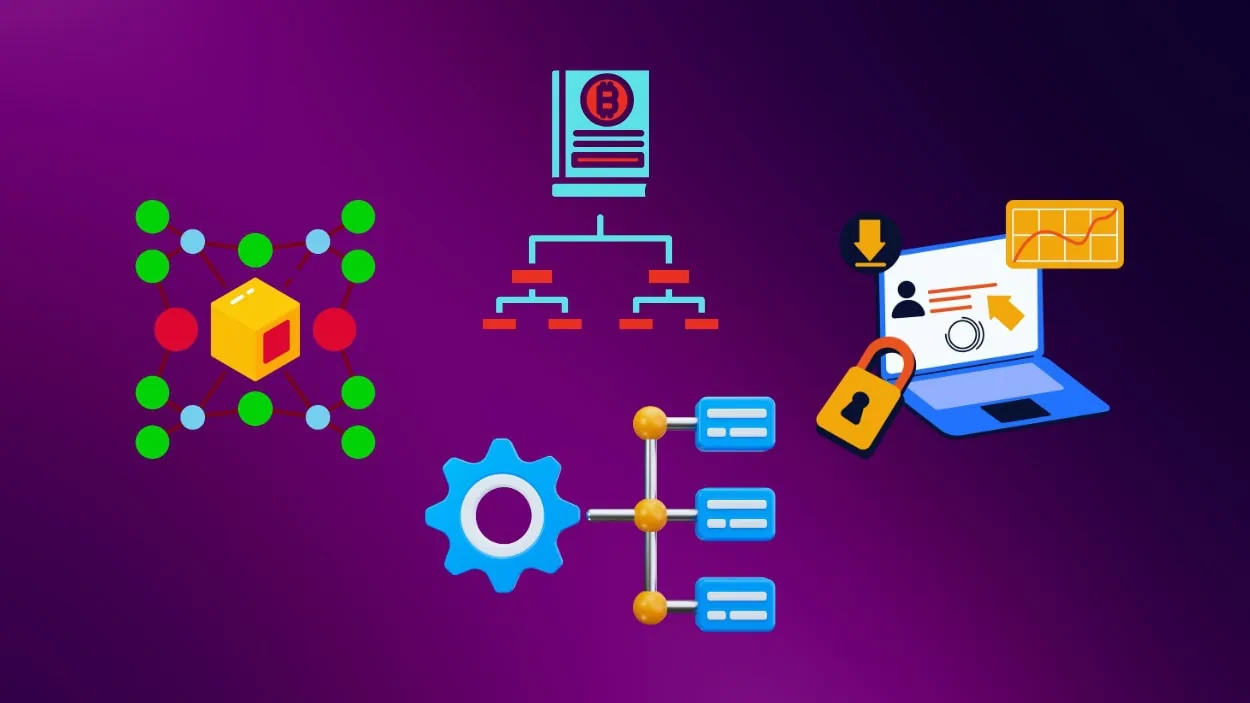
Merkle trees add another layer of data integrity within each block. Transactions are paired, hashed together, then paired again, forming a tree structure where the single root hash at the top represents every transaction in the block. Verifying one transaction requires checking only a small branch of the tree, not the entire block. This is what allows lightweight wallet apps on phones to verify transactions without downloading the full blockchain (350+ GB for Bitcoin).

Blockchain technology explained visually

5. Ledger Synchronization

The new block is appended to the chain, and all nodes update their copies. Because each block references the previous one through cryptographic hashing, altering any past record would require recalculating every subsequent block across the entire network. The ledger remains synchronized, consistent, and transparent.

Why Does Blockchain Matter?

Blockchain solves a problem that existed for decades in computer science: how to establish trust between parties who don’t know each other without relying on a central authority.

Before Bitcoin’s 2009 launch, every digital transaction required a trusted middleman, a bank, a payment processor, a clearinghouse. It was the equivalent of every bank running a proprietary wire transfer protocol that refused to talk to other banks. Blockchain replaced that entire model with a distributed network where no single entity controls the ledger.

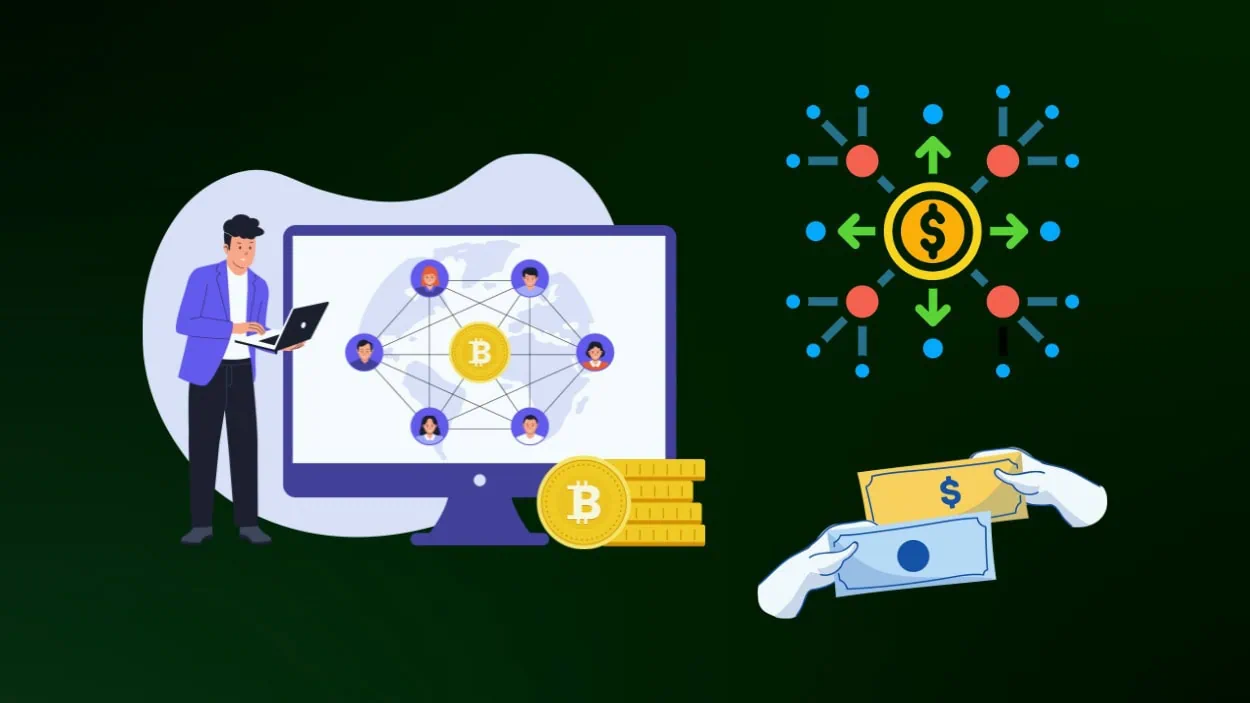
Centralized vs decentralized finance systems

The practical impact has been substantial. Cryptocurrency adoption now spans over 420 million users globally. The DeFi sector has grown from zero to over $90 billion in total value locked, all running on blockchain-based smart contracts without traditional financial intermediaries. Our coverage of 300+ articles across the Bitcoin and Layer-1 cluster, compiled from data across 8 blockchain explorers and 15 regulatory filings, shows a consistent trend: blockchain adoption accelerates fastest in sectors where trust verification costs are highest.

Pros, Cons, and Risks

Advantages

  • Transparency: Transactions are visible and auditable on shared ledgers.
  • Security: Cryptographic hashing and distributed storage protect data integrity.
  • Decentralization: Reduces reliance on single authorities or intermediaries.
  • Composability: Tokens and contracts integrate into lending, trading, and yield systems.
  • Immutability: Once recorded, data is extremely difficult to alter retroactively. Our tracking of exchange collapses since 2014 shows that blockchain-based proof of reserves would have exposed FTX, Celsius, and Three Arrows Capital months before they failed.

Trade-offs and Risks

  • Scalability: Bitcoin processes 7 TPS vs Visa’s 65,000 TPS. Layer-2 solutions address this, but add complexity.
  • Energy consumption: Proof of Work networks consume significant electricity (Bitcoin: ~150 TWh/year).
  • Regulatory uncertainty: Legal frameworks vary across jurisdictions and are still evolving.
  • Irreversibility: Errors in transactions cannot be easily reversed once confirmed on-chain.
  • Smart contract vulnerabilities: Poorly written contracts can be exploited, leading to irreversible losses.
  • Private key risk: If a user loses their private key, they permanently lose access to their assets with no recovery option. No customer support, no password reset.

Types of Blockchains

Not all blockchains work the same way. The four main types differ in who can participate and who validates transactions.

TypeAccessValidatorsSpeedUse CaseExamples
PublicAnyoneDecentralized (miners/validators)Slower (7-30 TPS)Cryptocurrency, DeFi, NFTsBitcoin, Ethereum, Solana
PrivateInvitation onlySingle organizationFast (1,000+ TPS)Internal record-keeping, auditingHyperledger Fabric
ConsortiumSelected organizationsMultiple approved entitiesModerate (100-1,000 TPS)Industry collaboration, supply chainR3 Corda, Quorum
HybridMixed (public + private layers)VariesVariesEnterprise + public transparencyXDC Network, Dragonchain

Source: Hyperledger Foundation, R3, respective project documentation

Real-World Applications

Cross-Border Payments

Blockchain enables faster and more transparent international transactions by removing multiple intermediaries from the settlement chain. JPMorgan’s Onyx platform processes billions in daily wholesale payments using a private blockchain, cutting settlement times from days to minutes.

Supply Chain Verification

Companies use blockchain to record product movement and verify authenticity at each step. Walmart’s food traceability system reduced the time to trace a product’s origin from 7 days to 2.2 seconds using a Hyperledger-based blockchain.

Decentralized Finance

Beyond crypto trading, blockchain powers lending protocols, automated market makers, and yield farming platforms. Users deposit assets into smart contracts that execute financial operations without banks or brokers. The entire DeFi ecosystem runs on blockchain-based token standards and contract logic.

Scenario: A Simple Bitcoin Transaction

Alice wants to send 0.5 BTC to Bob. She broadcasts a transaction signed with her private key to the Bitcoin network. Nodes verify she has sufficient funds and that her signature is valid. Miners compete to solve the proof-of-work puzzle for the next block. Once a miner wins and the block containing Alice’s transaction is confirmed, Bob’s wallet reflects the incoming balance. The transaction is now part of Bitcoin’s permanent public ledger, visible to anyone but modifiable by no one. From broadcast to first confirmation, the process takes roughly ten minutes.

Frequently Asked Questions (FAQs)

What is a blockchain in simple terms?

A blockchain is a shared digital record book spread across many computers. When someone adds a new entry, the network verifies it and seals it permanently. No single person or company controls the record, and past entries cannot be changed without detection.

How is blockchain different from a regular database?

A traditional database is controlled by one entity that can modify or delete records. A blockchain distributes identical copies across thousands of nodes. Changes require network consensus, making unauthorized alterations practically impossible.

Is blockchain the same as Bitcoin?

No. Bitcoin is one application built on blockchain technology. Blockchain is the underlying data structure. Thousands of other projects use blockchain independently of Bitcoin.

Can a blockchain be hacked?

Theoretically, an attacker controlling 51% of a networku0027s computational power could manipulate transactions. In practice, attacking Bitcoin would require hardware investment exceeding a billion dollars, making it economically irrational.

How much energy does blockchain use?

Energy consumption varies by consensus mechanism. Bitcoinu0027s Proof of Work consumes roughly 150 TWh annually. Ethereum, after switching to Proof of Stake in September 2022, reduced its energy use by 99.95%.

What is the oldest blockchain?

Bitcoinu0027s blockchain, launched on January 3, 2009, is the oldest continuously operating blockchain. Satoshi Nakamoto mined the genesis block (Block 0) on that date.

The Bottom Line

Blockchain started as the technical backbone of Bitcoin in 2009. Seventeen years later, it underpins an ecosystem of over 1,000 networks, $90 billion in DeFi value, and $19 billion in annual enterprise spending. The core innovation, replacing trusted intermediaries with cryptographic proof, has proven durable across multiple market cycles and technological generations. Whether the next wave of adoption comes from tokenized real-world assets, central bank digital currencies, or applications not yet built, the underlying architecture continues to expand.

Definition of Smart Contract. Link to full glossary entry follows the description.Smart Contract

A smart contract is a self-executing program stored on a blockchain that automatically enforces agreement terms when predefined conditions are met, without intermediaries.

Read more

Definition of DeFi. Link to full glossary entry follows the description.DeFi

Decentralized finance leverages blockchain protocols and smart contracts to enable lending, trading, and borrowing without banks or traditional intermediaries.

Read more

Definition of Consensus Algorithm. Link to full glossary entry follows the description.Consensus Algorithm

A consensus algorithm is a protocol that lets a distributed network agree on which block is added next, securing the blockchain without a central authority.

Read more

By , April 30, 2026

Share ChatGPT Perplexity

Explore More Terms

TRC-20

TRC-20

TRC-20 is the TRON blockchain's smart-contract token standard for fungible tokens. It is fully compatible with Ethereum's ERC-20 at the interface level and powers most on-chain USDT circulation.

Cross-Chain

Cross-Chain

Cross-chain is the ability to move data or assets between separate blockchains via bridges, messaging protocols, or interoperability networks.

Gas Fee

Gas Fee

A gas fee is the transaction cost paid to Ethereum validators for the computational effort needed to process and confirm blockchain operations.

Layer 1

Layer 1

A Layer 1 is the base blockchain layer that settles its own transactions, enforces its own consensus, and secures its own ledger. Bitcoin, Ethereum, Solana.

Hash Rate

Hash Rate

Hash rate measures the total computational power miners use to process and validate transactions on a proof-of-work blockchain like Bitcoin.

EVM

EVM

The Ethereum Virtual Machine is the runtime environment that executes smart-contract bytecode across every Ethereum node, using a 256-bit stack architecture and gas-metered computation.

Primary Sidebar

Connect With Us

facebook x linkedin google-news telegram pinterest whatsapp email
google-preferred-source-badge Add as a preferred source on Google

You Should Also Read

Table of Contents

  • Key Takeaways
  • How Does a Blockchain Work?
  • Why Does Blockchain Matter?
  • Pros, Cons, and Risks
  • Types of Blockchains
  • Real-World Applications
  • Frequently Asked Questions (FAQs)
  • The Bottom Line
Connect on Telegram
Coinbase Sparks New Race With 1:1 Backed Tokenized Stocks
Finance

Coinbase Sparks New Race With 1:1 Backed Tokenized Stocks

By Kathleen Kinder June 16, 2026
Kraken Rolls Out Regulated Crypto Perps Across the US
Cryptocurrency

Kraken Rolls Out Regulated Crypto Perps Across the US

By Kathleen Kinder June 16, 2026
MARA Buys 1,000 Bitcoin After Massive $1.5B BTC Selloff
Cryptocurrency

MARA Buys 1,000 Bitcoin After Massive $1.5B BTC Selloff

By Kathleen Kinder June 16, 2026
Binance Could Lose EU Access After Reported MiCA Rejection
Compliance

Binance Could Lose EU Access After Reported MiCA Rejection

By Kathleen Kinder June 16, 2026
India’s ED Files Case in $20M Coinbase Crypto Heist
Cryptocurrency

India’s ED Files Case in $20M Coinbase Crypto Heist

By Kathleen Kinder June 16, 2026
Capital B Eyes High Yield Bitcoin Credit Product in Europe
Cryptocurrency

Capital B Eyes High Yield Bitcoin Credit Product in Europe

By Kelvin Scott June 16, 2026
Pyra to Shut Down After Drift Exploit Leaves No Path to Recovery
Cryptocurrency

Pyra to Shut Down After Drift Exploit Leaves No Path to Recovery

By Kelvin Scott June 16, 2026
Nvidia Unveils Huge $20B Bond Raise to Power AI Growth
Investments

Nvidia Unveils Huge $20B Bond Raise to Power AI Growth

By Kathleen Kinder June 15, 2026

Footer

CoinLaw Logo

Bringing Finance Closer to You.

Connect With Us

Follow Us on Google News

Editorial & Trust

  • About
  • Publishing Principles
  • Fact-Check Policy
  • Corrections Policy
  • Ethics Policy
  • Disclaimer

Worth Checking

  • Ethereum Gas Fees Statistics
  • Zelle vs. Venmo Statistics
  • Millennial vs. Gen Z Banking
  • Binance vs. Coinbase Statistics
  • Traditional Banks vs. Neobanks
Contact Us
13570 Grove Dr #189,
Maple Grove, MN 55311,
United States
10 a.m. – 6 p.m. | Every day

Copyright © 2024–2026 CoinLaw. All Rights Reserved. Powered by the HODL Force ❤️

  • Privacy Policy
  • Terms
Company
  • About Us
  • Our Team
  • Our Mission
  • Core Values
Discover
  • glossary icon
    Glossary
  • Stats
    Stats Research Process
  • Brand Guide Icon
    Brand Assets
Categories
  • Cryptocurrency
  • Payments
  • Finance
  • Banking
  • Insurance
Cryptocurrency
Coinbase vs Kraken Statistics 2026: Volume, Fees, Licenses
Solana vs Ethereum Statistics 2026: TVL, Fees, Validators, ETFs
Uniswap vs PancakeSwap Statistics 2026: Head-to-Head DEX Data
Cryptojacking Statistics 2026: 80+ Cloud, Cost & Threat Numbers
MetaMask vs Phantom Wallet Statistics 2026: Big Growth Data
Crypto Wallet Ecosystem Statistics 2026: Addresses, Security, Adoption
Payments
Toast Statistics 2026: ARR, GPV & Revenue Data
Rapyd Statistics 2026: TPV, Valuation & Licences
Marqeta Statistics 2026: TPV, Revenue and Customer Mix
Digital Payments Statistics 2026: Market Size, Users, and Growth
Cash App vs Venmo vs Zelle Statistics 2026: What You Must Know Now
Worldpay Statistics 2026: Massive Payment Growth
Finance
Emergency Fund Statistics 2026: How Much Americans Have Saved (and How Much They Should)
Financial Advisor Statistics 2026: Headcount, AUM, and Demographics
Wealth Inequality Statistics 2026: Hidden Wealth Divide
Blockchain in Supply Chain Finance Statistics 2026: Trade Breakthrough
Blockchain in Healthcare Finance Statistics 2026: Cost Breakthrough
AI-Powered Robo Trading Statistics 2026: Big Insights
Banking
N26 Statistics 2026: Customers, Deposits, Revenue and the BaFin Growth Cap
Revolut vs Monzo Statistics 2026: Customers & Profit
Islamic Banking Statistics 2026: Assets, Growth, and Top Markets
Credit Union Statistics 2026: Assets, Members, Loans
Banking API Statistics 2026: Market Size, Adoption, and Growth
Citigroup Statistics 2026: Growth Secrets Inside
Insurance
Lemonade Insurance Statistics 2026: Customers, In-Force Premium, Loss Ratio, Pet & Auto Segments
Chubb Statistics 2026: Powerful Data Insights
Virtual Reality In Insurance Statistics 2026: Innovations, Risks, and Opportunities
US Life Insurance Industry Statistics 2026: Growth Facts
US Auto Insurance Industry Statistics 2026: What You Must Know Now
UK Insurance Industry Statistics 2026: Growth Data
Categories
  • Cryptocurrency
  • Investments
  • Compliance
  • Fintech
  • Finance
Cryptocurrency
Kraken Rolls Out Regulated Crypto Perps Across the US
MARA Buys 1,000 Bitcoin After Massive $1.5B BTC Selloff
India’s ED Files Case in $20M Coinbase Crypto Heist
Capital B Eyes High Yield Bitcoin Credit Product in Europe
Pyra to Shut Down After Drift Exploit Leaves No Path to Recovery
Bitmine Buys $136M ETH, Holdings Surge to 5.62M Ethereum
Investments
Nvidia Unveils Huge $20B Bond Raise to Power AI Growth
Binance SpaceX IPO Offer Attracts Massive $557M Demand
Metaplanet Acquires Siiibo in Major Bitcoin Expansion Move
Morpho Raises $175M at $2B Value as MORPHO Token Jumps
Pyth Launches Groundbreaking 24/7 Stock and Commodity Indices
Nvidia Secures SK Hynix AI Memory Supply Deal
Compliance
Binance Could Lose EU Access After Reported MiCA Rejection
New York Moves to Align Stablecoin Rules With GENIUS Act
Polymarket Faces Major Blow as South Korea Probes Users
FCA Flags Crypto Sponsorship Risks for Premier League Clubs
Polymarket May Enforce KYC as Regulators Tighten Oversight
CFTC and Gemini Ask Court to Undo $5M Settlement
Fintech
Bybit Unveils Powerful Broker API With Ultra Low Latency Access
Bitget and xStocks Bring SpaceX IPO Access Onchain
Bybit Launches IPO Express With Tokenized SpaceX Access
Pred Launches Sports Prediction Markets for FIFA World Cup
JPMorgan, Citi, BofA to Build Blockchain Deposit Network
Moomoo Debuts Kalshi Powered Event Contracts for Retail Traders
Finance
Coinbase Sparks New Race With 1:1 Backed Tokenized Stocks
Bitmine Launches $300M Preferred Stock to Buy More ETH
Coinbase Lists SpaceX Pre IPO Perpetual Futures
Binance Expands Into US Stocks With New bStocks Service
SEC Clears Paxos to Settle U.S. Stocks on Blockchain
Mastercard Expands Stablecoin Strategy With NY BitLicense
Newsletter Img

Too much noise in crypto?

We respect your time. You get one high-impact briefing a week. If the market is quiet, so are we.

✅ Join readers from Visa, Vanguard, and the FDIC.
Newsletter Img

The Weekly Briefing

We track the market 24/7. You get a 5-minute summary. If it’s quiet, we skip it.

✅ Read by pros at Visa, Vanguard, and the FDIC.