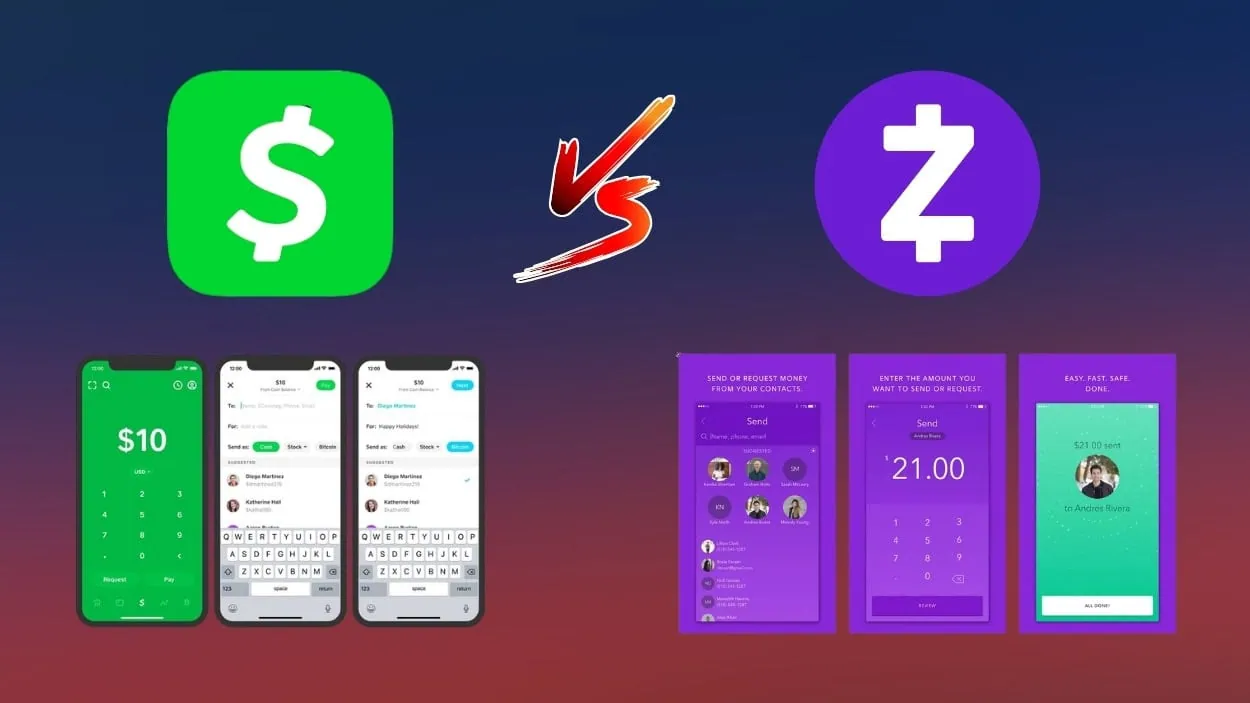






Cash App reported 59 million monthly transacting actives across the United States as of December 2025, according to Block’s FY2025 10-K. Zelle reached 151 million enrolled accounts and helped users send over $1 trillion in 2024, according to Early Warning Services, the network operator of Zelle.
Those two numbers describe products that work in opposite ways. One is a standalone app that holds your money; the other is a rail wired inside thousands of banks. The data below covers users, volume, transfer speed, fees, send limits, and the business models behind each network.
Key Takeaways
- Cash App counted 59 million monthly transacting actives in the United States as of December 2025, concentrated in a single app with a stored balance.
- Zelle reached 151 million enrolled accounts in 2024, up 16 million from 135 million a year earlier, spread across member banks rather than one app.
- Zelle moved over $1 trillion in 2024, a 27% year-over-year increase, the most ever sent by a person-to-person service in a single year.
- Cash App transacting actives brought $316 billion in inflows into the app in 2025, a different metric from Zelle’s bank-to-bank network volume.
- Cash App standard cash-outs are free but take 1-3 business days; instant transfers carry a 0.5%-2.5% fee, while Zelle delivers in minutes at no consumer cost.
- Cash App generated $6.3 billion in gross profit in 2025, up 21%, while Zelle charges consumers nothing and is funded by its member banks.
Editor’s Choice
- Zelle processed 3.6 billion transactions in 2024, a 25% increase over 2023.
- Cash App pulled in an average of $1,410 of inflows per monthly transacting active in the fourth quarter of 2025.
- Zelle runs across more than 2,200 financial institutions, 95% of which are community banks and credit unions.
- Block generated $10.4 billion in total gross profit in 2025, up 17% year over year.
- Zelle’s first half of 2025 hit 2 billion payments and nearly $600 billion sent, up 19% and 23%, respectively.
- Cash App lets verified users send up to $7,500 per week against a base of $1,000 per 30 days.
Cash App vs Zelle: Users and Network Reach
- Cash App had 59 million monthly transacting actives across the United States as of December 2025.
- Zelle counted 151 million consumer and small business accounts enrolled to use Zelle, an increase of 16 million from 135 million in 2023.
- Cash App ranked the number one finance app on Google Play and the number three finance app on iOS based on downloads in the United States in 2025.
- Cash App had monthly transacting actives in each of the 50 states and nearly every county as of December 2025.
- Zelle runs across more than 2,200 financial institutions, 95% of which are community banks and credit unions.
| Metric | Cash App | Zelle |
|---|---|---|
| Primary user metric | 59 million monthly transacting actives | 151 million enrolled accounts |
| Period | December 2025 | Full-year 2024 |
| Year-over-year change | n/a | +16 million accounts |
| Distribution | Single app | 2,200+ financial institutions |
| App store rank (US, 2025) | No. 1 Google Play, No. 3 iOS | No standalone app |
Source: Block FY2025 Form 10-K (SEC EDGAR), Early Warning Services
The gap between the figures in Block’s 10-K and the Early Warning Services release looks decisive until you account for what each number counts. A Cash App active is one person using one app. A Zelle enrollment is an account inside a member bank, so a single household with three bank accounts can hold three Zelle enrollments and still be one Cash App user.
That 151 million count spans consumer and small business accounts across thousands of institutions, according to Early Warning Services.
Which has more users, Cash App or Zelle?
Zelle reports more enrolled accounts (151 million in 2024) than Cash App reports monthly transacting actives (59 million in December 2025), but the two metrics are not directly comparable. Zelle counts bank-linked enrollments across thousands of institutions, while Cash App counts engaged users inside one app. For a like-for-like read, our Cash App vs Venmo vs Zelle statistics comparison lines all three up on shared metrics.

Payment Volume: Network Rail vs App Inflows
- Zelle helped users send over $1 trillion in 2024, the most money ever sent by a person-to-person payments service in a single year.
- Zelle’s total dollar amount sent increased 27% from 2023.
- Cash App transacting actives brought $316 billion in inflows into Cash App in 2025.
- Cash App actives brought in an average of $1,410 of inflows during the fourth quarter of 2025.
- Zelle transaction volume totaled 3.6 billion, a 25% increase from the prior year.
| Volume metric | Cash App | Zelle |
|---|---|---|
| Headline volume | $316 billion inflows (2025) | $1 trillion sent (2024) |
| Transactions | Not disclosed by count | 3.6 billion (2024) |
| Year-over-year growth | n/a | +27% dollars, +25% transactions |
| What it measures | Money entering one app | Money moving between bank accounts |
Source: Block FY2025 Form 10-K (SEC EDGAR), Early Warning Services
The trillion-dollar Early Warning Services headline and the $316 billion inflow figure Block disclosed to the SEC are not the same kind of number. Zelle’s total is gross money moved across a rail; Cash App’s inflow figure is money loaded into the app before it is spent, invested, or withdrawn. Stacking them as a leaderboard, the way most coverage does, compares a payment network to a wallet’s funding pipe.
Recent Developments
- May 2026: Block reported Cash App gross profit of $1.91 billion in the first quarter of 2026, up 38% year over year.
- May 2026: Block’s total gross profit reached $2.91 billion in the first quarter of 2026, up 27% year over year.
- February 2026: Block reported Cash App generated gross profit of $6.3 billion in 2025, up 21% year over year.
- December 2025: Cash App ended the year with 59 million monthly transacting actives across the United States.
- September 2025: Zelle reported 2 billion payments in the first six months of 2025, a 19% increase.
- August 2025: Zelle had its biggest month ever in August, with over $108 billion sent.
Transfer Speed and Fees Compared
- Zelle sends money directly to the recipient’s account, typically available in minutes, once the recipient has enrolled.
- Zelle charges no fees for consumers to send or receive money, typically, though banks may set their own.
- Cash App standard transfers are free and usually arrive within 1-3 business days.
- Cash App instant transfers typically arrive immediately to your linked debit card and are subject to a 0.5%-2.5% fee, minimum $0.25-$1, maximum $75.
Zelle is the faster path to a bank account because it never holds the money. Zelle moves funds directly between bank accounts, so there is no balance to cash out. Cash App keeps funds in a stored balance that can be transferred to a linked bank account, one of several options alongside spending, ATM withdrawal, investing, and buying Bitcoin, which is why reaching a bank means either a free standard transfer or the instant fee. The speed gap is a product of architecture, not marketing.
| Speed and fees | Cash App | Zelle |
|---|---|---|
| To recipient | Lands in Cash App balance | Lands in bank account, minutes |
| Standard to bank | Free, 1-3 business days | Typically minutes, free |
| Instant to bank/card | 0.5%-2.5% fee | Not applicable |
| Consumer send/receive fee | $0 for standard | Typically $0 |
Source: Cash App Help, Zelle FAQ (2026)
By the numbers: Cash App’s instant cash-out fee runs 0.5%-2.5% of the amount, with a minimum of $0.25-$1 and a maximum of $75, per Cash App’s help center. Zelle delivers directly to a bank account in minutes at no consumer fee, because the money never pauses in an app balance.
Send and Receive Limits: Cash App vs Zelle
- Cash App lets users send and receive up to $1,000 within any 30-day period before identity verification.
- Cash App grants higher limits once identity is verified using full name, date of birth, and SSN or ITIN.
- Verified Cash App users can send up to $7,500 per week.
- Zelle limits are set per bank, with most banks setting limits per day and per month, and some weekly and per-transaction limits.
- Wells Fargo, for example, allows $3,500 per day and $20,000 per 30-day rolling period for consumer accounts on Zelle.
The two networks treat limits in opposite ways. Cash App publishes one flat ladder that every user climbs the same way; Zelle hands the decision to each member bank, so the same network spans a default of $500 per week to send where a bank sets no separate limit and five-figure per-bank ceilings. Anyone moving large sums on Zelle should check their specific bank’s limit rather than a network-wide figure.
| Limit type | Cash App | Zelle |
|---|---|---|
| Base send limit | $1,000 per 30 days | Set by bank (default $500/week) |
| Verified send limit | Up to $7,500 per week | Set by bank |
| Example high ceiling | n/a | $20,000 per 30 days (Wells Fargo) |
| Who sets the limit | Cash App, one ladder | Each financial institution |
Source: Cash App Help, FinanceBuzz, Bank of America
How the Two Models Differ: App Balance vs Bank Rail
- Cash App funds can be sent to another customer through the app, spent anywhere that accepts Visa cards or Cash App Pay, withdrawn from an ATM using the Cash App Card, invested in stocks or ETFs, used to buy bitcoin, or transferred to a linked bank account.
- Cash App users can add funds by linking a bank account, depositing mobile checks, adding physical cash at participating retailers, or receiving a recurring paycheck by direct deposit.
- Zelle moves money directly to the recipient’s account once they have linked an eligible account to an email or U.S. mobile phone number, with no app balance.
- Block describes its platform as integrating payments, banking, lending, and commerce solutions, primarily through Cash App’s consumer network and Square’s business network.
- Each Cash App active account brought in an average of $1,410 of inflows during the fourth quarter of 2025, money that lands in the app balance before it moves anywhere.
The core difference is the stored balance. Cash App functions as a stored balance that holds value and layers payments, banking, lending, and commerce on top of it, while Zelle is a transfer feature that moves money directly between existing bank accounts. That single design choice explains most of the downstream gaps in speed, fees, and feature breadth.
Does Cash App use Zelle?
No, Cash App and Zelle are separate networks with no shared infrastructure. Cash App operates through Cash App’s consumer network with its own stored balance, while Zelle moves money directly between enrolled bank accounts linked to an email or U.S. mobile number. A transfer sent on one network does not touch the other.
Zelle Volume Growth
- Zelle sent over $1 trillion across full-year 2024.
- Zelle’s first-half volume in 2024 was $481 billion.
- Zelle’s first-half volume in 2025 reached nearly $600 billion, up 23%.
- Zelle’s first-half 2025 payment count hit 2 billion payments, a 19% increase.
Why it matters: Zelle’s first-half dollar volume climbed from $481 billion in 2024 to nearly $600 billion in 2025, a 23% increase, according to Early Warning Services. Sustained double-digit growth on a base this large signals that bank-rail peer-to-peer payments are still expanding, not plateauing.
Cash App Monetization vs Zelle’s Free Model
- Cash App generated gross profit of $6.3 billion in 2025, up 21% year over year, primarily driven by growth in Cash App Borrow.
- Block generated gross profit of $10.4 billion in 2025, up 17% year over year.
- Square generated gross profit of $3.9 billion in 2025, up 9% year over year.
- Bitcoin was only 6% of Cash App gross profit in 2025, down from 8% in 2024.
- Zelle charges no fees for consumers to send or receive money, typically.
Cash App and Zelle sit at opposite ends of the monetization spectrum. Cash App earns directly from lending, its card, instant-transfer fees, and Bitcoin; Zelle takes nothing from the consumer and exists to keep deposits inside its member banks. The same “send a friend money” surface hides a paid product on one side and a free retention tool on the other.
| Monetization | Cash App | Zelle |
|---|---|---|
| 2025 gross profit | $6.3 billion | $0 from consumers |
| Main revenue drivers | Borrow, Card, instant fees, Bitcoin | None (bank-funded) |
| Consumer cost | Fees on instant transfers | Typically free |
| Who profits | Block, Inc. | Member banks indirectly |
Source: Block FY2025 Form 10-K (SEC EDGAR)
Small Business Use on Each Network
- Zelle small businesses sent or received more than 500 million transactions in 2024, a 32% increase from 2023.
- Those Zelle small-business transactions totaled $283 billion, a 32% increase from the previous year.
- Zelle payments to small businesses jumped 31% to 180 million in the first half of 2025.
- Person-to-small-business payments on Zelle jumped 30% in volume, with average payment size up 5% in the first half of 2025.
Both networks serve sellers, but through different doors. Zelle reaches small businesses through their existing bank accounts, while Cash App routes business activity through Block’s Square seller network rather than the consumer app itself. Zelle’s 32% small-business growth in 2024 shows the rail model spreading into commerce without building a separate merchant product.
What Cash App Does That Zelle Doesn’t
- Cash App users can invest in stocks or exchange-traded funds and buy bitcoin inside the app.
- Cash App balances can be spent anywhere that accepts Visa cards or Cash App Pay, or withdrawn from an ATM using the Cash App Card, which rides the Visa network statistics rail.
- Cash App’s lending product, Cash App Borrow, primarily drove the 21% growth in Cash App gross profit in 2025.
- Block’s platform spans payments, banking, lending, and commerce solutions beyond simple transfers.
Zelle does one thing: move money between bank accounts quickly and for free. Cash App bundles transfers with a card, direct deposit, investing, Bitcoin, and lending. For a reader who only needs to repay a friend, Zelle’s narrowness is a feature; for someone who wants a banking-style hub, Cash App’s breadth is the draw.
Safety and Reversibility
- Zelle payments cannot be reversed.
- Zelle advises that it should only be used to send or receive money with people you know and trust.
Both networks move money in ways that are difficult or impossible to claw back once sent, which is the trade-off for speed. Neither is a substitute for a credit-card chargeback when buying from a stranger. The irreversibility that makes these rails fast is the same property that makes them a poor fit for transactions with people you cannot vouch for.
Is Zelle safer than Cash App?
Neither network is categorically safer; both send money in ways that generally cannot be reversed once completed. Zelle moves funds directly between bank accounts and warns users to send only to people they know and trust. Cash App holds funds in an app balance and applies identity verification to unlock higher limits. The shared risk is irreversibility, so the safer choice is the one matched to a trusted recipient, not a feature either platform advertises.
Conclusion
The headline figures, 59 million Cash App monthly transacting actives against 151 million Zelle enrolled accounts and over $1 trillion in 2024 network volume, describe two products built on opposite foundations. Zelle is a free bank rail that delegates limits to its member banks; Cash App is a standalone wallet that charges for instant cash-outs and earned $6.3 billion in Cash App gross profit in 2025.
Readers comparing the two get the clearest answer by matching the tool to the task: a fast, free transfer between known parties leans toward Zelle, while a wallet that doubles as a banking and investing hub leans toward Cash App. With Zelle’s first-half volume already nearly $600 billion and Cash App’s monetization deepening through lending, both models look set to keep growing along their separate tracks rather than converging into one.