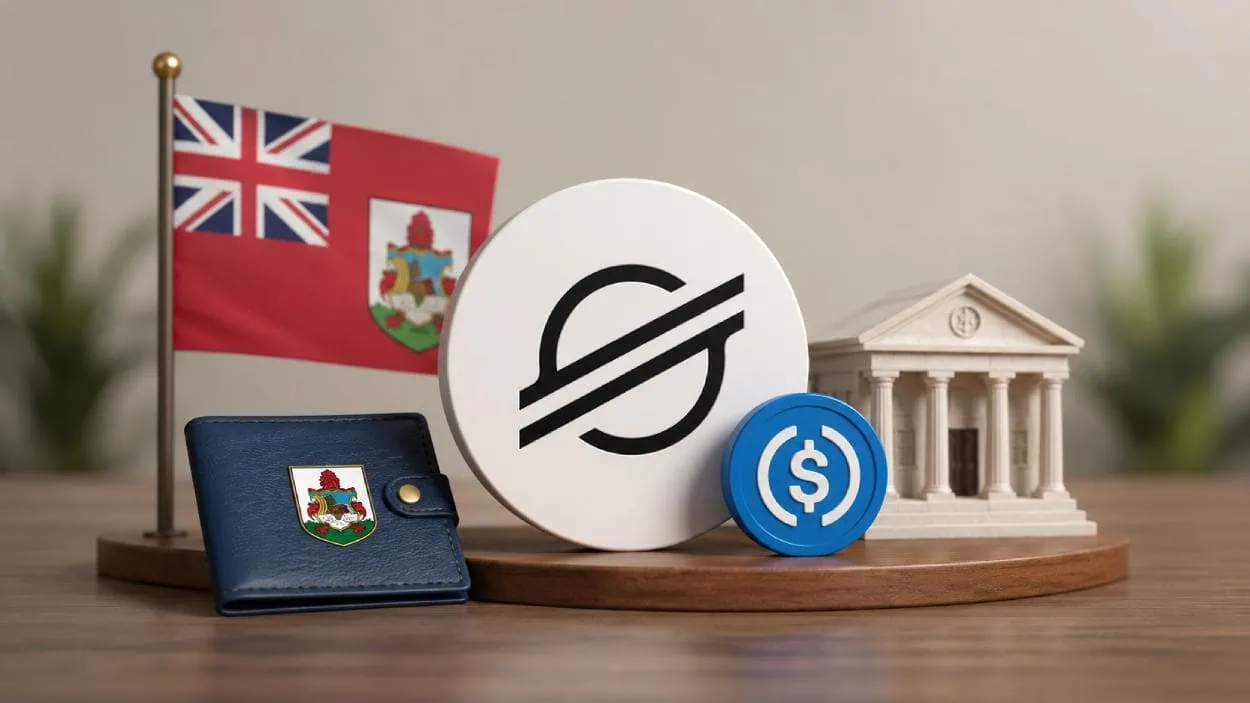






Bermuda is moving key government payment services onto the Stellar blockchain as the country accelerates its plan to build a fully on chain digital economy powered by stablecoins and blockchain infrastructure.
Key Takeaways
- Bermuda is integrating Stellar blockchain technology into government payment systems.
- Residents may soon use Stellar based wallets for salaries, retail payments and government fees.
- The initiative includes stablecoin payments and tokenized financial tools under Bermuda’s digital asset framework.
- Officials believe blockchain rails can lower transaction costs and improve access to global finance.
What Happened?
The government of Bermuda has announced plans to migrate parts of its public payment and financial infrastructure onto the Stellar blockchain network. The initiative is part of the country’s broader vision to become the world’s first fully on chain national economy.
The move will allow residents to eventually receive salaries, make merchant payments, pay government fees and store digital assets using Stellar-powered digital wallets. Bermuda is also planning to pilot stablecoin based payment systems in collaboration with Circle and Coinbase.
JUST IN: Bermuda begins moving national payment and financial services onchain via the @StellarOrg network, the first operational step toward its goal of becoming the world’s first fully onchain national economy. pic.twitter.com/QF5oMO14m7
— CoinDesk (@CoinDesk) May 12, 2026
Bermuda Expands Its Blockchain Ambitions
Bermuda has steadily positioned itself as one of the most crypto friendly jurisdictions in the world. The latest move builds on the country’s Digital Asset Business Act introduced in 2018, which created a legal framework for blockchain and digital asset companies operating in the region.
According to the announcement shared by the Stellar Development Foundation and Bermuda officials, the country will begin integrating blockchain based payment rails into government systems and public services. The goal is to improve payment efficiency while reducing the high transaction costs faced by residents and businesses.
Officials stated that local merchants currently deal with payment processing fees ranging from 3% to 5%. By using blockchain infrastructure and stablecoins, Bermuda hopes to lower these costs significantly while speeding up transactions.
The plan was first highlighted at the World Economic Forum in Davos, where Bermuda officials discussed the country’s ambition to transition major parts of its economy onto blockchain infrastructure. The government described the initiative as a step toward building a more modern and efficient financial system.
Stellar and USDC at the Center of the Plan
The Stellar blockchain has emerged as a major network for stablecoin settlements and cross-border transactions. Bermuda’s initiative relies heavily on Stellar’s payment rails alongside the USDC stablecoin issued by Circle.
The government said agencies will begin piloting stablecoin based payments while financial institutions explore tokenized financial instruments. These tokenized assets may eventually be integrated into welfare payments and other public spending systems.
Residents are expected to use Stellar based wallets for everyday financial activities including:
- Receiving salaries.
- Paying government service fees.
- Sending and receiving crypto payments.
- Making retail and merchant transactions.
- Holding digital assets securely.
Premier David Burt has continued promoting Bermuda’s blockchain strategy internationally. During the DC Blockchain Summit in Washington, Burt met with policymakers and industry executives to discuss stablecoin regulation, tokenized markets and financial market integrity.
Officials believe Bermuda’s regulatory framework demonstrates that digital asset innovation and responsible oversight can work together.

Stellar Strengthens Its Stablecoin Role
The timing of Bermuda’s announcement also comes as Stellar continues expanding its role in global stablecoin infrastructure. Crypto payments company Mesh recently integrated Stellar as a core settlement layer for its payment network.
Mesh co-founder and CEO Bam Azizi said Stellar has provided trusted financial rails for institutions for more than a decade with strong fiat connectivity and global payment reach.
Reports also show stablecoin market capitalization on Stellar recently surpassed $400 million, largely driven by USDC activity. That growth is helping position the network as a serious player in blockchain based payments and real world financial settlements.
CoinLaw’s Takeaway
In my experience, governments usually move very slowly when it comes to adopting new financial technology. That is why Bermuda’s decision stands out. The country is not just experimenting with crypto for headlines. It is trying to build actual public infrastructure around blockchain payments and stablecoins.
I found the focus on lowering transaction fees and improving access to global finance especially important for smaller economies. If Bermuda successfully rolls this out at scale, it could become a real example for other countries exploring blockchain based payment systems.