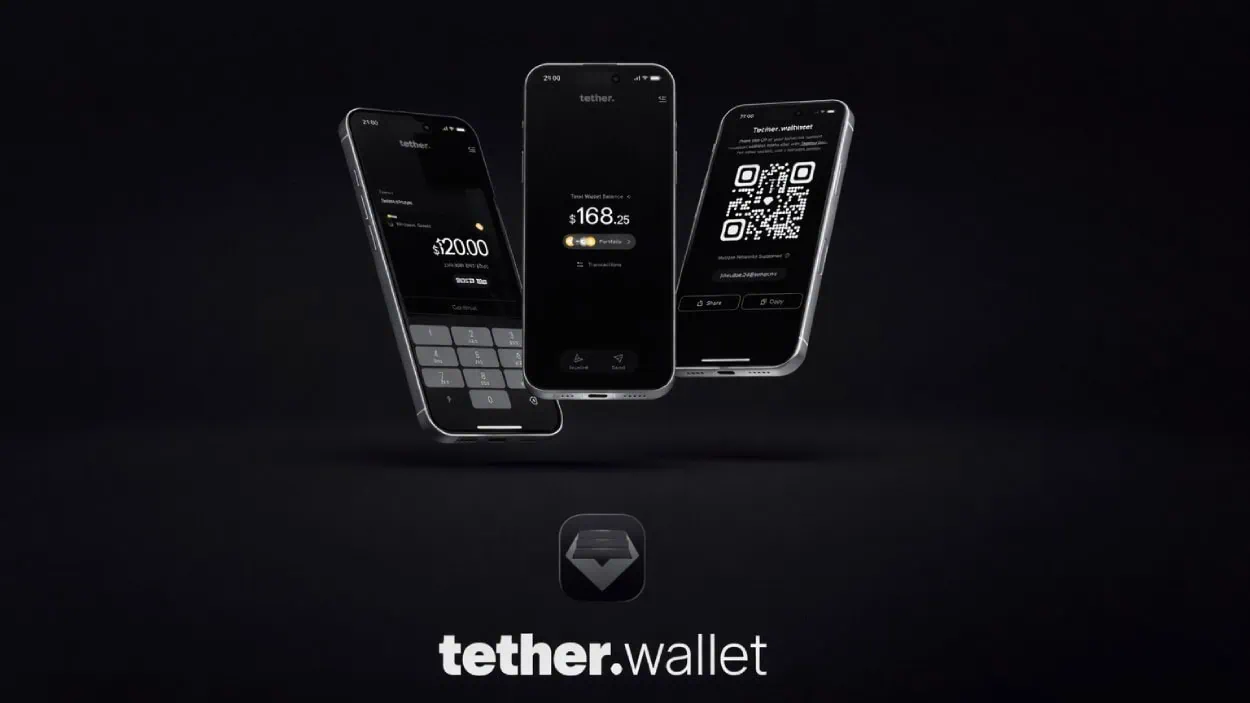






Tether has launched a new self custodial wallet that aims to make sending Bitcoin and stablecoins as simple as everyday messaging.
Key Takeaways
- Tether introduces tether.wallet, a self custodial app for direct crypto payments.
- Supports Bitcoin, USDT, USAT, and XAUT across multiple blockchains.
- Removes need for separate gas tokens by allowing fees in the same asset.
- Uses human readable usernames like name@tether.me to simplify transactions.
What Happened?
Tether has officially launched tether.wallet, a new mobile based self custodial crypto wallet designed to give users direct access to its financial ecosystem. The app supports Bitcoin, stablecoins, and tokenized gold, aiming to simplify digital payments for both new and experienced users.
The move marks a major shift for Tether as it expands from infrastructure provider to a direct consumer facing platform.
Forget this: bc1qxy2kgdygjrsqtzq2n0yrf2493p83kjkjmx…
— tether wallet (@tetherwallet) April 14, 2026
Your Tether Wallet address:
yourname1@tether.me
Send & Receive Bitcoin, Gold, and Digital Dollars the same way you send an email.
Get Your https://t.co/MVebFP8Fz3 username today.
Download Tether Wallet. pic.twitter.com/wEus89M28k
Tether Moves Closer to End Users
With the launch of tether.wallet, Tether is taking a significant step toward bringing its technology directly into users’ hands. Until now, most users interacted with Tether indirectly through exchanges or payment platforms. This new wallet changes that by offering a simple interface where users can hold and transfer assets themselves.
According to the company, more than 570 million users already rely on Tether’s infrastructure, and adoption continues to grow rapidly each quarter. The wallet is designed to make that ecosystem more accessible, especially for people in regions with limited banking access or high inflation.
Tether highlighted that nearly half of the global population still lacks reliable financial services. The wallet is positioned as a tool to bridge that gap.
Features Designed for Simplicity
The wallet introduces several features aimed at reducing common friction in crypto usage:
- No separate gas tokens required as users can pay fees directly in the asset being sent.
- Human readable identifiers like name@tether.me replace complex wallet addresses.
- Multi network support including Ethereum, Polygon, Arbitrum, and Plasma.
- Bitcoin integration through both on chain transactions and the Lightning Network.
These changes are intended to make crypto transactions feel more like sending a message rather than dealing with technical barriers.

Self Custody and Security Approach
Tether emphasized that the wallet is fully self custodial. Users retain control of their private keys, and all transactions are signed locally on their devices before being broadcast to the network.
The company stated that private keys and recovery phrases remain under user control. However, the wallet also introduces a cloud backup option for private keys, which has raised some concerns among users who prefer fully offline security methods.
It remains unclear whether this backup feature can be disabled, and Tether has not yet provided further clarification.
Built on Existing Infrastructure
The wallet is built using Tether’s open source Wallet Development Kit, which was introduced in 2024. This toolkit allows developers to integrate non custodial wallets into apps, websites, and devices.
Tether has already used this infrastructure in external projects, including integrations that enable peer to peer payments and creator monetization.
Speaking about the launch, CEO Paolo Ardoino said the wallet represents a natural evolution of the company’s role in the digital asset space, shifting from backend infrastructure to direct usability.
CoinLaw’s Takeaway
In my experience, this is one of the most important moves Tether has made in years. I found that the biggest barrier to crypto adoption has always been complexity, not technology. By removing gas fees confusion and replacing long wallet addresses with simple usernames, Tether is clearly targeting everyday users, not just crypto natives.
At the same time, I think the cloud backup feature could spark debate. Convenience often comes at the cost of perceived security, and users will want more clarity here. Still, if Tether executes this well, it could significantly accelerate real world crypto usage, especially in regions that need it most.