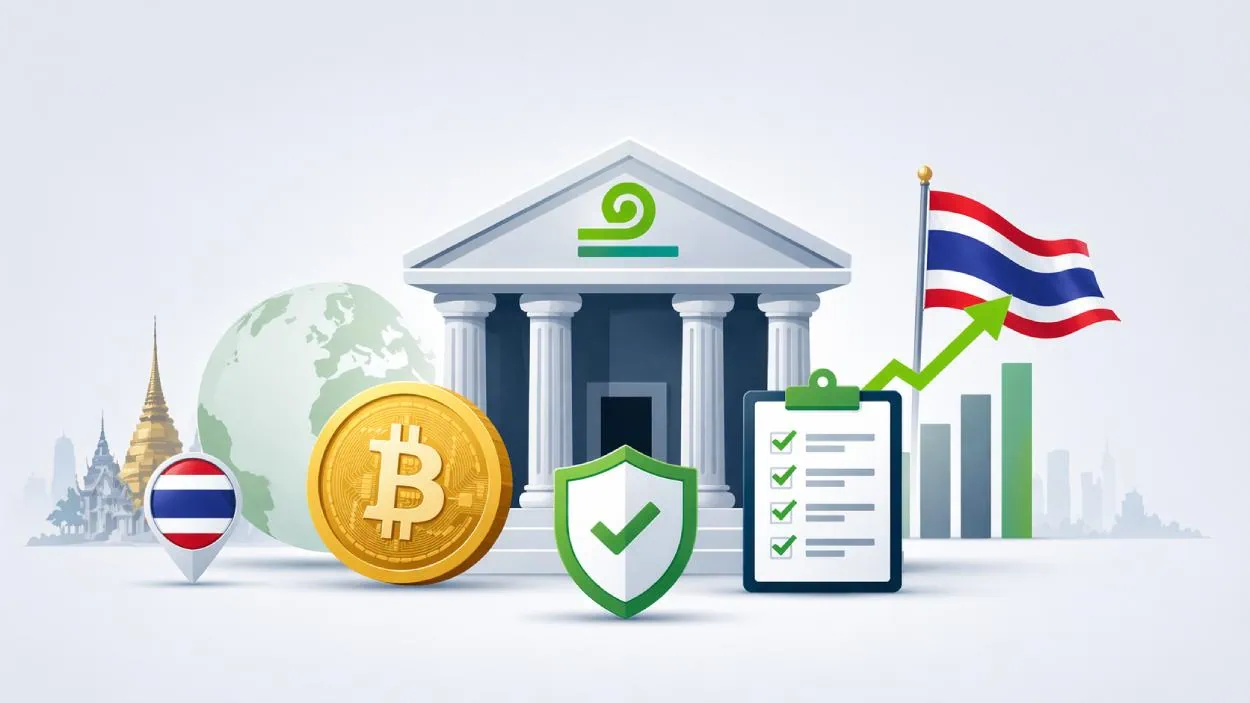






Thailand’s Securities and Exchange Commission is proposing new rules that would let crypto firms access derivatives licenses more easily while strengthening oversight.
Key Takeaways
- Thailand SEC wants crypto firms to apply for derivatives licenses within existing entities.
- Public consultation is open until May 20, 2026 before final rules are set.
- New safeguards will target conflicts of interest and improve supervision.
- Global momentum in crypto derivatives is influencing Thailand’s regulatory push.
What Happened?
Thailand’s Securities and Exchange Commission has proposed regulatory changes to simplify how digital asset firms enter the derivatives market. The plan removes the need to create separate companies and instead allows licensing within existing business structures.
The proposal is currently open for public feedback until May 20, 2026, with industry input expected to shape the final framework.
THAILAND MAY LET CRYPTO FIRMS OFFER DERIVATIVES DIRECTLY
— BSCN (@BSCNews) April 23, 2026
Thailand’s SEC is considering easing restrictions on crypto derivatives.
Firms may soon apply for licenses without creating separate legal entities. The change simplifies the process for market participation.
Authorities… pic.twitter.com/S5Dx9ghS0B
Thailand Looks to Remove Entry Barriers
Thailand is taking a clear step toward making its crypto market more accessible and efficient. Under the current system, firms must establish a separate legal entity to offer derivatives products, which adds cost and complexity.
The new proposal changes that by allowing licensed digital asset businesses to apply for derivatives licenses directly within their existing corporate structure. This could significantly reduce operational hurdles and speed up market entry.
Regulators believe this move will help:
- Lower costs for crypto firms expanding into derivatives.
- Encourage innovation in financial products.
- Create a more unified market structure.
This reform builds on earlier regulatory progress. Thailand had already recognized digital assets as valid underlying assets for futures and options under its derivatives framework. Cabinet approval earlier this year also cleared the way for cryptocurrencies such as Bitcoin to be used in regulated derivatives markets.
Focus on Investor Tools and Market Growth
The SEC has framed the proposal around improving investor experience and expanding financial tools. Officials say the changes aim to provide better hedging options and portfolio management tools for both retail and institutional investors.
In its consultation document, the regulator stated, “This promotes greater acceptance of digital assets as an investment asset and provides investors with an additional hedging option.”
This signals a broader shift in Thailand’s stance on crypto. Digital assets are increasingly being treated as a legitimate financial asset class, rather than a niche or speculative market.

Stronger Safeguards and Oversight
While the proposal simplifies access, it also introduces stricter rules. The SEC plans to enforce enhanced safeguards to prevent conflicts of interest, especially for firms operating across both spot and derivatives markets.
Key regulatory upgrades include:
- Measures to prevent misuse of customer trading order data.
- Stronger supervision of exchanges and clearinghouses.
- Higher financial reporting standards aligned with global benchmarks.
These safeguards are seen as critical, particularly as exchanges gain more visibility into user trading behavior when operating multiple services under one entity.
Global Crypto Derivatives Market Gains Momentum
Thailand’s move comes at a time when crypto derivatives are rapidly expanding worldwide. Major platforms are rolling out new products, even as regulators in key markets evaluate frameworks.
Recently, Blockchain.com introduced perpetual futures trading within its self custody wallet, powered by Hyperliquid. The feature allows users to trade across more than 190 markets using Bitcoin as collateral with leverage of up to 40x.
Other exchanges are also pushing forward. Kraken and Coinbase have launched perpetual futures tied to equities for users outside the United States, reflecting growing demand for 24 hour multi asset trading.
In the United States, regulatory momentum is building as well. Commodity Futures Trading Commission official Michael Selig said the agency is working toward enabling crypto perpetual futures and could take action soon. Meanwhile, Kraken’s parent company Payward has agreed to acquire Bitnomial, a regulated derivatives platform, to expand its futures offerings.
Thailand’s Long Term Crypto Strategy
Thailand has been steadily developing its crypto regulatory framework since 2018, when digital asset oversight was first introduced. The latest proposal reflects a shift from basic compliance toward market expansion and integration.
The country is also exploring additional products such as crypto ETFs and tokenized investments, with regulators highlighting strong investor demand for easier access.
By allowing firms to operate across both spot and derivatives markets under a single structure, Thailand is moving toward a more integrated financial ecosystem.
CoinLaw’s Takeaway
I see this as a smart and timely move by Thailand. In my experience, forcing companies to create separate entities often slows innovation and adds unnecessary friction. By simplifying licensing while tightening oversight, the SEC is striking a balance that many regulators struggle to achieve.
I found that this approach not only supports business growth but also protects investors, which is exactly what the crypto industry needs right now. If executed well, Thailand could position itself as a serious hub for regulated crypto derivatives in Southeast Asia.