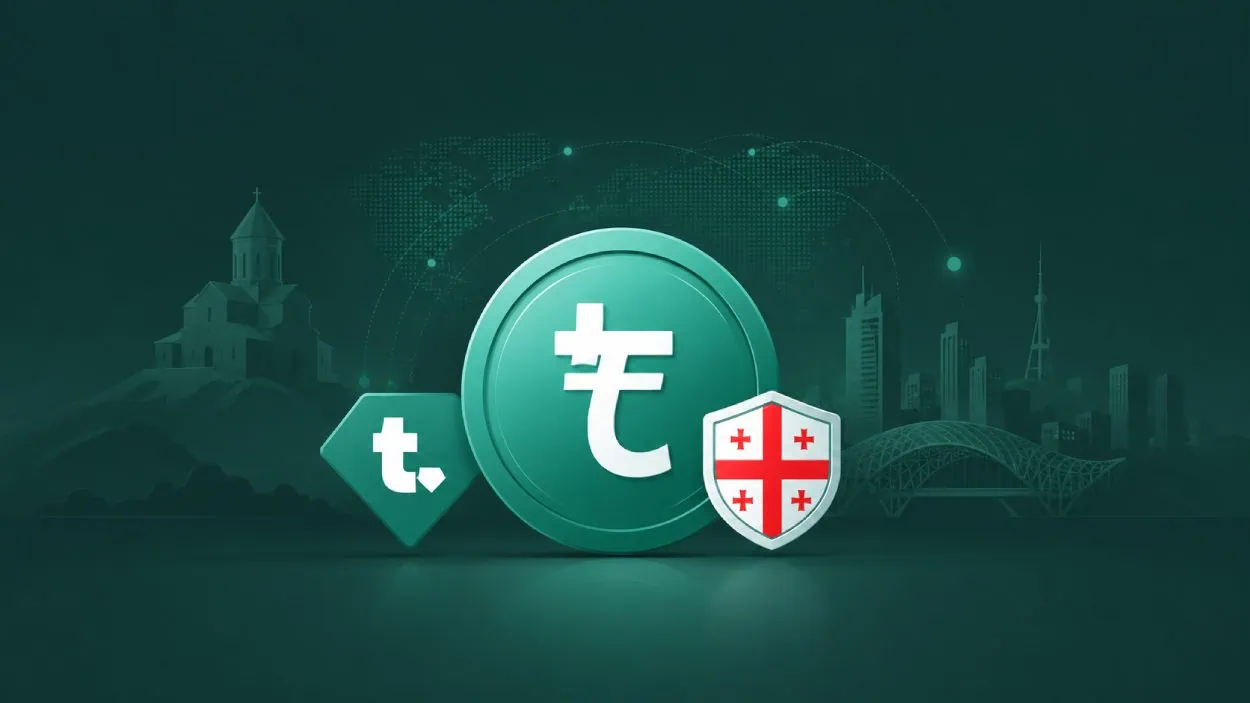






Tether has announced plans to launch GEL₮, a Georgian lari backed stablecoin developed in partnership with the Government of Georgia.
Key Takeaways
- Tether and the Government of Georgia plan to launch GEL₮, a stablecoin tied to the Georgian lari.
- The project aims to support faster payments, lower transaction costs, and cross-border digital transfers.
- Georgia is positioning itself as a crypto friendly hub with a regulatory framework aligned with emerging U.S. stablecoin rules.
- Officials say the initiative could strengthen fintech innovation and digital finance infrastructure in the region.
What Happened?
Tether, the company behind the world’s largest stablecoin USDT, announced on Monday that it plans to launch GEL₮, a new stablecoin representing Georgia’s national currency, the Georgian lari. The project is being developed with support from the Government of Georgia and the National Bank of Georgia.
According to the official announcement, GEL₮ will serve as a digital version of the Georgian lari and is expected to support payments, settlements, remittances, and fintech applications across Georgia and nearby regions.
Tether and the Government of Georgia to Launch GEL₮, the Official Stablecoin of Georgiahttps://t.co/ueSLlJzot1
— Tether (@tether) May 25, 2026
Tether Expands Stablecoin Push Into National Currency Infrastructure
The launch of GEL₮ marks one of the first collaborations between a national government and a private stablecoin issuer to place a sovereign currency directly onto blockchain-based financial rails under a dedicated regulatory framework.
Tether said the stablecoin is designed to enable:
- Lower transaction costs
- Near instant settlements
- Programmable payments
- Faster cross-border value transfers
The company added that stablecoins are becoming increasingly important in global finance as governments and businesses look for alternatives to slower traditional banking systems.
In its announcement, Tether highlighted the growing scale of stablecoin adoption worldwide. The company said USDT’s market capitalization is approaching $190 billion, with trading volumes that regularly exceed traditional payment networks such as Visa and Mastercard.
Georgia Strengthens Crypto Friendly Regulatory Framework
Georgia has spent the past few years building a regulatory environment aimed at attracting digital asset companies and blockchain businesses.
According to Tether, Georgia’s stablecoin framework includes rules covering:
- Reserve management
- Redemption rights
- Issuer oversight
- Anti-money laundering compliance
The framework was also designed to align with emerging U.S. stablecoin legislation, including the proposed GENIUS Act.
This approach could position Georgia as one of the first countries seeking compatibility with future U.S. digital asset regulations while encouraging innovation in digital payments and financial technology.
The country has already experimented with crypto related payment infrastructure. Tether noted that Georgia currently allows tax payments through instant conversion of digital assets into local currency.

Tether’s Existing Presence in Georgia
The GEL₮ initiative builds on Tether’s earlier involvement in Georgia’s blockchain and payments ecosystem.
Back in 2023, Tether signed a memorandum of understanding with the Georgian government to support Bitcoin, Web3, and peer-to-peer technology development in the country. That effort included grants and investments for local blockchain startups.
Tether has also invested in CityPay.io, a crypto payment platform operating across hundreds of businesses in Georgia, including hotels, shops, and restaurants.
In 2024, the company expanded its investment in CityPay.io to support broader growth across Eastern Europe. The platform reportedly aims to build more than 500,000 crypto payment points across the region.
Officials Highlight Digital Finance Ambitions
Georgia’s Prime Minister Irakli Kobakhidze said the partnership with Tether would help create “a more connected, transparent, and digitally empowered financial world.”
Tether CEO Paolo Ardoino said:
National Bank of Georgia President Natia Turnava also welcomed the collaboration, calling it part of the country’s strategy to advance secure and internationally aligned digital finance infrastructure.
Meanwhile, Georgian parliament member Vakhtang Turnava said the partnership could help Georgia become a bridge between traditional finance and the digital economy.
Tether stated that more details regarding GEL₮’s rollout, structure, and implementation timeline will be shared later.
CoinLaw’s Takeaway
In my experience, this partnership shows how quickly stablecoins are moving beyond crypto trading into real financial infrastructure. I found Georgia’s approach especially interesting because the country is not waiting for global regulations to fully mature before building a framework that welcomes innovation while still focusing on compliance.
If GEL₮ succeeds, it could encourage other smaller nations to explore government supported stablecoins for payments, remittances, and digital commerce. Tether is clearly trying to position itself not just as a crypto company, but as a long term infrastructure provider for digital money worldwide.