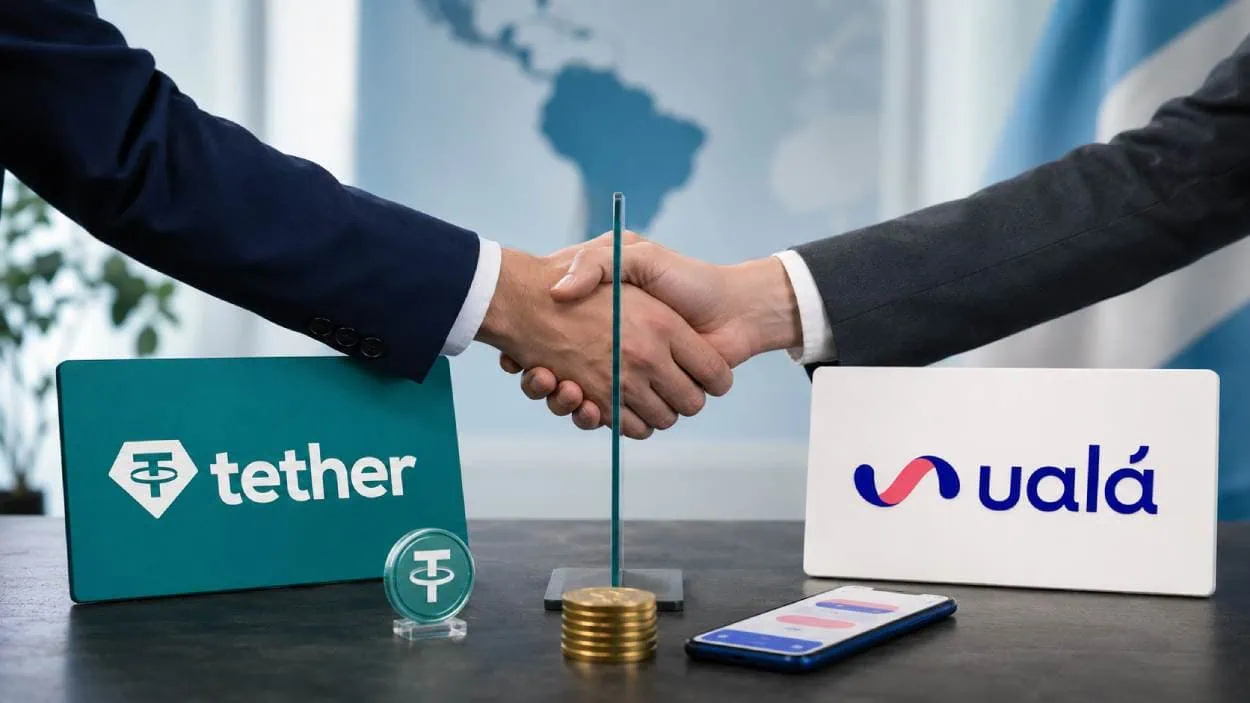






Tether disclosed on July 15, 2026, that it invested $20 million in Argentine neobank Ualá, according to Bloomberg. It was the first time the size of the stablecoin issuer’s stake had been made public.
Key Takeaways
- Tether’s stake sits inside Ualá’s $195 million funding round, led by Allianz X at a $3.2 billion post-money valuation.
- Ualá CEO Pierpaolo Barbieri said Tether joined the round solely as a financial investor, not a product partner.
- Barbieri said regulations in Argentina and Mexico currently block USDT from integrating into Ualá’s app.
- Ualá serves more than 11 million customers across Argentina, Mexico and Colombia with full banking licenses in every market.
- The stake follows two other Tether-backed deals disclosed the same month: $20 million in Latin America’s Mercado Bitcoin and $7 million in payroll startup Pact Labs.
What Happened?
Tether had already been named as one of the participants when Ualá announced the raise in March, but the size of its check stayed undisclosed until Bloomberg’s report. The same round also drew Stone Ridge Holdings Group, Tencent, TABLE Holdings, Soros Fund Management and D1 Capital Partners.
Ualá, an Argentine neobank offering cards, lending and investment accounts through a single mobile app. Barbieri, Ualá’s chief executive, said Tether’s participation was strictly a financial investment rather than a step toward putting USDT inside the app.
LATEST: 💰 Tether invested $20M in Argentine neobank Ualá as part of a $197M round led by Allianz X, per Bloomberg. pic.twitter.com/dUi23P9fQD
— CoinMarketCap (@CoinMarketCap) July 16, 2026
Why Tether Still Can’t Put USDT on Ualá?
Barbieri’s own framing is the real story here. That license is exactly what a stablecoin issuer cannot simply buy, and Tether’s stake claims a slice of it rather than a lever to route USDT through the app.
Mercado Bitcoin, the other Latin America deal Tether disclosed the same month, runs on on-chain settlement rather than licensed retail banking. Side by side, the two deals sketch Tether’s regional playbook: buy distribution where crypto rails are already legal, buy patience where regulators still say no.
A Rapid Latin America Deal Cadence
Tether announced a $7 million Series A investment in Pact Labs on July 14 to build payroll and earned-wage infrastructure around USA₮, its separate US-regulated stablecoin. A week earlier, on July 7, Tether said it would invest $20 million in a strategic financing round for Mercado Bitcoin, describing itself as the largest company in the digital asset industry.
Three Latin America and payments checks in ten days is a fast cadence for one counterparty, and it reads as a current priority, not a one-off. Europe’s neobanks scaled through licensed-banking rails years before any stablecoin issuer took a seat at the table, a sequencing Ualá is now repeating in Latin America.

Implications for Latin America’s Stablecoin Rails
Run the numbers: $20 million against a $3.2 billion valuation works out to roughly 0.6% of Ualá, a passive sliver next to Allianz X’s lead stake. That gap between a rounding-error equity position and a fully licensed, mass market bank is the clearest read on what Tether actually bought: optionality, not a distribution channel.
The harder question is what happens once a regulator allows a licensed bank to plug in a dollar-pegged token.
CoinLaw’s Takeaway
This reads as Tether hedging into Latin American financial infrastructure rather than opening a new stablecoin corridor. The $20 million buys standing next to a roster of global investors on Ualá’s cap table and a foothold in a licensed bank, with the door to actual USDT distribution left for regulators to open later, not for Tether to force now.
The more telling signal is the pace. Three disclosed checks in ten days, spanning a crypto exchange, a payroll startup and a licensed neobank, describe a company spreading small, financial-only bets across every rail Latin America’s regulators currently allow, then waiting on the ones they do not. That is a patient, diversified posture, not a rushed land grab, and it is worth watching which government moves to let a bank and a stablecoin actually touch.