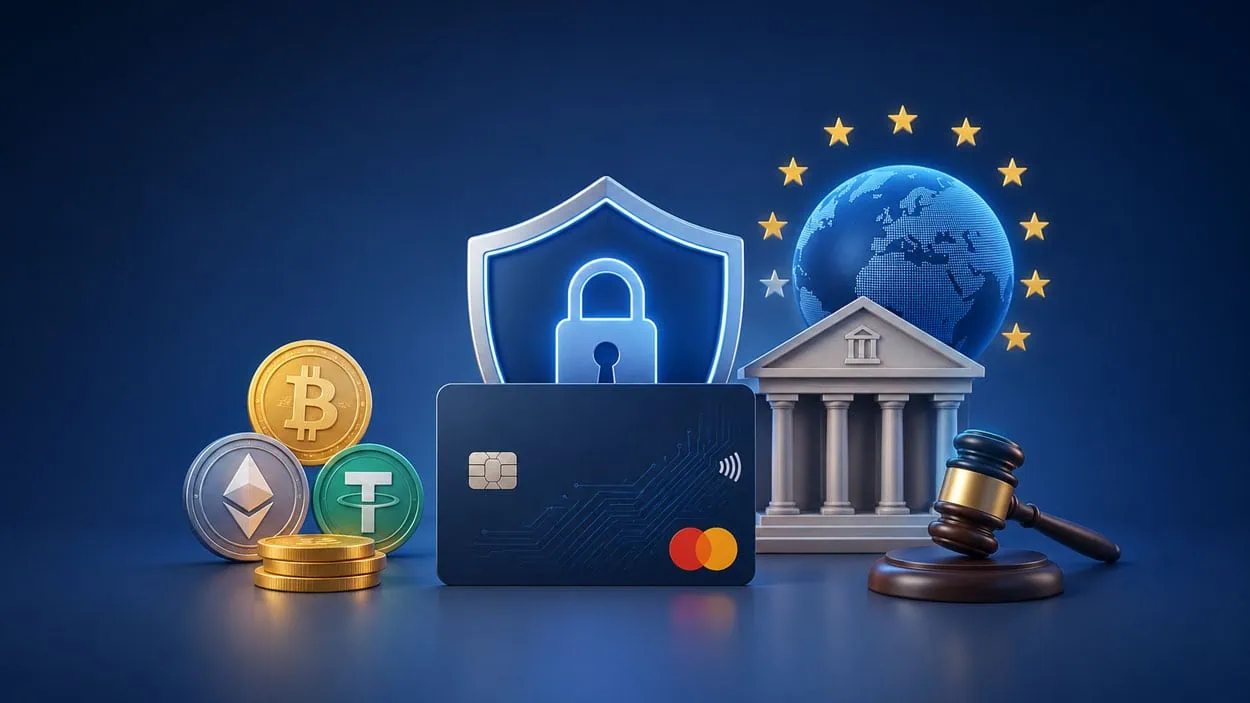






As crypto payments move from novelty to everyday utility, the legal framework around crypto debit cards has become one of the most consequential and most misunderstood areas of digital-asset regulation. For anyone comparing options, a neutral resource like NomadCrypto Cards helps cut through the marketing to what actually matters legally: who issues the card, which license it operates under, and how user funds are protected.
Crypto debit cards sit at the intersection of two regulated worlds. On one side is the card network, such as Visa or Mastercard, and the issuing bank or e-money institution. On the other is the crypto custodian that holds or converts the assets. In the European Union, the Markets in Crypto-Assets Regulation, known as MiCA, has tightened obligations for the crypto side, particularly for the stablecoin issuers whose tokens back many spend-your-crypto products. Cardholders rarely see this machinery, but it determines whether a card can legally operate in their country and what happens to their money if the provider fails.
Three legal questions deserve attention before signing up.
First, who is the regulated issuer? Most crypto cards are not issued by the crypto brand itself but by a licensed e-money institution operating under contract. That institution’s jurisdiction defines your consumer protections, your dispute rights, and the rules for safeguarding client funds. A card marketed as global may quietly exclude users in regions where its issuer is not licensed, so the fine print genuinely matters.
Second, is the model custodial or non-custodial? Custodial cards convert crypto to fiat at the point of sale and expose you to counterparty risk if the custodian becomes insolvent. Non-custodial models keep assets in your own wallet until the moment you spend, which is a very different legal and risk profile. Neither is inherently better, but they carry different obligations and protections worth understanding before you commit.
Third, how does the card handle KYC and tax reporting? Reputable cards enforce full know-your-customer and anti-money-laundering checks. That is a feature, not a bug, because cards that skip it tend to be short-lived and legally fragile. Separately, spending crypto is often treated as a taxable disposal event in many jurisdictions, and the record-keeping obligation falls on the user rather than the provider.
The regulatory direction of travel is clear. Consumer-facing crypto payment products are converging toward the same standards as traditional fintech, which is good news for users because it filters out fly-by-night operators and forces real accountability. The practical challenge is comparing cards on these legal dimensions rather than only on cashback rates, since the flashiest rewards often come from the least stable providers.
That is exactly where independent comparison becomes valuable. Tools that surface issuer, license, safeguarding, and regional availability alongside the usual fee and reward data make genuine due diligence far easier, and they will only grow more important as enforcement matures across the EU, the UK, and beyond. Choosing a crypto card in 2026 is as much a compliance decision as a consumer one, and treating it that way is the surest way to avoid an expensive mistake.