

• Skip to primary navigation
  • Skip to main content
  • Skip to primary sidebar
  • Skip to footer
CoinLaw LogoCoinLaw

Bringing Crypto & Finance Closer to You

  • Latest News
  • Statistics
  • About
  • Contact
  • Subscribe
Subscribe
CoinLaw Logo
  • Latest News
  • Statistics
  • About
  • Contact
  • Subscribe
Subscribe
Home » Cryptocurrency

The Global Crypto Boom of 2026: What Investors Need to Know

Published on: July 22, 2026
Kathleen Kinder
Senior Editor • 1,967 Articles
Kathleen Kinder brings over 11 years of experience in the research industry, with deep expertise in finance, cryptocurrency, and insurance. ... See full bio
LATEST POSTS:
UK Blacklists 5 Crypto Platforms in Bold Russia Sanctions
Securitize Unlocks Tokenized Stock Trading on Solana
Ledger Launches Crypto Loans Through Morpho for Bitcoin Holders
Global Crypto Market
As Featured In
Deloitte logoForbes LogoFortune LogoCoinDesk LogoInvestopedia logo
Share on LinkedIn ChatGPT Perplexity Share on X Share on Facebook

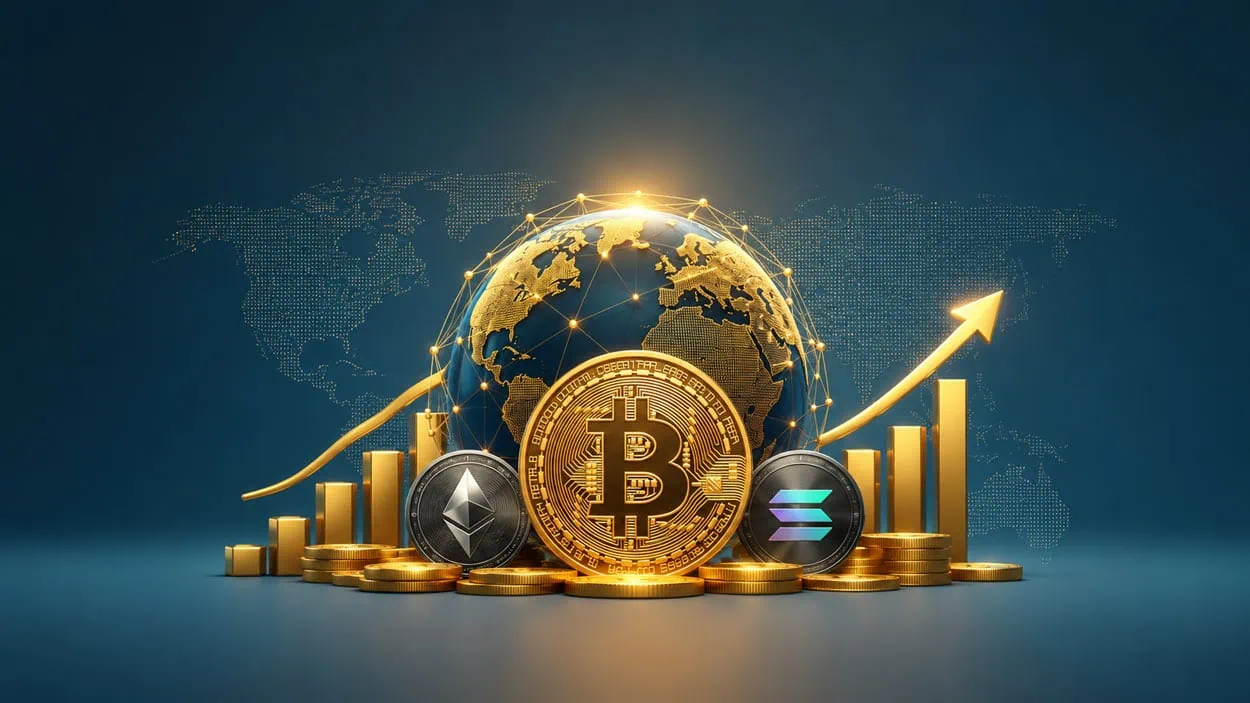
The global cryptocurrency market in 2026 is attracting attention from private investors, financial companies, technology businesses, and payment providers. Digital assets are becoming more closely connected to traditional investment products, international transfers, online commerce, and blockchain-based financial services. As interest grows, investors need to look beyond price movements and understand the forces influencing the wider market. One place readers may include in their research is Coinspot crypto media, which covers different areas of cryptocurrency, trading, blockchain technology, and digital finance.

The current expansion is different from earlier periods of crypto growth. In the past, market activity was often driven mainly by speculation and the popularity of new tokens. In 2026, attention is increasingly focused on practical uses, regulated investment access, stablecoin payments, and the tokenization of traditional assets.

This does not mean that speculation has disappeared. Prices can still rise or fall quickly, and many projects continue to depend heavily on investor interest. However, the market is becoming more diverse. Some companies are building payment systems, custody services, analytics tools, and financial platforms that may remain useful even when cryptocurrency prices decline.

For investors, the main challenge is understanding which developments represent long-term progress and which are only temporary trends. A growing market can create attractive opportunities, but it can also hide weak projects, unrealistic promises, and serious financial risks.

Institutional Interest is Expanding the Market

Institutional investors are playing a larger role in the crypto industry. Banks, asset managers, investment platforms, and financial technology companies are exploring ways to provide access to digital assets or use blockchain technology in their operations.

This development can help cryptocurrency reach a wider audience. Many investors are interested in digital assets but do not want to manage private keys, use unfamiliar exchanges, or transfer funds between different blockchain networks. Traditional financial companies can make access simpler by offering crypto-related products through systems that customers already understand.

Institutional participation may also improve certain market standards. Professional investors generally expect secure custody, transparent reporting, reliable pricing, and clear risk management. Crypto companies that want to work with large financial organizations must demonstrate that they can protect assets and operate responsibly.

The growth of institutional services may support companies that provide infrastructure rather than issue their own tokens. Custody providers, blockchain analytics firms, compliance platforms, and security companies can benefit from wider crypto adoption without depending entirely on the success of one digital asset.

However, institutional involvement also raises questions about centralization. Cryptocurrency was originally developed as an alternative to financial systems controlled by banks and other intermediaries. If most investors access digital assets through large institutions, the market may become more centralized over time.

This could create a system in which blockchain technology is widely used, but control remains concentrated among a limited number of companies. Investors may gain convenience and stronger protection, but they could lose some of the independence associated with direct ownership.

Large institutions can also influence market behavior. When professional investors add significant amounts of capital, prices may rise, and liquidity may improve. When they reduce exposure, the effect can be equally strong. Institutional adoption does not remove volatility, and it may create new connections between crypto markets and the wider financial system.

The long-term value of institutional involvement will depend on whether it supports real usage. Investment products can increase demand, but they do not automatically create practical applications. Sustainable growth requires payment services, financial tools, and blockchain networks that people and businesses use for reasons beyond price speculation.

Stablecoins Could Become a Major Financial Tool

Stablecoins are among the most important areas of crypto growth in 2026. These digital assets are designed to maintain a relatively stable value, usually by being connected to a traditional currency.

Their stability makes them different from cryptocurrencies that can experience large daily price movements. Users may hold stablecoins to transfer funds, settle trades, make online payments, or access decentralized financial applications without immediately converting money back into a bank account.

Cross-border payments represent one of the clearest potential uses. Traditional international transfers may involve several banks, currency conversions, processing delays, and additional fees. Stablecoins can move through blockchain networks at any time, including weekends and public holidays.

This flexibility may be useful for companies working with international suppliers, remote employees, and customers in different countries. It may also help individuals send money to family members or move funds between digital platforms.

Stablecoins can also support markets where access to reliable banking services is limited. In regions with unstable currencies, some users may prefer to hold a digital asset linked to a stronger currency. This can provide an alternative way to store and transfer value, although legal and technical risks remain.

The most important question is whether stablecoins can maintain trust during difficult market conditions. Their reliability depends on the assets supporting them, the financial position of the issuer, and the ability of users to redeem tokens when they choose.

A stablecoin may appear safe when market activity is normal. Problems can emerge when many holders attempt to withdraw funds at the same time. If supporting assets cannot be sold quickly or if the issuer lacks sufficient reserves, the token may lose its connection to the intended value.

Regulation is therefore likely to become more important. Authorities may require stablecoin companies to maintain high-quality reserves, provide regular reports, and protect the redemption rights of users. Clear standards could make stablecoins more attractive to businesses and financial institutions.

At the same time, stricter rules could reduce the number of issuers. Smaller companies may struggle with the cost of compliance, while larger organizations could gain more control over the market.

Stablecoins have the potential to become an important part of payments and settlement, but their future depends on transparency. Users need to understand who issues the asset, what supports its value, and what legal protections are available if something goes wrong.

Tokenization is Connecting Crypto With Traditional Assets

Tokenization is another trend that could reshape the market. It involves creating digital tokens that represent rights connected to traditional assets such as bonds, funds, commodities, or property.

The idea is to use blockchain technology to record ownership and transfer value more efficiently. Instead of relying on several separate databases and intermediaries, market participants could use a shared digital system.

Tokenization may reduce the time required to complete transactions. In traditional markets, the transfer of an asset and the transfer of payment may be handled by different organizations. A blockchain-based system could coordinate these steps and allow settlement to happen more quickly.

It may also make certain assets available in smaller units. Expensive investments can be divided into digital portions, allowing people to participate with less capital. This does not remove financial risk, but it may expand access.

Smart contracts can automate some processes connected to tokenized assets. They may distribute income, apply transfer restrictions, or complete transactions after specific conditions are met. This could reduce manual work and lower certain administrative costs.

However, tokenization does not automatically create value. A digital token is only useful if it represents clear legal rights and if investors are willing to trade it. The technology may improve the transfer process, but it cannot make a weak underlying asset more attractive.

Legal ownership is one of the biggest concerns. Investors must understand whether holding a token gives them direct ownership, a contractual claim, or another type of financial right. They also need to know who controls the underlying asset and what happens if the issuing company fails.

Liquidity is another challenge. An asset can be divided into many tokens, but those tokens still need buyers and sellers. Without active trading, investors may find it difficult to exit their positions.

Different tokenized assets may develop at different speeds. Government bonds and money market products may gain adoption faster because they are familiar and supported by established financial institutions. More complex assets, such as real estate or private company shares, may face greater legal and operational difficulties.

Tokenization could become a major part of the digital asset market, but its success will depend on reliable platforms, clear regulation, and strong demand. The most useful products will likely be those that improve an existing process rather than use blockchain technology only as a marketing feature.

Investors Still Face Serious Risks

The crypto boom of 2026 creates opportunities, but it does not remove the basic risks of digital asset investing. Prices remain highly sensitive to market sentiment, economic conditions, regulation, and unexpected events.

A project can gain attention quickly and lose it just as fast. Social media activity, exchange listings, partnerships, and promotional campaigns can produce strong short-term demand. These signals do not always show that the project has a sustainable product.

Investors should examine how a token is used and why people would continue to need it. A digital asset may be part of a network, but that does not guarantee that its price will rise. The supply structure, ownership concentration, and distribution of tokens can have a major effect on future performance.

Large allocations held by founders or early investors may create selling pressure. When previously restricted tokens become available, the market supply can increase significantly. If demand does not grow at the same rate, the price may fall.

Liquidity also requires careful attention. A token may appear valuable based on its reported market capitalization, but that figure does not show how easily a large position can be sold. Small markets can experience severe price declines when major holders attempt to exit.

Security remains another major concern. Cryptocurrency transactions are usually difficult to reverse, which means that technical mistakes can be extremely costly. Exchanges, wallets, smart contracts, and blockchain bridges may all contain vulnerabilities.

Many losses are also caused by fraud rather than technical failures. Criminals may create fake websites, investment platforms, wallet applications, or customer support accounts. Their goal is often to convince users to reveal private information or approve a harmful transaction.

Artificial intelligence can make such scams more realistic. Fraudulent messages may appear more professional and personalized, while fake videos and identities can be used to promote unreliable investments.

Investors need to verify information carefully and protect access to their wallets. They should avoid sharing recovery phrases, review transaction details, and confirm that they are using official websites and applications.

Regulation can reduce some risks, but it cannot guarantee that an investment will be successful. A licensed platform can still offer assets that decline in value. A regulated product can make access easier without changing the volatility of the underlying market.

The global crypto boom of 2026 may support the development of useful financial services, payment systems, and investment infrastructure. Institutional adoption, stablecoins, and tokenization could help digital assets become a more permanent part of the global economy.

At the same time, investors should remain cautious. Market growth can make weak projects appear stronger than they are, while rising prices can encourage decisions based on emotion rather than research, following https://coinspot.io/en/.

The most important task is to separate practical development from speculation. Projects with active users, transparent management, reliable security, and understandable economic models are more likely to remain relevant. Assets supported mainly by promotion and short-term demand may struggle when market conditions change.

Crypto in 2026 offers significant potential, but it remains a high-risk market. Investors who understand both the opportunities and the limitations will be better prepared to make informed decisions as the industry continues to evolve.


Definition of Blockchain. Link to full glossary entry follows the description.Blockchain

A distributed digital ledger that records transactions across a network, with each block cryptographically linked to the previous one for security.

Read more

Definition of Smart Contract. Link to full glossary entry follows the description.Smart Contract

A smart contract is a self-executing program stored on a blockchain that automatically enforces agreement terms when predefined conditions are met, without intermediaries.

Read more

Definition of Stablecoin. Link to full glossary entry follows the description.Stablecoin

A stablecoin is a cryptocurrency tied to a reserve asset like the US dollar, designed to maintain a stable value for trading, payments, and transfers.

Read more

CoinLaw follows strict Publishing Principles and a documented Fact-Check Policy to ensure accuracy, transparency, and editorial independence across all content.

Add CoinLaw as a Preferred Source on Google for instant updates! Follow on Google News
Share ChatGPT Perplexity
Kathleen Kinder

Kathleen Kinder

Senior Editor


Kathleen Kinder brings over 11 years of experience in the research industry, with deep expertise in finance, cryptocurrency, and insurance. At CoinLaw, she writes timely, reader-focused news articles and also serves as a senior editorial reviewer. Drawing on her background in B2B research, consumer insights, and executive interviews, she ensures every piece delivers clarity, accuracy, and real-world relevance.

Related Posts

Cryptocurrency Regulations Impact Statistics
Cryptocurrency

Cryptocurrency Regulations Impact Statistics 2026: Big Insights

Crypto Market Capitalization Statistics
Cryptocurrency

Crypto Market Capitalization Statistics 2026: Totals, Dominance, and Trends

Tokenized Commodities Market Statistics
Finance

Tokenized Commodities Market Statistics 2026: Growth, Trends, and Insights

Disclaimer: The content published on CoinLaw is intended solely for informational and educational purposes. It does not constitute financial, legal, or investment advice, nor does it reflect the views or recommendations of CoinLaw regarding the buying, selling, or holding of any assets. All investments carry risk, and you should conduct your own research or consult with a qualified advisor before making any financial decisions. You use the information on this website entirely at your own risk.

Reader Interactions

Leave a Comment Cancel reply

Primary Sidebar

Connect With Us

facebook x linkedin google-news telegram pinterest whatsapp email
google-preferred-source-badge Add as a preferred source on Google

You Should Also Read

The Growth of Crypto Payroll in 2026: What You Need to Know
Crypto Market Liquidity Statistics 2026: Hidden Trends Now
Cryptocurrency Statistics 2026: Growth, Trends, and Market Analysis

Table of Contents

  • Institutional Interest is Expanding the Market
  • Stablecoins Could Become a Major Financial Tool
  • Tokenization is Connecting Crypto With Traditional Assets
  • Investors Still Face Serious Risks

Weekly stats quiz Week 41

How much of a crypto geek are you?

5 fast questions from this week's verified market data. About a minute.

Play the quiz New every Monday

Footer

CoinLaw Logo

Bringing Finance Closer to You.

Connect With Us

Follow Us on Google News

Editorial & Trust

  • About
  • Publishing Principles
  • Fact-Check Policy
  • Corrections Policy
  • Ethics Policy
  • Disclaimer
  • Cookie Policy

Worth Checking

  • The Crypto Desk
  • Exchange Listings Tracker
  • Crypto Regulation Tracker
  • Retail Options Trading Stats
  • Banking Customer Retention Stats
  • NFT Market Growth Stats
  • DeFi Market Stats
Contact Us
13570 Grove Dr #189,
Maple Grove, MN 55311,
United States
10 a.m. – 6 p.m. | Every day

Copyright © 2024–2026 CoinLaw. All Rights Reserved. Powered by the HODL Force ❤️

  • Privacy Policy
  • Terms
  • Accessibility Statement
Manage your privacy

To provide the best experiences, we and our partners use technologies like cookies to store and/or access device information. Consenting to these technologies will allow us and our partners to process personal data such as browsing behavior or unique IDs on this site and show (non-) personalized ads. Not consenting or withdrawing consent, may adversely affect certain features and functions.

Click below to consent to the above or make granular choices. Your choices will be applied to this site only. You can change your settings at any time, including withdrawing your consent, by using the toggles on the Cookie Policy, or by clicking on the manage consent button at the bottom of the screen.

Functional Always active
The technical storage or access is strictly necessary for the legitimate purpose of enabling the use of a specific service explicitly requested by the subscriber or user, or for the sole purpose of carrying out the transmission of a communication over an electronic communications network.
Preferences
The technical storage or access is necessary for the legitimate purpose of storing preferences that are not requested by the subscriber or user.
Statistics
The technical storage or access that is used exclusively for statistical purposes. The technical storage or access that is used exclusively for anonymous statistical purposes. Without a subpoena, voluntary compliance on the part of your Internet Service Provider, or additional records from a third party, information stored or retrieved for this purpose alone cannot usually be used to identify you.
Marketing
The technical storage or access is required to create user profiles to send advertising, or to track the user on a website or across several websites for similar marketing purposes.
Statistics

Marketing

Features
Always active

Always active
  • Manage options
  • Manage services
  • Manage {vendor_count} vendors
  • Read more about these purposes
Manage options
  • {title}
  • {title}
  • {title}
Manage your privacy
To provide the best experiences, we use technologies like cookies to store and/or access device information. Consenting to these technologies will allow us to process data such as browsing behavior or unique IDs on this site. Not consenting or withdrawing consent, may adversely affect certain features and functions.
Functional Always active
The technical storage or access is strictly necessary for the legitimate purpose of enabling the use of a specific service explicitly requested by the subscriber or user, or for the sole purpose of carrying out the transmission of a communication over an electronic communications network.
Preferences
The technical storage or access is necessary for the legitimate purpose of storing preferences that are not requested by the subscriber or user.
Statistics
The technical storage or access that is used exclusively for statistical purposes. The technical storage or access that is used exclusively for anonymous statistical purposes. Without a subpoena, voluntary compliance on the part of your Internet Service Provider, or additional records from a third party, information stored or retrieved for this purpose alone cannot usually be used to identify you.
Marketing
The technical storage or access is required to create user profiles to send advertising, or to track the user on a website or across several websites for similar marketing purposes.
Statistics

Marketing

Features
Always active

Always active
  • Manage options
  • Manage services
  • Manage {vendor_count} vendors
  • Read more about these purposes
Manage options
  • {title}
  • {title}
  • {title}
Company
  • About Us
  • Our Team
  • Our Mission
  • Core Values
Discover
  • glossary icon
    Glossary
  • Stats
    Stats Research Process
  • Brand Guide Icon
    Brand Assets
Categories
  • Cryptocurrency
  • Payments
  • Investments
  • Banking
  • Finance
Cryptocurrency
Crypto Regulation by Country 2026: Legal Status, Tax and Licensing
Crypto Regulation by Country Statistics 2026: Legal Status, Tax and Licensing
Biggest Crypto Hacks Statistics Ranked by Value Stolen
Biggest Crypto Hacks Statistics 2026: Ranked by Value Stolen
Perpetual Futures Statistics Volume Funding and Leverage
Perpetual Futures Statistics 2026: Volume, Funding and Leverage
Bitcoin Treasury Companies Statistics Holdings and Cost Basis
Bitcoin Treasury Companies Statistics 2026: Holdings and Cost Basis
Prediction Market Statistics Kalshi vs Polymarket Volume
Prediction Market Statistics 2026: Kalshi vs Polymarket Volume
AI Trading Bot Statistics
AI Trading Bot Statistics 2026: Market, Platforms and MEV Data
Payments
Remittances By Country Statistics
Remittances by Country Statistics 2026: Inflows and Cost
Cash App vs Zelle Statistics
Cash App vs Zelle Statistics 2026: Speed, Limits and User Data
Venmo vs. PayPal Statistics
Venmo vs PayPal Statistics 2026: Users, Fees and Volume
Toast Statistics 2026: ARR, GPV, Take Rate and Revenue
Rapyd Statistics 2026: Valuation, Revenue and PayU Deal
Marqeta Statistics
Marqeta Statistics 2026: TPV, Revenue and Customer Mix
Investments
Crypto ETF Statistics Net Assets Fees and Flows by Issuer
Crypto ETF Statistics 2026: Net Assets, Fees and Flows by Issuer
Largest Investment Banks Statistics
Largest Investment Banks Statistics 2026: Revenue, League Tables and Headcount
Public vs Robinhood Statistics
Public vs Robinhood Statistics 2026: Users, Assets, and Fees Compared
Robinhood vs Acorns Statistics
Robinhood vs Acorns Statistics 2026: Users, AUM and Fees
Robinhood vs Fidelity Statistics
Robinhood vs Fidelity Statistics 2026: Accounts, AUM, and Fees Compared
Robinhood vs Schwab Statistics
Robinhood vs Schwab Statistics 2026: Users, Assets, Pricing
Banking
Global Systemically Important Banks Statistics
Global Systemically Important Banks Statistics 2026: Bucket Allocation and Capital Surcharges
Bank Failures Statistics
Bank Failures Statistics 2026: FDIC Data, DIF Costs, and Recent Trends
The 15 Largest Banks in the US
The 15 Largest Banks in the US in 2026: By Assets, Deposits, and Branches
N26 Statistics
N26 Statistics 2026: Customers, Deposits, Revenue and the BaFin Growth Cap
Revolut vs Monzo Statistics
Revolut vs Monzo Statistics 2026: Customers & Profit
Islamic Banking Statistics Assets Growth and Top Markets
Islamic Banking Statistics 2026: Assets, Growth, and Top Markets
Finance
Federal Tax Revenue By State Statistics
Federal Tax Revenue by State Statistics 2026: IRS Gross Collections, Top 10 States, Donor vs Recipient
Tariff Revenue Statistics
Tariff Revenue Statistics 2026: Customs Duties and IEEPA Refunds
Emergency Fund Statistics
Emergency Fund Statistics 2026: How Much Americans Have Saved (and How Much They Should)
Financial Advisor Statistics
Financial Advisor Statistics 2026: Headcount, AUM, and Demographics
Wealth Inequality Statistics
Wealth Inequality Statistics 2026: Hidden Wealth Divide
Blockchain In Supply Chain Finance Statistics
Blockchain in Supply Chain Finance Statistics 2026: Trade Breakthrough
Categories
  • Cryptocurrency
  • Fintech
  • Payments
  • Compliance
  • Investments
Cryptocurrency
Ledger 86m Usd Wallet Hack Reported
Ledger Users Drained of Over $86M in Suspected Exploit
Blockchain And Cftc Application
Blockchain.com Seeks CFTC Nod for Crypto Derivatives Platform
Securitize Tokenized Stocks On Solana
Securitize Unlocks Tokenized Stock Trading on Solana
Samsung Wallet Usdc Payment Support
Samsung Launches USDC Remittances on 82M Galaxy Phones
Ledger Morpho Crypto Btc Loans
Ledger Launches Crypto Loans Through Morpho for Bitcoin Holders
Winklevoss Bros Zcash Etf S 1 Filing
Winklevoss Files S-1 for Zcash ETF at 0.25% Annual Fee
Fintech
Bybit Ceo Ben Zhou Keynote October 13
Bybit CEO Ben Zhou Sets Global Livestream Keynote
Pharos Network Realfi Ai Agent Native Upgrade
Pharos Expands RealFi With Powerful AI Agent Upgrade
Soneium Dayonedream Unveil K Pop Ip Tokenization Deal
Soneium, DayOneDream Unveil K-Pop IP Tokenization Deal
Binanec 100m Circle Stock Purchase
Binance Takes $100M Circle Stake in Strategic USDC Move
World Launches Provekit For Zk Proofs
World Launches ProveKit for On-Device Zero-Knowledge Proofs
Kraken Lseg Tokenized Stocks Deal
LSEG and Kraken Forge Major Deal for Tokenized Shares
Payments
Polygon Tron Usdt Support
Polygon Open Money Stack Adds TRON USDT Support
Circle Foundation Backs UNDP WFP Stablecoin Aid Payments
Circle Foundation Backs UNDP, WFP Stablecoin Aid Payments
Bybit Openpayd Unified Fiat Payments
Bybit’s OpenPayd Deal Brings Fiat Payments Under One Roof
Ecb Launches Pontes Digital Euro
ECB Launches Pontes, Its Wholesale Digital Euro Platform
Moneygram Launches Stablecoin Backed Visa Card In Colombia
MoneyGram Launches Stablecoin-Backed Visa Card in Colombia
Openpayd Sage Capital Partnership
Sage Capital Taps OpenPayd for USD, EUR and GBP Rails
Compliance
Celsius Alex Mashinsky Crypto Ban New York
Alex Mashinsky Hit With Lifetime Ban in New York Celsius Deal
Uk Sanctions Crypto Payments To Russia
UK Blacklists 5 Crypto Platforms in Bold Russia Sanctions
New York Sues Polymarket Calls Prediction Markets Illegal Gambling
New York Sues Polymarket, Calls Prediction Markets Illegal Gambling
Ecb Central Banks Drop Stablecoin Deposits Rule Featured 1
ECB Pushes to Drop Mandatory Stablecoin Deposit Rule
Avalanche L1 Uaepass Blockchain Id
Avalanche Powers UAE Identity Vault for 12.5M People
Fca Review Uk Predictions Market
UK Prediction Markets Gain Hope as FCA Reviews Ban
Investments
Okx Investment Ripple Circle Standard Chartered
OKX Raises Strategic Capital at $25 Billion Valuation
Payward And Bny Partnership Crypto Custody
Payward and BNY Explore Strategic Crypto Tie-Up
Strategy Locks Strc Dividend Rate At 12 For October
Strategy Locks STRC Dividend Rate at 12% for October
Cboe S P 500 Options Spx
Cboe and S&P DJI Extend SPX Options Exclusivity to 2051
Ondo Finance Blackrock Tokenized Stock
Ondo Brings BlackRock Portfolios On-Chain in Major Move
Kalshi Eyes 60 Stock Perps
Kalshi Eyes 60 Stock Perps as Leverage Debate Heats Up
Newsletter Img

Too much noise in crypto?

We respect your time. You get one high-impact briefing a week. If the market is quiet, so are we.

Read by pros at Visa, Mastercard, Vanguard, and the FDIC.
Newsletter Img

The Weekly Briefing

We track the market 24/7. You get a 5-minute summary. If it’s quiet, we skip it.

Read by pros at Visa, Mastercard, Vanguard, and the FDIC.