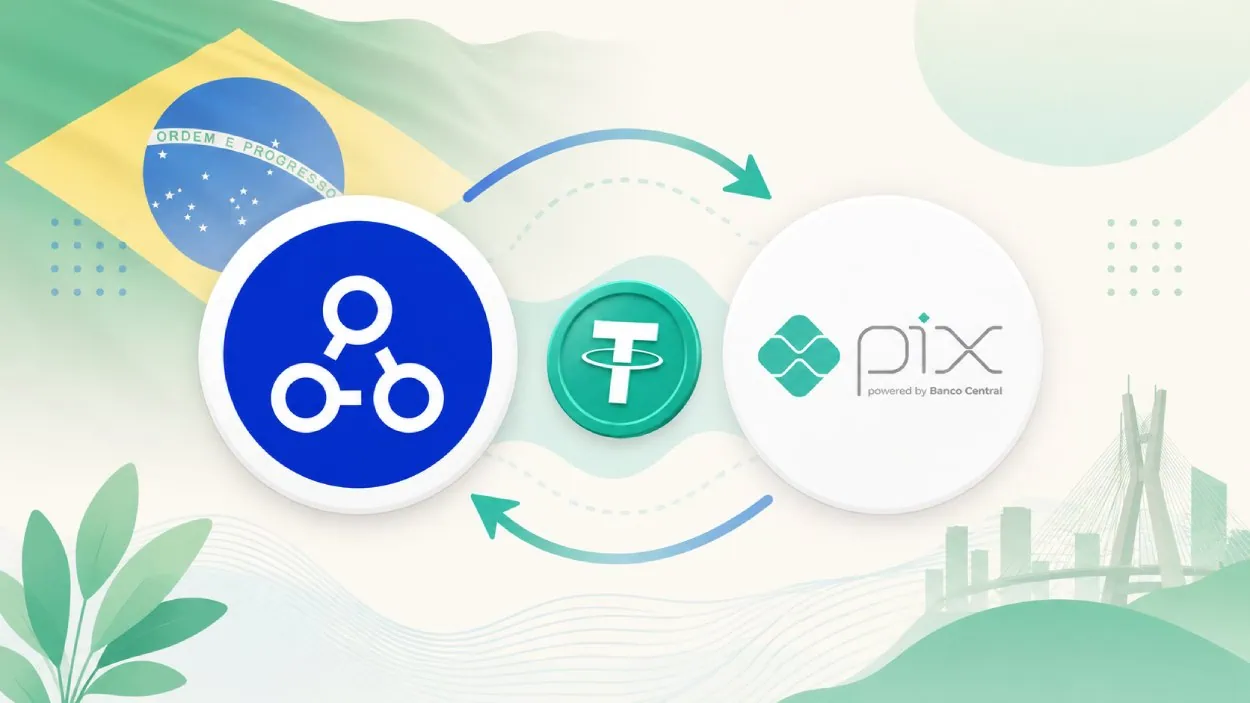






Brazilian users can now hold and spend USDT through the country’s widely used PIX payment network after Tether backed crypto payments app Oobit rolled out a new integration connecting stablecoins with everyday transactions.
Key Takeaways
- Oobit has integrated Brazil’s PIX payment network, enabling users to deposit reais, hold USDT, and make payments through familiar PIX tools.
- The move connects stablecoins to a payment system used by nearly 170 million to 178 million people across Brazil.
- Oobit’s testing data showed that 92% of transactions involved stablecoins, with USDT accounting for 86% of transaction volume.
- The launch comes as Brazil continues to refine crypto regulations while stablecoin adoption accelerates across Latin America.
What Happened?
Tether backed crypto payments platform Oobit has announced support for Brazil’s PIX instant payment network, allowing users to seamlessly move between Brazilian reais and USDT, the world’s largest dollar pegged stablecoin.
The integration enables users to deposit local currency into the app, convert holdings into USDT, and spend funds using PIX payment rails that are already deeply embedded in everyday commerce across Brazil.
Alô, Brasil 🇧🇷
— Oobit (@oobit) June 23, 2026
Oobit 🤝 PIX@TheBlockCo https://t.co/Yy6zpAJnkm
Oobit Brings Stablecoins Into Everyday Payments
The latest rollout is designed to make stablecoin usage feel no different from traditional digital banking. Users can send funds to a PIX key, scan a QR code, or instantly top up balances through the app while blockchain settlement occurs behind the scenes.
Part time Oobit advisor Alex Obchakevich highlighted the simplicity of the experience, stating:
“Send USDT to any PIX key, scan a QR, top up instantly.“
He added that the payment process mirrors the familiar PIX experience already used by millions of Brazilians through their banking applications.
The integration effectively bridges the gap between crypto assets and one of the world’s most successful real time payment networks. Created by Banco Central do Brasil in 2020, PIX has grown rapidly and now serves approximately 170 million to 178 million registered users, representing around 91% of Brazilian adults.
In 2024 alone, the payment system reportedly processed around BRL 11 trillion in transactions, underscoring its importance in Brazil’s financial ecosystem.
Self Custody Meets Traditional Banking
A notable aspect of Oobit’s model is its focus on self custody. Users can transfer USDT and other supported stablecoins directly from their own wallets into Brazilian bank accounts, with settlement occurring in reais.
Unlike many crypto payment providers that require assets to be deposited into company controlled accounts, Oobit’s structure allows users to maintain control of their funds until the moment a transaction is executed.
The company has also expanded its global payment capabilities through its DePay feature, which supports tap to pay transactions at more than 150 million Visa merchants worldwide.
Oobit entered the Brazilian market with more than 50,000 pre launch users, and the PIX integration significantly expands the platform’s utility within the country.

Stablecoin Demand Continues to Grow in Brazil
Brazil has emerged as one of Latin America’s most active stablecoin markets. According to previously reported regional data, stablecoins accounted for 40% of crypto purchases across Latin America, compared with 18% for Bitcoin.
The trend reflects growing demand for dollar denominated assets among users seeking value preservation and efficient payment options.
Oobit’s internal data further supports that trend. During the company’s testing phase in Brazil, 92% of processed transactions involved stablecoins, while USDT represented 86% of total transaction volume.
The opportunity has also attracted competition. Companies including Bitget Wallet, Bybit Pay, and KuCoin Pay have introduced similar integrations connecting stablecoins with Brazil’s payment infrastructure.
Meanwhile, Nubank has explored stablecoin payment initiatives, and Circle previously partnered with the Brazilian fintech firm to expand access to USDC in the region.
Regulatory Environment Remains in Focus
The launch arrives as Brazilian regulators continue evaluating how stablecoins and digital assets should fit into the country’s financial system.
Earlier this year, Brazil’s central bank restricted the use of virtual assets within regulated cross border eFX settlement rails. While the measure did not prohibit crypto transfers, it signaled regulators’ intention to maintain oversight of stablecoin related payment flows.
At the same time, Brazil is actively developing Drex, its central bank digital currency project, which could eventually compete with private stablecoins in domestic payment use cases.
Tether’s Growing Push Into Payments
Oobit’s expansion in Brazil follows its $25 million Series A funding round completed in 2024. The round was led by Tether, with participation from CMCC Global’s Titan Fund, 468 Capital, and Solana co founder Anatoly Yakovenko.
At the time, Tether CEO Paolo Ardoino said
The PIX integration now provides one of the clearest examples of that strategy in action, bringing stablecoin payments closer to mainstream financial activity in one of the world’s largest digital payments markets.
CoinLaw’s Takeaway
In my experience, the biggest challenge for crypto adoption has never been buying digital assets. It has been finding practical ways to use them in everyday life. I found Oobit’s PIX integration interesting because it removes much of that friction. Instead of asking users to learn a new payment system, it connects USDT to a network that millions already trust and use daily. If stablecoins continue gaining traction in emerging markets, integrations like this could become a blueprint for real world crypto adoption.