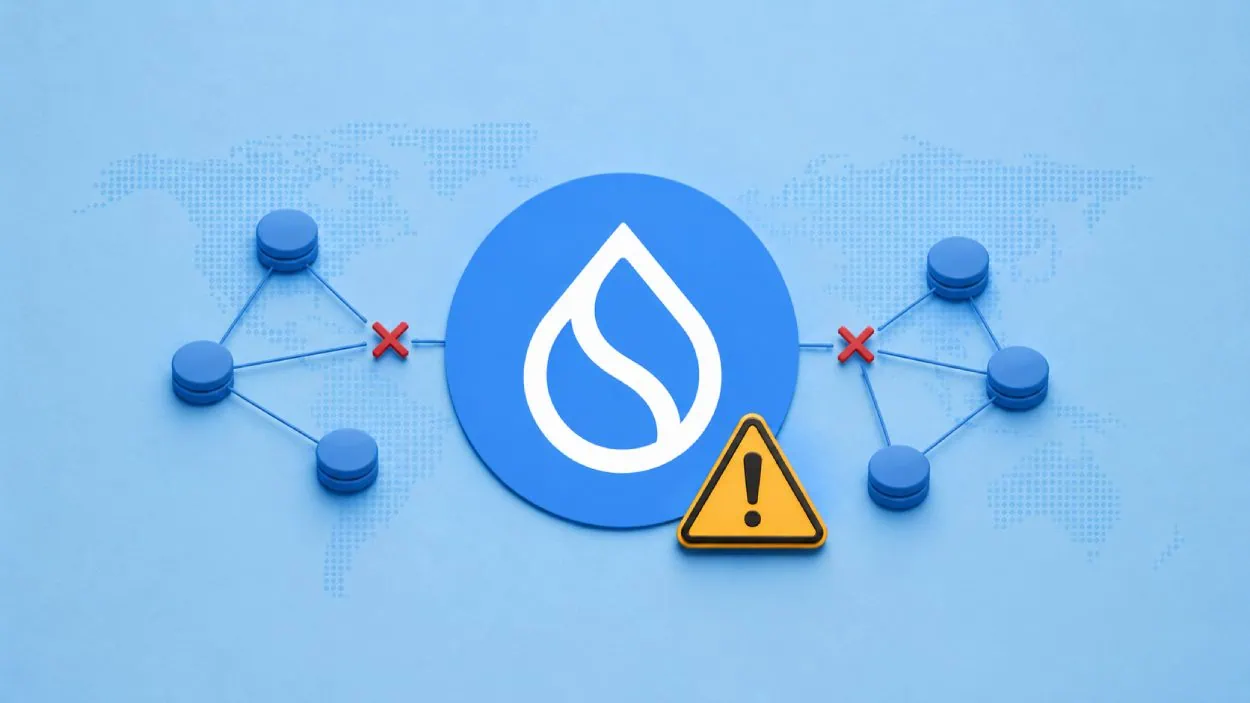






Sui Network has reported another mainnet disruption after a network stall temporarily halted transaction processing, marking the blockchain’s third major outage of 2026.
Key Takeaways
- Sui mainnet experienced a network stall, causing transaction activity across the blockchain to pause.
- The Sui Core team is investigating the issue and has not yet disclosed the root cause.
- The latest incident marks Sui’s third significant network disruption of 2026.
- The outage adds to growing concerns about reliability for a blockchain that promotes high speed performance for decentralized applications.
What Happened?
Sui Network announced on X that its mainnet was experiencing a network stall, warning users that network activity and transactions could be temporarily paused. The team said developers were actively investigating the issue and promised to share updates and an incident review once more information becomes available.
The disruption appeared to halt activity across the network at the time of the announcement. While the blockchain remained under investigation, no official explanation for the outage had been provided at press time.
Sui Reports Another Mainnet Stall
The latest outage affected the Sui blockchain, a Layer 1 network developed by Mysten Labs. In its public statement, the project informed users that transaction processing could be interrupted while engineers worked to identify and resolve the problem.
Sui mainnet is currently experiencing a network stall. Network activity may be paused at this time.
— Sui (@SuiNetwork) May 29, 2026
The Sui Core team is actively investigating. Updates and incident review will be shared as soon as they are available.
At the time of reporting, the team had not disclosed what caused the interruption. As a result, users, developers, and market participants were left waiting for additional technical details regarding the incident.
Third Major Outage This Year
The latest disruption continues a difficult year for the network’s operational stability.
This is the third significant network disruption suffered by Sui in 2026. The blockchain previously experienced a nearly six hour outage earlier in May after a crash bug in the gas charging logic was introduced through the version 1.72 release.
That incident kept the network offline for approximately 5 hours and 55 minutes before services were restored.
Before that, Sui also suffered another outage in January 2026, which lasted roughly six hours. These repeated interruptions have raised questions about network resilience as the blockchain seeks to compete with more established Layer 1 ecosystems.
The latest event also follows a broader pattern of technical incidents that have affected Sui since late 2024, including periods of degraded performance and previous service interruptions.

Growing Focus on Blockchain Reliability
Launched in 2023, Sui has positioned itself as a high performance blockchain designed to compete with Ethereum and Solana. The network promotes fast transaction speeds and lower costs, making it attractive for decentralized finance, gaming, and other blockchain-based applications.
However, recurring outages remain one of the most closely watched metrics for blockchain networks. Developers and traders often view uptime and reliability as critical requirements, particularly for applications handling financial transactions and real time user activity.
As news of the latest disruption spread, the network’s native SUI token was reported to be down about 8% over the previous 24 hours, although broader cryptocurrency market conditions remained mixed.

For users and developers building on the network, the focus now shifts to the official incident report and whether the latest outage reveals deeper infrastructure challenges or an isolated technical issue.
CoinLaw’s Takeaway
In my experience, occasional technical issues can happen on any blockchain, especially newer networks pushing for higher performance. However, what stands out here is the frequency of Sui’s disruptions in 2026. Three major incidents within a few months will likely increase scrutiny from developers, investors, and users evaluating the network for long term adoption.
I found that reliability often becomes just as important as speed and low fees when blockchains compete for serious users and capital. The upcoming incident review could be an important test of transparency and the team’s ability to restore confidence.