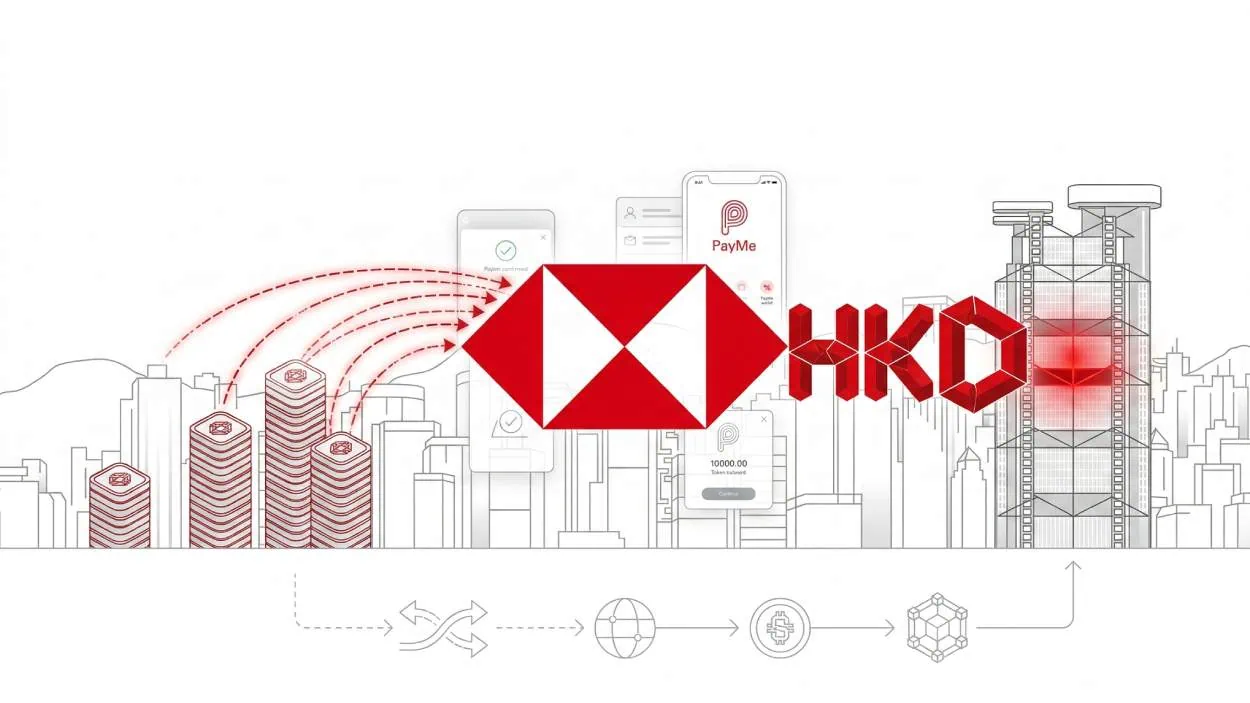






Hong Kong has approved its first stablecoin licences, allowing HSBC to launch a Hong Kong dollar backed digital currency and expand regulated crypto use.
Key Takeaways
- HSBC and a Standard Chartered led venture receive Hong Kong’s first stablecoin licences.
- HSBC plans to launch an HKD stablecoin integrated into PayMe and its banking app.
- Regulators are taking a strict and cautious approach with limited licences.
- Stablecoins are seen as a core building block for Web3 and digital finance growth.
What Happened?
Hong Kong Monetary Authority has granted its first stablecoin issuer licences to HSBC and a joint venture led by Standard Chartered. This marks a major step in Hong Kong’s plan to become a global hub for digital assets.
HSBC confirmed it will launch a Hong Kong dollar stablecoin, while the Standard Chartered backed venture Anchorpoint Financial will also introduce its own digital currency product.
Hong Kong Monetary Authority issues its first stablecoin licenses to HSBC and a consortium led by Standard Chartered.
— BeInCrypto (@beincrypto) April 10, 2026
The joint venture, backed by Animoca Brands and HKT, will launch HKD-backed stablecoins under the new framework.
Rollout is expected later this year, covering… pic.twitter.com/k08XjxooSw
Hong Kong Pushes Forward With Regulated Stablecoins
The approval comes months after Hong Kong introduced its Stablecoin Ordinance, one of the first regulatory frameworks of its kind globally. The move reflects the city’s ambition to balance innovation with financial stability.
Out of 36 applications, only two licences were granted in the first round. Regulators emphasized that the bar remains high, with strict requirements around risk management, compliance, and operational controls.
HKMA officials said the selected firms bring strong experience in traditional finance, which aligns with the goal of bridging traditional banking and blockchain based finance.
At the same time, authorities remain cautious due to concerns around money laundering, fraud, and financial system risks linked to digital assets.
HSBC’s Stablecoin Plans and Use Cases
HSBC plans to roll out its HKD stablecoin in the second half of 2026, targeting both retail users and merchants. The stablecoin will be fully backed by high quality liquid assets held in segregated accounts, ensuring stability and trust.
The bank will integrate the stablecoin into its popular platforms:
- PayMe, which already has over 3.3 million users.
- HSBC Hong Kong mobile banking app, which has seen strong growth.
Initial use cases include:
- Peer-to-peer payments, allowing instant transfers between users.
- Merchant payments, enabling direct payments using stablecoins.
- Tokenised investments, giving users access to digital asset based products.
HSBC CEO Maggie Ng said:
She also noted that the stablecoin will not offer interest, but may include incentives from merchants or the bank to encourage adoption.

Standard Chartered Venture Targets Institutional Market
The second licence was awarded to Anchorpoint Financial, a joint venture backed by Standard Chartered, Animoca Brands, and Hong Kong Telecommunications.
Anchorpoint plans to launch its HKD stablecoin called HKDAP, initially focusing on institutional clients rather than retail users. The firm highlighted benefits such as:
- Lower transaction costs
- 24 hour settlement capability
- Improved efficiency in cross border transactions
The company also aims to work with selected partners to expand distribution and access over time.
Global Context and China Factor
Hong Kong’s move comes amid a complex regulatory backdrop. While the city is embracing digital assets, mainland China continues to enforce strict crypto restrictions, including limits on tokenisation and stablecoins.
Experts believe Hong Kong can act as a controlled testing ground for blockchain innovation, especially for cross border financial use cases and the broader internationalisation of digital assets.
Industry leaders also stress that stablecoins are becoming essential. One expert described them as the “basic building block” of the Web3 ecosystem, enabling smooth value transfer across digital platforms.
With the global stablecoin market already valued at over $300 billion, the stakes are high for jurisdictions competing in this space.
CoinLaw’s Takeaway
In my experience, this is one of the clearest signs that traditional banks are no longer sitting on the sidelines of crypto. I found it especially interesting that regulators chose large, trusted institutions first. That tells me Hong Kong wants control and credibility before rapid expansion.
What stands out is how practical this rollout is. This is not hype driven crypto innovation. It is focused on real payments, real users, and real integration into everyday apps. If HSBC executes this well, it could quietly reshape how people move money in one of Asia’s biggest financial hubs.