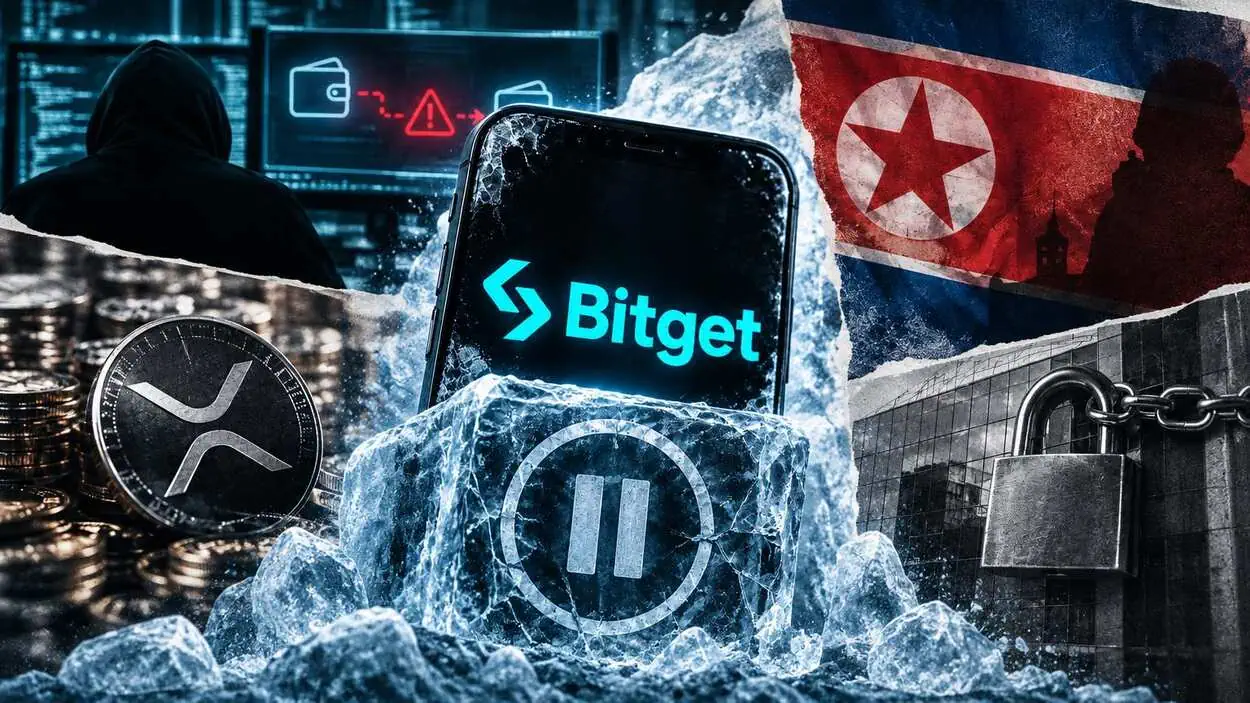






Zilliqa said on July 20, 2026 that ZIL had been stolen from a cold wallet controlled by an exchange partner, and it asked exchanges to pause ZIL deposits and withdrawals while it investigates.
Key Takeaways
- An exchange partner suffered a security incident in which ZIL was stolen from a cold wallet, according to Zilliqa, which is investigating with relevant parties.
- The network asked exchanges to temporarily pause ZIL deposits and withdrawals to help prevent the movement or sale of the stolen funds.
- Zilliqa has not disclosed the amount of ZIL stolen, identified the affected exchange partner, or explained the possible cause of the incident, per Zilliqa.
- ZIL was trading around $0.0025, down 7.1% over the past 24 hours, as the market reacted to the limited disclosure.
- Zilliqa framed the event as an exchange-partner security incident it is investigating with relevant parties.
What Happened?
Zilliqa’s official account said an exchange partner suffered a security incident in which ZIL was stolen from a cold wallet. The team said it is investigating the incident with relevant parties and has asked exchanges to temporarily pause ZIL deposits and withdrawals to help prevent the movement or sale of the stolen funds.
We have been made aware of a security incident involving one of our exchange partners, in which ZIL was stolen from a cold wallet.
— Zilliqa (@zilliqa) July 20, 2026
The incident is under active investigation, and we are working with the relevant parties to establish the root cause and full scope. As a…
Zilliqa did not disclose the amount of ZIL stolen, identify the affected exchange partner, or explain the possible cause of the incident. The project also asked users to rely on its official channels while the investigation continues.
Custody Versus Chain: What the Pause Actually Covers
Zilliqa’s current network, Zilliqa 2.0, describes itself as “a fast-finality, scalable blockchain protocol” running a native EVM execution layer alongside a custom execution layer based on the Scilla smart contract language. That infrastructure keeps settling on-chain transactions on its own terms. An exchange partner’s cold wallet, by contrast, sits under that partner’s own key management and signing procedures, not Zilliqa’s protocol code.
The distinction matters: a custody breach and a chain level failure sit on opposite sides of the trust boundary. Cold storage keeps assets offline, away from internet connected systems. A theft from that kind of wallet, rather than a routine hot wallet exploit, points toward a signing, approval, or access control lapse at the exchange rather than a network exploit.
Zilliqa launched in 2017 as a layer-1 blockchain built around sharding, a method that splits transaction processing across multiple groups of nodes, and its mainnet went live in January 2019. ZIL is the token exchanges are now being asked to pause for deposits and withdrawals while the exchange partner review continues.
What a Transfer Freeze Does to ZIL Liquidity?
Pausing deposits and withdrawals while spot trading stays open does not remove ZIL from the market. It fragments it. Traders may find it harder to move ZIL between venues, arbitrage gaps can widen, and market makers may reduce activity if they cannot reliably transfer inventory.
Zilliqa is investigating the incident with relevant parties, but the details still missing are the ones that matter for containment: whether the theft was confined to one partner, whether signing controls were compromised, and whether customer balances were touched. The market is pricing that uncertainty in the dark. Even a single venue pausing transfers on a mid cap token like ZIL can measurably dent short-term trading volume and liquidity.

Implications for Exchange Partner Custody Risk
This is another entry in a recurring category: losses that trace back to exchange side custody arrangements rather than base layer protocol code, a pattern that holds across the industry even as underlying blockchains grow more resilient. That is why exchange custody controls draw as much scrutiny as the chains they support.
The episode also revives the standing debate between exchange held custody and self custody. Some holders will treat incidents like this as the argument for moving funds off exchanges entirely, even though self custody carries its own key-management risk.
CoinLaw’s Takeaway
This reads as containment, not resolution. Pausing transfers first and explaining the cause later limits further movement of stolen funds, but it also leaves the real scope of the loss known only to a narrow circle of exchanges and investigators.
The bigger signal is how long the pause lasts. A short freeze plus a full accounting of the amount and venue would support an isolated lapse. A prolonged, vague pause across exchanges would instead point to weaker exchange side controls than protocol level ones.