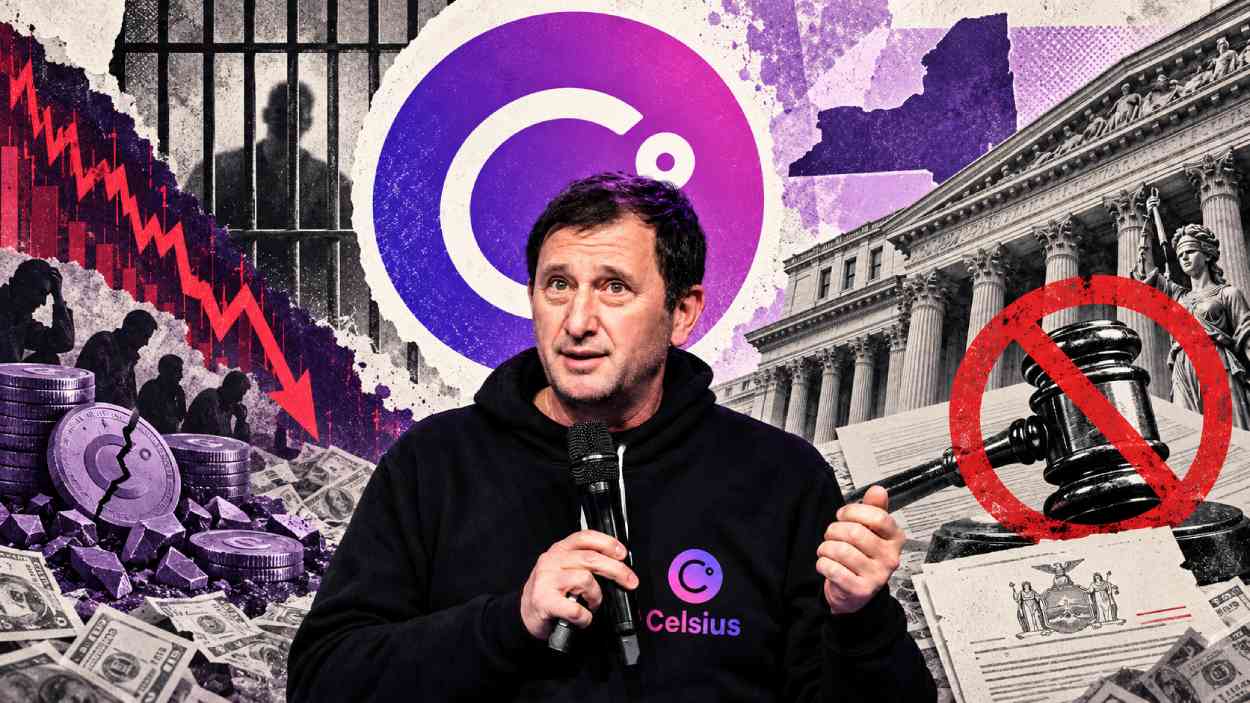






New York Attorney General Letitia James on Oct. 9 permanently barred former Celsius Network CEO Alex Mashinsky from crypto, securities, and commodities businesses. The settlement carries up to $35 million in payments that come due only if he skips a federal forfeiture payment or leaves prison early.
Flash Update
- Alex Mashinsky can no longer run, promote, advise, or solicit customers for crypto businesses under the New York settlement.
- The settlement’s payments of up to $35 million depend on federal forfeiture and on Mashinsky serving his full prison term.
- Celsius creditors have recovered more than $3.4 billion through bankruptcy distributions as of August, the attorney general’s office said.
The $35 million hinges on prison and forfeiture
The headline number is conditional. Under the settlement filed Oct. 8, Mashinsky owes New York $25 million unless he pays $10 million to the U.S. Department of Justice under his federal forfeiture order. Payments made after May 20, 2025, count toward that sum.
A second $10 million judgment is satisfied if he completes his prison sentence under the agreement’s terms. A reduced or overturned sentence, compassionate release, sentence credits, or certain early-release and home-confinement programs can trigger it.
Mashinsky is serving a 12-year federal term imposed in May 2025 after he pleaded guilty to commodities fraud and securities fraud. The criminal court also ordered him to forfeit $48,393,446 and pay a $50,000 fine.
Read together, the terms work as a backstop. If he pays the Justice Department and serves the full term, New York collects nothing extra. The money exists to punish an early exit or a skipped forfeiture payment.
JUST IN: Ex-Celsius CEO Alex Mashinsky settles NY civil fraud suit for up to $35M. • Must serve 12-year sentence and forfeit $10M. https://t.co/0cVUI6E0IX
— Bitcoin Archive (@BitcoinArchive) October 9, 2026
The ban reaches advice and promotion, not just the C-suite
The order goes past executive roles. It bars Mashinsky from investment advice, paid financial commentary, promotions, and soliciting customers for digital asset firms, with no stated geographic limit. A state court keeps jurisdiction, and the attorney general can pursue violations through civil or criminal contempt.
One carve-out survives: his personal purchases and sales. That exemption doesn’t override earlier federal bans.
Those bans keep stacking up. The Federal Trade Commission’s April settlement included a suspended $4.7 billion judgment, a $10 million payment, and an 18-year reporting requirement. The Commodity Futures Trading Commission followed in June with permanent trading and registration bans covering futures, options, and swaps. .
James framed the action in her office’s announcement: “I will not allow scammers to use cryptocurrencies to prey on unsuspecting New Yorkers.“
Her office sued in January 2023, alleging Mashinsky misled hundreds of thousands of depositors, including more than 26,000 New Yorkers, about the platform’s safety while hiding losses from risky investments.
Depositors lost savings and borrowed money
Celsius never operated under the strict federal and state rules that govern banks, despite Mashinsky’s repeated promises of bank-like safety, the attorney general’s office said. He also failed to register in required securities and commodities roles.
The federal case separately detailed purchases that artificially lifted CEL, the platform’s own token. Mashinsky made roughly $48 million selling CEL while publicly claiming he wasn’t selling.
The damage landed on individuals. One New York resident mortgaged two properties to invest, and a disabled veteran lost $36,000 saved over nearly a decade.
Celsius emerged from bankruptcy on Jan. 31, 2024, under a plan that pays creditors in crypto and cash. For Mashinsky, the next checkpoint runs through the Justice Department. Each qualifying forfeiture payment counts toward the $10 million that keeps the larger New York bill from coming due.