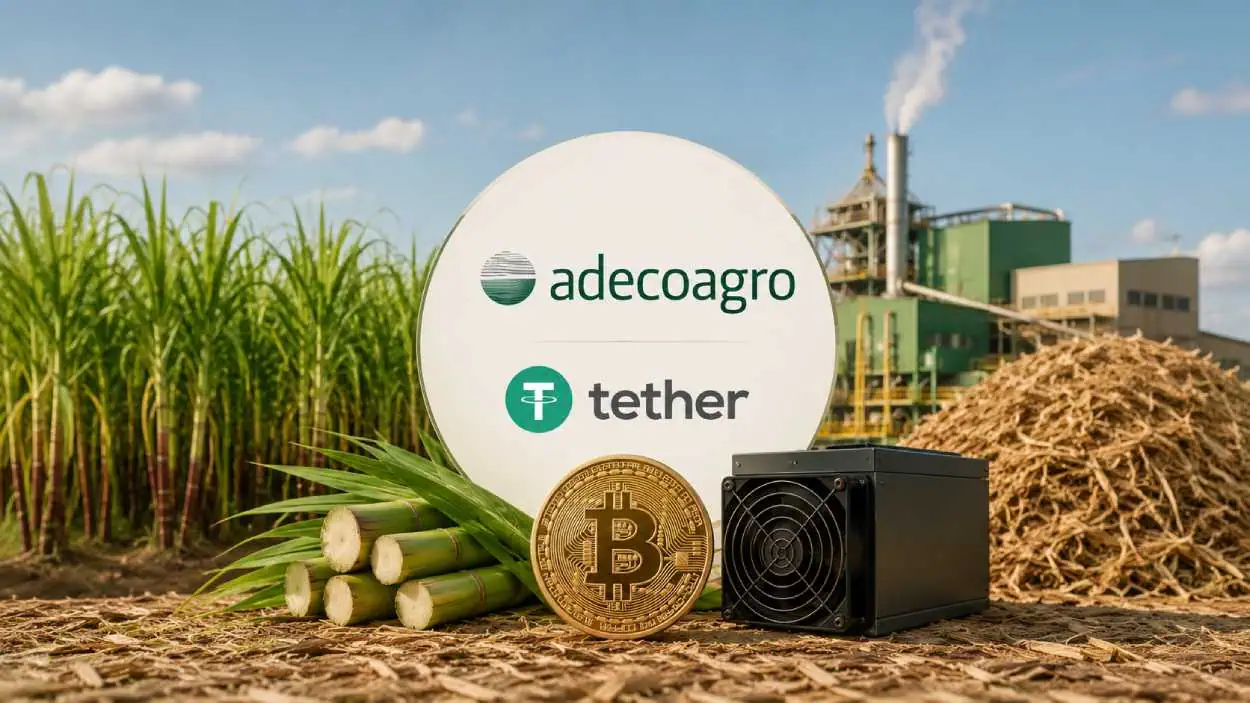






Tether-backed agribusiness giant Adecoagro is set to launch a Bitcoin mining operation in Brazil powered by renewable energy generated from sugarcane processing, marking a new step in the convergence of agriculture, energy, and digital assets.
Key Takeaways
- Adecoagro plans to begin Bitcoin mining operations in Brazil around July 1, 2026.
- The project will use electricity generated from sugarcane bagasse, a byproduct of sugar and ethanol production.
- The initial deployment includes 10 megawatts of capacity and approximately 1,280 mining machines.
- Tether, the issuer of USDT, owns a majority stake in Adecoagro and continues expanding its presence in Bitcoin infrastructure and energy related businesses.
What Happened?
Adecoagro is preparing to launch a Bitcoin mining facility at its Ivinhema unit in Mato Grosso do Sul, Brazil, using renewable electricity generated from sugarcane residue. The company expects the first phase of the operation to go live around July 2026 with an initial capacity of 10 megawatts and roughly 1,280 mining machines.
The project was presented during the Raízes do Futuro event, where government officials and business leaders discussed innovation, technology, and economic development initiatives across the state.
INTEL: Tether-backed agricultural giant Adecoagro to turn surplus sugarcane biomass power into Bitcoin mining pic.twitter.com/Hsi105O6da
— Solid Intel 📡 (@solidintel_x) June 3, 2026
Adecoagro Brings Bitcoin Mining to Its Agricultural Operations
Adecoagro is one of South America’s largest agribusiness companies, with operations spanning sugar, ethanol, rice, dairy products, and renewable energy. The company has built a significant renewable energy business around its sugarcane processing facilities, which generate electricity by using bagasse, the fibrous residue left after sugarcane crushing.
Instead of selling all surplus power to the grid, Adecoagro will now direct part of that electricity toward Bitcoin mining. This approach allows the company to test whether digital asset infrastructure can become another revenue stream alongside its existing agricultural and energy businesses.
The first phase is relatively small compared with some of the world’s largest mining operations, but it represents a meaningful pilot project that could be expanded in the future. Reports indicate the facility could eventually scale to 40 megawatts if the model proves commercially viable.
Tether Expands Beyond Stablecoins
The initiative highlights Tether’s growing interest in Bitcoin infrastructure beyond its stablecoin business.
The USDT issuer previously acquired a majority stake in Adecoagro, linking one of the crypto industry’s largest companies with a major agricultural and renewable energy producer. Through this relationship, Tether gains exposure to real world energy assets, industrial operations, and renewable power generation.
The Bitcoin mining project aligns with Tether’s broader strategy of expanding into areas such as mining infrastructure, energy investments, and Bitcoin focused business ventures. By supporting projects tied to renewable energy production, the company is building a more diversified presence across the digital asset ecosystem.

Renewable Energy Could Become a Mining Advantage
Adecoagro’s renewable energy portfolio exceeds 230 megawatts of generation capacity across South America, providing substantial access to electricity generated from agricultural operations.
Brazil’s position as one of the world’s largest sugarcane producers also creates a favorable environment for bioenergy projects. Sugar and ethanol mills have long used bagasse to generate steam and electricity, making the fuel source readily available within existing industrial infrastructure.
Bitcoin mining requires significant computing power and electricity. For producers with access to renewable energy, mining can serve as a flexible demand source that consumes excess power when supply exceeds other commercial uses.
Industry observers may closely watch the Adecoagro project because a successful rollout could encourage other agricultural and renewable energy companies to explore similar models for monetizing surplus electricity.
Mato Grosso do Sul Pushes Digital Innovation
State authorities have also promoted the project as part of a broader technology and innovation agenda in Mato Grosso do Sul.
According to reports, the state government supported conditions for private investment through licensing and business development efforts. During the same event, officials announced initiatives focused on expanding digital tools in schools and improving rural address registration systems through georeferenced mapping technology.
These efforts reflect a wider strategy to attract technology driven investments while leveraging the region’s agricultural and renewable energy strengths.
CoinLaw’s Takeaway
In my experience, the most interesting part of this story is not the Bitcoin mining operation itself. It is the fact that an established agricultural company is testing a new way to monetize renewable energy that already exists within its business.
I found the combination of sugarcane production, bioenergy, and Bitcoin mining particularly notable because it demonstrates how traditional industries are increasingly exploring digital asset infrastructure. If the project succeeds, it could become a model for other agricultural producers looking to create additional value from surplus renewable power.