





Moscow Exchange is expanding its crypto index suite with four major altcoins and faster updates to support a growing derivatives market.
Key Takeaways
- Moscow Exchange will add Solana, XRP, TRON, and BNB indices starting May 13.
- Crypto indices will update every 15 seconds including weekends.
- Data will be sourced from Binance, Bybit, OKX, and Bitget.
- New indices are expected to support upcoming crypto derivatives products.
What Happened?
Russia’s largest stock exchange is expanding its cryptocurrency benchmarks by introducing four new indices tied to major altcoins. At the same time, it is shifting to near real time updates, marking a significant step toward building a more active and regulated crypto market.
Russia’s Largest Securities Exchange to Launch SOL, XRP, TRX and BNB Crypto Indexes
— Wu Blockchain (@WuBlockchain) May 5, 2026
The Moscow Exchange will begin publishing four crypto indexes tracking SOL, XRP, TRX and BNB from May 13, using pricing data from Binance (50%), Bybit (20%), OKX (15%) and Bitget (15%).
Existing… pic.twitter.com/SIUCvugd4D
Expansion of Crypto Indices
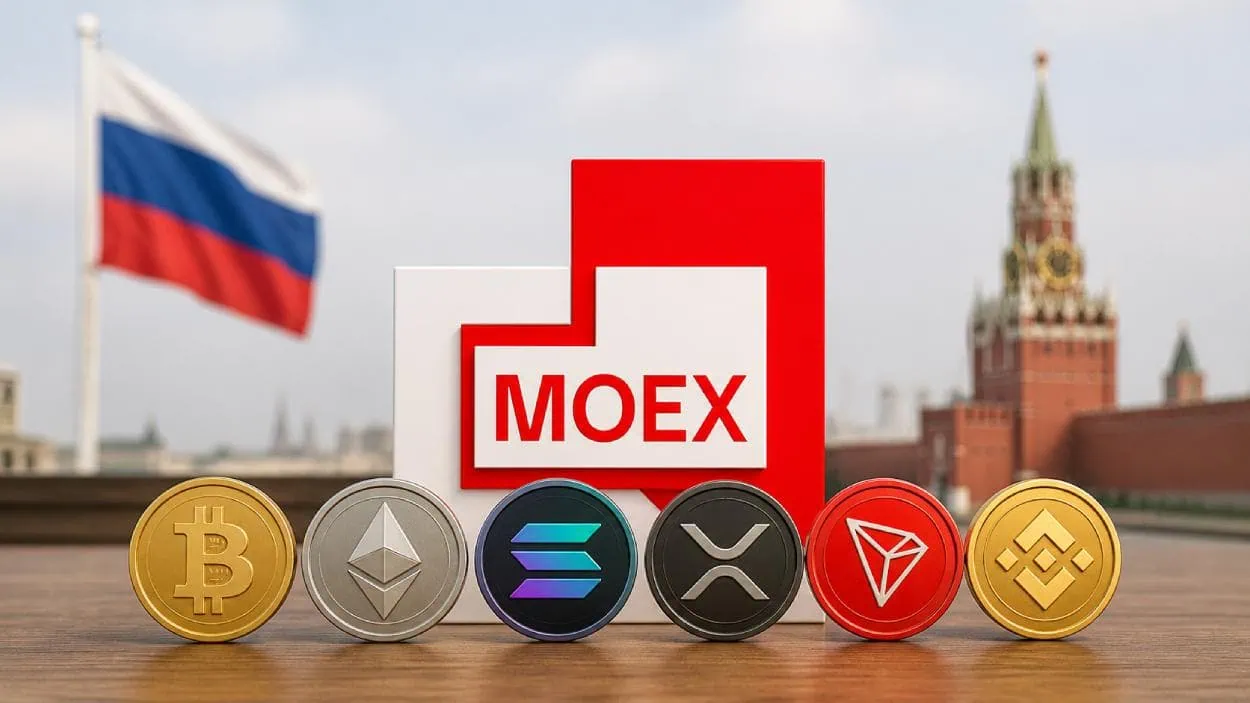
Moscow Exchange is set to launch new indices for Solana, XRP, TRON, and BNB on May 13, adding to its existing Bitcoin and Ethereum benchmarks. The new tickers will be listed as MOEXSOL, MOEXXRP, MOEXTRX, and MOEXBNB, bringing the total number of crypto indices to six, with plans to expand to ten in the future.
The exchange entered the crypto benchmark space in 2025 with its Bitcoin index and later introduced Ethereum. This latest move shows a clear effort to broaden its coverage beyond the two largest digital assets and into high liquidity altcoins that play key roles in global crypto markets.
The selection of assets reflects different use cases across the crypto ecosystem:
- Solana represents high speed smart contract platforms.
- XRP focuses on payments and settlement networks.
- TRON is closely linked to stablecoin transfers.
- BNB connects to one of the largest exchange ecosystems.
Shift to Real Time Market Data
A major part of the update is the transition from daily index calculations to updates every 15 seconds. This applies throughout trading hours and extends into weekend sessions, aligning with the 24 hour nature of crypto markets.
This change is expected to significantly improve how traders track price movements and manage risk. Faster updates make these indices more suitable for:
- Derivatives pricing.
- Structured financial products.
- Active trading strategies.
Previously, once a day updates limited the indices to basic reference use. With near real time data, they become far more practical for professional trading environments.

Data Sources and Global Integration
The indices will rely on aggregated pricing data from major global crypto exchanges:
- 50 percent from Binance.
- 20 percent from Bybit.
- 15 percent from OKX.
- 15 percent from Bitget.
This blended approach ensures that the indices reflect broader market activity rather than relying on a single platform. However, it also highlights the continued dependence on offshore liquidity sources, even as Russia builds its domestic crypto infrastructure.
Focus on Derivatives and Professional Investors
The expansion is closely tied to Moscow Exchange’s derivatives strategy. The exchange is preparing to launch new products such as futures and perpetual contracts linked to Bitcoin and Ethereum, with similar structures expected for the newly added altcoins.
These instruments will be cash settled, meaning investors gain exposure to price movements without owning the underlying assets. This model aligns with the Bank of Russia’s regulatory stance, which allows crypto linked financial products but restricts direct asset delivery.
Initially, access to these products will remain limited to qualified investors, reflecting a cautious approach to market expansion.
Regulatory Developments in Russia
Russia is actively shaping a controlled framework for digital assets. A new law on Digital Currency and Digital Rights is currently under review and is expected to take effect from July 1, 2026.
Key aspects of the proposed framework include:
- Retail investment limits of 300,000 rubles per year for non-qualified investors.
- No limits for qualified investors, with restrictions on certain tokens.
- Continued ban on using cryptocurrencies for domestic payments.
The framework aims to bring clarity to a market that has operated in a regulatory gray zone while also encouraging domestic trading activity.
Roadmap for Crypto Market Growth
Moscow Exchange has indicated that it may begin direct crypto trading by early 2027, depending on regulatory approval. Until then, the focus remains on building a strong foundation through indices and derivatives.
The expansion to include SOL, XRP, TRON, and BNB represents a move toward a multi asset crypto framework, allowing investors to access a wider range of digital assets through regulated financial products.
CoinLaw’s Takeaway
I see this as a smart and calculated move by Moscow Exchange. Instead of rushing into spot crypto trading, they are building the backbone first through indices and derivatives. In my experience, this approach creates a more stable market environment before opening access to a wider audience.
What stands out to me is the focus on real time data and major altcoins. This is not just about adding more assets. It is about making the platform useful for serious trading. If they follow through with futures and eventually spot trading, Russia could develop a strong domestic crypto market that competes with global platforms.