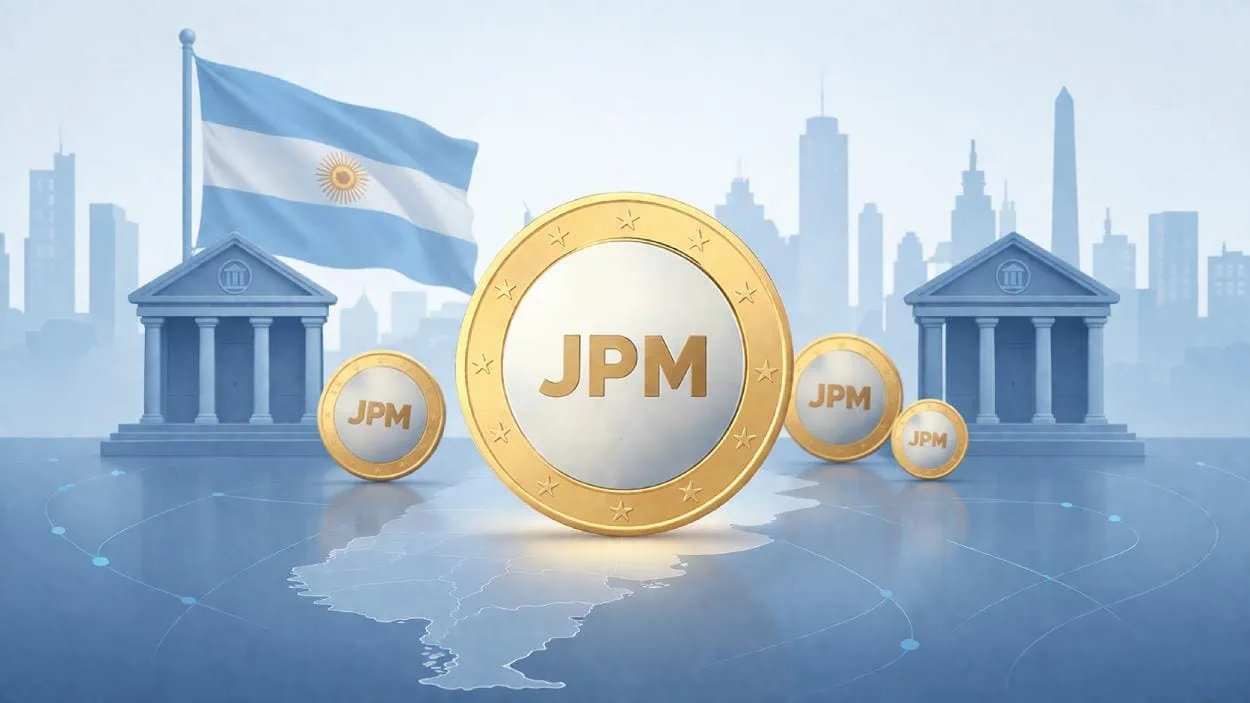






JPMorgan Chase has evaluated launching its own stablecoin, according to a Wall Street Journal report on August 26, 2026. The bank is separately weighing a global stablecoin alliance with Bank of America, Wells Fargo, and Santander.
Key Takeaways
- JPMorgan Chase has evaluated issuing its own stablecoin, according to people familiar with the bank’s plans.
- Four banks are exploring a shared stablecoin alliance: JPMorgan, Bank of America, Wells Fargo, and Santander.
- Kinexys, JPMorgan’s blockchain platform, already runs institutional payments and tokenization work for the bank’s corporate clients.
- The alliance would cover global payments, cross-border settlement, and digital asset trading under the reported proposal.
- No structure or technical approach has been settled, and the proposal sits at an exploratory stage.
What We Know?
JPMorgan’s interest rests on infrastructure the bank already operates. Kinexys Digital Payments moves money for corporate treasuries around the clock, and Mitsubishi Corporation settles transfers between its global subsidiaries on it, using round-the-clock corporate payments that run outside normal banking hours. A stablecoin would push that capability outward, into a token other institutions could hold and settle with.
The four-bank proposal covers bank-issued or bank supported stablecoins for global payments, cross-border settlement, and digital asset trading. That second phrase carries weight, because “bank supported” leaves room for a consortium that backs or distributes a token none of its members issues directly. Four banks each minting their own dollar is a materially different design from one shared instrument with four sponsors. The JPMorgan detail reached the market through the Wall Street Journal.
NEWS: JPMorgan, one of the world’s largest banks, is exploring launching its own stablecoin, according to WSJ. pic.twitter.com/GaK46bc5So
— SolanaFloor (@SolanaFloor) August 26, 2026
What We Don’t Know?
The reporting establishes that the discussions happened. It does not establish that any of the four banks has committed capital, approached a regulator, or fixed a launch date. Four questions stay open:
- Who issues the token, and whether each bank mints its own or the group shares one?
- What backs the reserves, and which entity holds them?
- Which regulator signs off, and under what charter or license?
- Whether membership stops at four banks or opens to others?
Why The Banks Would Move Together?
A single bank stablecoin runs into a reach problem. Its usefulness stops at the edge of that bank’s own counterparty network, and cross-border settlement is exactly the case where a token stalls because the receiving side does not recognize it. Four issuers agreeing on one standard start with a wider net than any of them commands alone.
Deposits explain the urgency better than the technology does, because money that moves into a non-bank stablecoin leaves a deposit base, and US bank trade groups have spent months making that argument in Washington. The Independent Community Bankers of America (ICBA), the trade body for smaller US lenders, projects that yield-bearing stablecoins could pull $1.3 trillion out of community bank deposits and shrink lending capacity by $850 billion, a figure central to the stablecoin yield debate now before Congress. A bank-issued token keeps those balances inside the banking system.

Implications For The Stablecoin Market
Bank-issued dollars would compete on a different axis from existing tokens. Settlement backed by a regulated deposit-taking institution appeals to corporate treasurers who stay off stablecoin rails on counterparty risk grounds, and that is the customer these four banks already serve.
The alliance also reshapes the regulatory ask. Four systemically important institutions presenting one design give supervisors a single object to examine, which is a stronger position than four separate applications filed against four different technical standards.
For treasury and payment operations already routing dollars over stablecoin rails, the details worth checking now are contractual: settlement terms, redemption windows, and which entity holds the reserve. A bank consortium would change all three, and none of them has been published.
Have a tip or story?
Have an exclusive tip or inside information about crypto or finance? Looking for press coverage? Contact our editorial team.
CoinLaw’s Takeaway
Two stories are moving at once here, and only one is about JPMorgan. A single bank evaluating a stablecoin is an infrastructure decision about its own client network. Four of the largest US and European banks evaluating a shared one is a decision about who issues digital dollars at scale, and it arrives while Congress has not settled whether those dollars may pay yield.
Nothing has been filed, and exploratory bank consortia collapse often. The useful signal is whether the four keep talking in public or the story goes quiet, because a design this consequential rarely sits long in the gap between a leak and a filing. Stablecoin adoption data gives the baseline these banks are measuring themselves against.