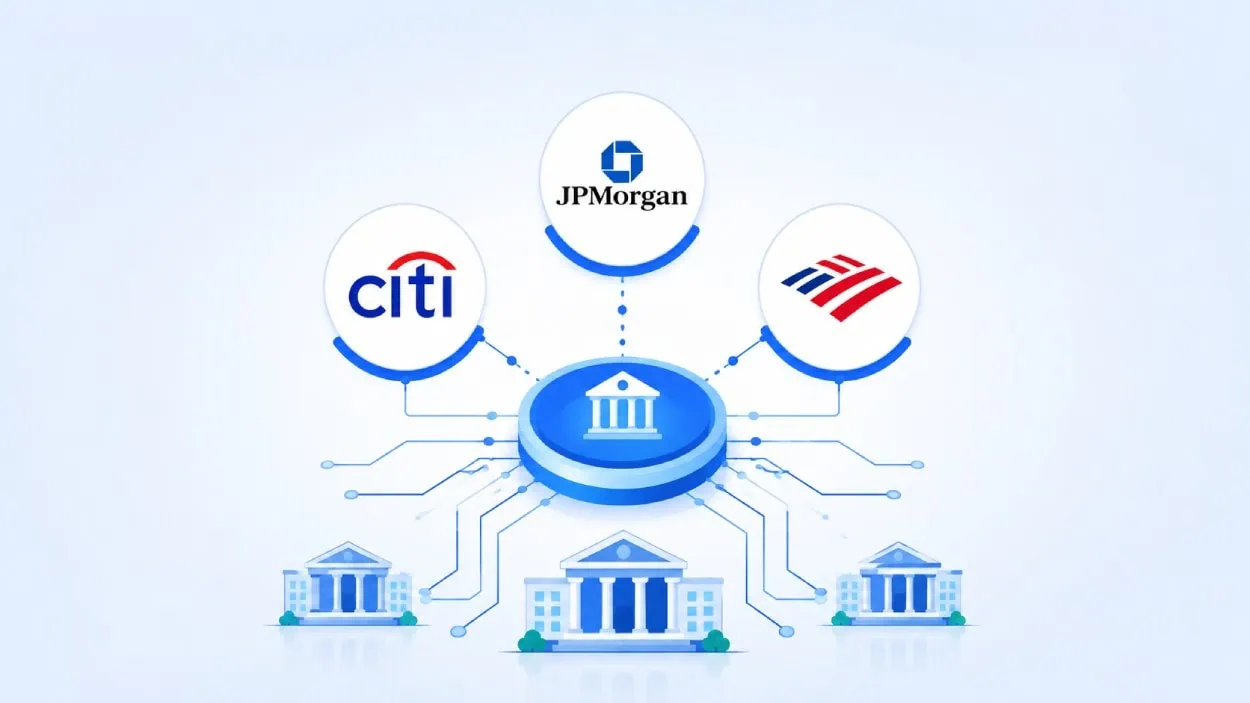






America’s largest banks are preparing a shared blockchain-based deposit network that aims to offer round the clock payments while keeping customer funds inside the traditional banking system.
Key Takeaways
- JPMorgan, Citi, and Bank of America plan to launch a shared tokenized deposit network by the first half of 2027.
- The network will be operated by The Clearing House, a payments company owned by major U.S. banks.
- Banks are responding to the rapid growth of the stablecoin market, which has reached $322 billion.
- The project aims to provide blockchain payment benefits while ensuring deposits remain within the regulated banking system.
What Happened?
America’s biggest banks are working together on a shared blockchain-based deposit network that could go live in the first half of 2027. The initiative, led by JPMorgan, Citi, and Bank of America, will allow traditional bank deposits to be converted into digital tokens that can move across a blockchain network at any time of day.
The project is expected to be managed by The Clearing House and is designed to offer faster payments, settlement, and liquidity management while protecting one of the banking sector’s most important assets, customer deposits.
🚨LATEST: AMERICA’S BANKING GIANTS MOVE TO CHALLENGE STABLECOINS
— Coin Bureau (@coinbureau) June 5, 2026
JPMorgan, Citi, Bank of America, and other major U.S. banks will launch a tokenized deposit network amid rising competition from stablecoins, per WSJ.
The network will link traditional banking infrastructure with… pic.twitter.com/M38W8HAdpo
Banks Turn to Blockchain as Stablecoin Competition Intensifies
The banking industry’s latest blockchain initiative comes as stablecoins continue gaining traction among businesses and institutions. Once viewed as a niche crypto product, stablecoins have evolved into a major force in digital payments, prompting traditional financial institutions to reassess their strategy.
The proposed network will not create a new stablecoin. Instead, it will tokenize existing customer deposits held at participating banks. These tokenized deposits will represent real funds already stored within regulated financial institutions.
By keeping deposits inside the banking system, banks can continue using those funds to support lending and credit creation while still offering customers faster payment capabilities commonly associated with blockchain technology.
How the Tokenized Deposit Network Will Work?
Under the plan, customer deposits will be converted into blockchain-based digital tokens. These tokens can then be transferred quickly across a shared network, enabling near instant settlement and around the clock transactions.
The system is expected to be operated by The Clearing House, the payments company collectively owned by major U.S. banks. According to reports, some participating banks have internally referred to the project as “the bridge”, while others call it “the chain.”
The initiative is being positioned as a modern upgrade to existing banking infrastructure, allowing institutions to benefit from blockchain efficiency without moving customer funds outside regulated channels.

Why Stablecoins Are Pushing Banks to Adapt?
The rise of stablecoins has become a growing concern for traditional lenders. Dollar backed digital assets offer users fast and relatively inexpensive blockchain based transfers, often outside the conventional banking system.
The concern among banks is that widespread stablecoin adoption could encourage customers and businesses to move funds from bank accounts into crypto wallets. Such a shift could weaken deposit bases that banks depend on to fund loans and other financial activities.
Additional pressure could come from proposed legislation in the United States. The advancing Clarity Act could potentially allow stablecoins to offer returns to holders, creating stronger competition for traditional deposit products.
Rather than allowing crypto firms to dominate blockchain payments, major banks are now building their own infrastructure that combines blockchain functionality with regulatory safeguards and banking protections.
Corporate Demand Could Drive Adoption
The Clearing House expects the network to attract large multinational companies looking for more advanced treasury and payment solutions.
Potential benefits include:
- Programmable treasury management
- Real time liquidity management
- Faster cross-border payments
- Twenty four hour fund transfers and settlement
These features could make tokenized deposits particularly attractive to corporations managing global operations and complex payment flows.
David Watson, CEO of The Clearing House, said, “This is a big move for the banks.”
Watson also described the future of onchain payments as “radically different.”
Meanwhile, Shahmir Khaliq, Citi’s head of services, said the initiative represents “another step that effectively cements” the role banks play across payments, financing, and capital markets.
CoinLaw’s Takeaway
In my experience, this development shows that traditional banks are no longer treating blockchain as an experiment. I found it notable that the industry’s biggest institutions are choosing to build tokenized deposit infrastructure rather than launch their own stablecoins.
That decision highlights how important deposits remain to the banking business model. If successful, this network could give customers many of the benefits of blockchain payments while allowing banks to retain control of the funds that power lending and financial markets. It also signals that competition between banks and stablecoin issuers is entering a new phase.