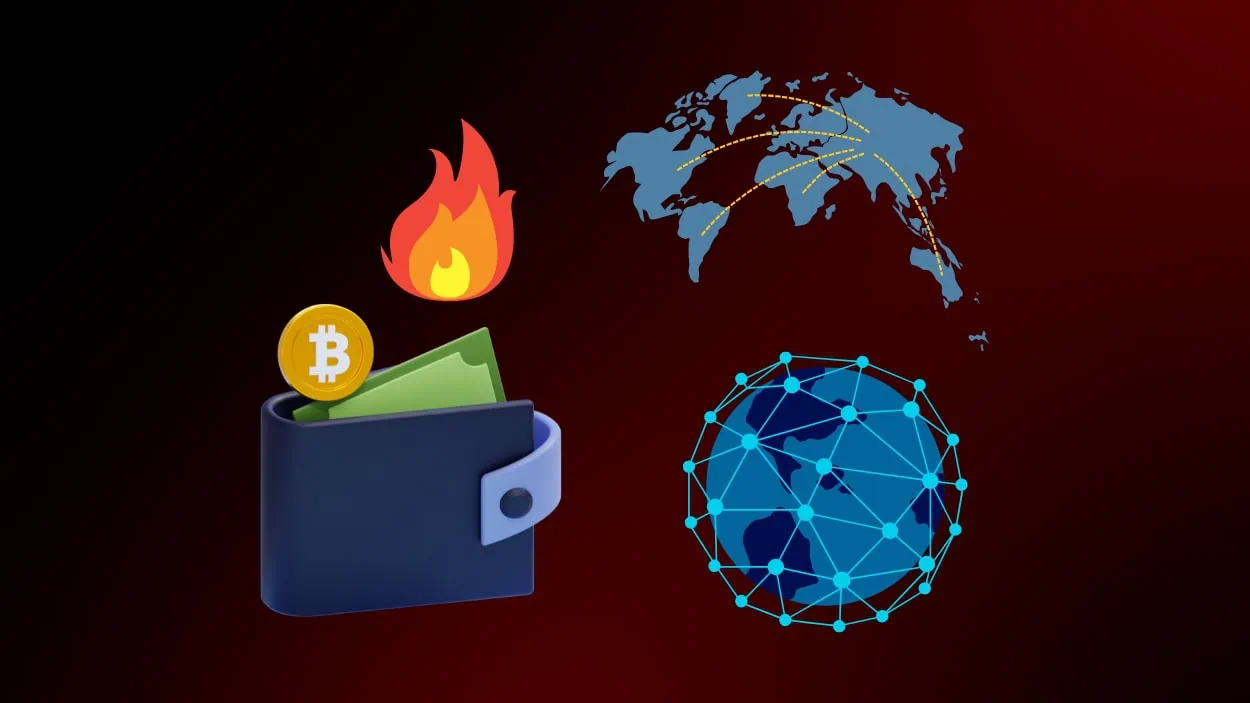
A hot wallet is an internet-connected cryptocurrency wallet that stores private keys on a device with network access, enabling quick transactions and easy interaction with blockchain applications at the cost of higher exposure to online threats.
Key Takeaways
- Hot wallets stay connected to the internet, allowing instant cryptocurrency transactions, DeFi interactions, and token swaps.
- Popular hot wallets include MetaMask (over 30 million monthly active users), Trust Wallet, and Coinbase Wallet.
- Exchange-hosted wallets (Coinbase, Binance accounts) are a type of hot wallet where the exchange controls the private keys on your behalf.
- Hot wallets are vulnerable to phishing attacks, malware, and exchange hacks because keys are stored on internet-connected devices.
- Most experienced users treat hot wallets like a spending account, keeping only the funds they need for active trading or DeFi use.
How Does a Hot Wallet Work?
1. Private Keys Stored on Connected Devices
A hot wallet stores your private keys on a device that maintains an internet connection: your phone, your browser, or an exchange’s servers. Think of it as carrying cash in your pocket versus locking it in a safe. The cash in your pocket is immediately accessible for any purchase, but it is also exposed to pickpockets. A cold wallet is the safe at home: more secure, but you cannot buy coffee with it.
Software wallets like MetaMask encrypt your private keys and store them locally in your browser or mobile app. When you initiate a transaction, the wallet decrypts the key, signs the transaction, and broadcasts it to the blockchain. This entire process happens in seconds, which is why hot wallets are preferred for active trading and DeFi interactions.
2. Two Categories: Custodial and Non-Custodial
Hot wallets are split into two fundamentally different models. Custodial wallets (exchange accounts at Coinbase, Binance, Kraken) mean the exchange holds your private keys. You log in with a username and password, but the exchange controls the actual keys. Non-custodial wallets (MetaMask, Trust Wallet, Phantom) give you direct control of your private keys, meaning only you can authorize transactions.
The distinction matters. When FTX collapsed in November 2022, users with custodial accounts on the exchange lost access to their funds. Users who had already transferred assets to non-custodial hot wallets or cold storage retained full control.

3. Browser Extensions Enable DeFi Access
Browser-based hot wallets like MetaMask serve as the gateway to decentralized applications (dApps). When you visit a DeFi protocol like Uniswap or Aave, the website detects your MetaMask extension and requests permission to connect. Once connected, you can swap tokens, provide liquidity, or lend assets, all authorized through your hot wallet with a few clicks.

| Hot Wallet Type | Examples | Key Control | Best For |
| Browser extension | MetaMask, Rabby, Phantom | Non-custodial (you hold keys) | DeFi, dApp interaction, Web3 |
| Mobile app | Trust Wallet, Coinbase Wallet | Non-custodial (you hold keys) | On-the-go transactions, NFT viewing |
| Desktop application | Exodus, Electrum | Non-custodial (you hold keys) | Multi-chain portfolio management |
| Exchange account | Coinbase, Binance, Kraken | Custodial (exchange holds keys) | Beginners, frequent fiat on/off ramp |
| Web wallet | MyEtherWallet, Blockchain.com | Non-custodial (browser-based) | Beginners, frequent on/off ramp |
Source: MetaMask, Trust Wallet, Coinbase documentation
Why Do Hot Wallets Matter?
Hot wallets are the interface between users and the blockchain ecosystem. Without them, interacting with DeFi protocols, minting NFTs, participating in governance votes, or making quick peer-to-peer transfers would require cumbersome manual processes. They are the everyday tool that makes cryptocurrency usable for routine transactions.
Our MetaMask wallet statistics show that browser-based hot wallet usage tracks closely with DeFi activity. When DeFi TVL rises, MetaMask active users rise with it. This correlation confirms that hot wallets serve primarily as access points to the broader decentralized ecosystem rather than as long-term storage solutions.
Pros, Cons, and Risks
Advantages
- Instant access: Transactions execute in seconds with no need to connect external hardware.
- DeFi compatibility: Non-custodial hot wallets connect directly to dApps, DEXs, and lending protocols.
- Free to use: Software wallets cost nothing to download and set up.
- Multi-chain support: Modern hot wallets support Ethereum, Solana, Polygon, Arbitrum, and dozens of other networks.
- Beginner-friendly: Exchange-based custodial wallets offer a familiar username/password experience for newcomers.
Trade-offs and Risks
- Phishing attacks: Fake websites and malicious links can trick users into approving transactions that drain their wallets.
- Malware exposure: Keyloggers and clipboard hijackers on compromised devices can intercept private keys or replace wallet addresses.
- Exchange risk (custodial): If the exchange is hacked or becomes insolvent, users may lose all deposited funds.
- Unlimited token approvals: Connecting to dApps often grants smart contract access to your tokens; malicious or compromised contracts can drain approved tokens.
- No deposit insurance: Unlike bank accounts, cryptocurrency held in hot wallets has no FDIC or government-backed protection.
Hot Wallet vs Cold Wallet
The hot vs cold wallet decision is not about choosing one over the other. It is about matching the right tool to the right purpose, similar to keeping some cash in your wallet for daily expenses while storing savings in a bank vault.
| Feature | Hot Wallet | Cold Wallet |
| Connection | Always online | Always offline |
| Speed | Instant transactions | Requires device access and physical steps |
| Security | Vulnerable to online attacks | Immune to remote hacking |
| DeFi Access | Direct connection to dApps | Possible via bridge apps (less convenient) |
| Cost | Free (software wallets) | $60-$250 (hardware wallets) |
| Ideal Amount | Only what you need for active use | Long-term holdings and savings |
| Analogy | Cash in your pocket | Gold in a safety deposit box |
Real-World Applications
Daily DeFi Trading
Active DeFi users keep a working balance in MetaMask to swap tokens on Uniswap, provide liquidity on Curve, or lend assets on Aave. The browser extension connects seamlessly to each protocol, and transactions complete in seconds. Traders often move profits to cold storage at the end of each session, using the hot wallet purely as a transactional interface.
Exchange-Based Onboarding
Most newcomers begin their crypto journey with an exchange account on Coinbase or Binance. These custodial hot wallets handle the complexity of key management behind a familiar interface. Users buy crypto with a credit card, store it on the exchange, and can withdraw to a non-custodial wallet or cold storage when they are ready to take custody of their own keys.
Scenario: Protecting a Hot Wallet from Common Attacks
Sarah uses MetaMask for weekly DeFi interactions. She follows a security protocol: she keeps only $500 worth of crypto in MetaMask at any time, transferring larger amounts from her Ledger cold wallet only when needed. She uses a dedicated browser profile exclusively for crypto, with no other extensions installed. Before connecting to any dApp, she verifies the URL against the protocol’s official documentation. She regularly reviews and revokes token approvals using a tool like Revoke.cash, removing old permissions from smart contracts she no longer uses. This layered approach limits her maximum loss to the hot wallet balance if anything goes wrong.

Frequently Asked Questions (FAQs)
Hot wallets are reasonably safe for small, actively used amounts when proper security practices are followed: strong passwords, two-factor authentication, verified URLs, and regular token approval reviews. They are not recommended for storing large holdings or long-term savings. The general guideline is to keep only what you can afford to lose in a hot wallet.
MetaMask is the most widely used non-custodial hot wallet, with over 30 million monthly active users. For custodial wallets, Coinbase and Binance serve the largest user bases. Trust Wallet and Phantom are popular mobile and Solana-focused alternatives, respectively.
Yes. Non-custodial hot wallets like MetaMask, Rabby, and Trust Wallet are specifically designed for DeFi interaction. They connect to decentralized exchanges, lending protocols, and NFT marketplaces through a browser interface. Custodial exchange wallets (Coinbase, Binance accounts) cannot connect to most DeFi protocols directly.
For non-custodial wallets, your recovery seed phrase (12 or 24 words generated during setup) restores full access on any compatible wallet app. Without the seed phrase, access is permanently lost. For custodial exchange wallets, standard account recovery (email, ID verification) applies since the exchange holds the underlying private keys.
The Bottom Line
Hot wallets are the everyday interface of cryptocurrency. They trade maximum security for the speed and convenience that active use demands. The smart approach is to treat a hot wallet like a checking account: keep enough for your current needs, move the rest to cold storage.
As the crypto ecosystem matures, hot wallet security is improving. Hardware wallet integration (connecting a Ledger to MetaMask for signing), passkey authentication, and advanced phishing detection are narrowing the security gap. The future likely involves hybrid solutions where hot wallet convenience and cold wallet security converge into a single, seamless experience.