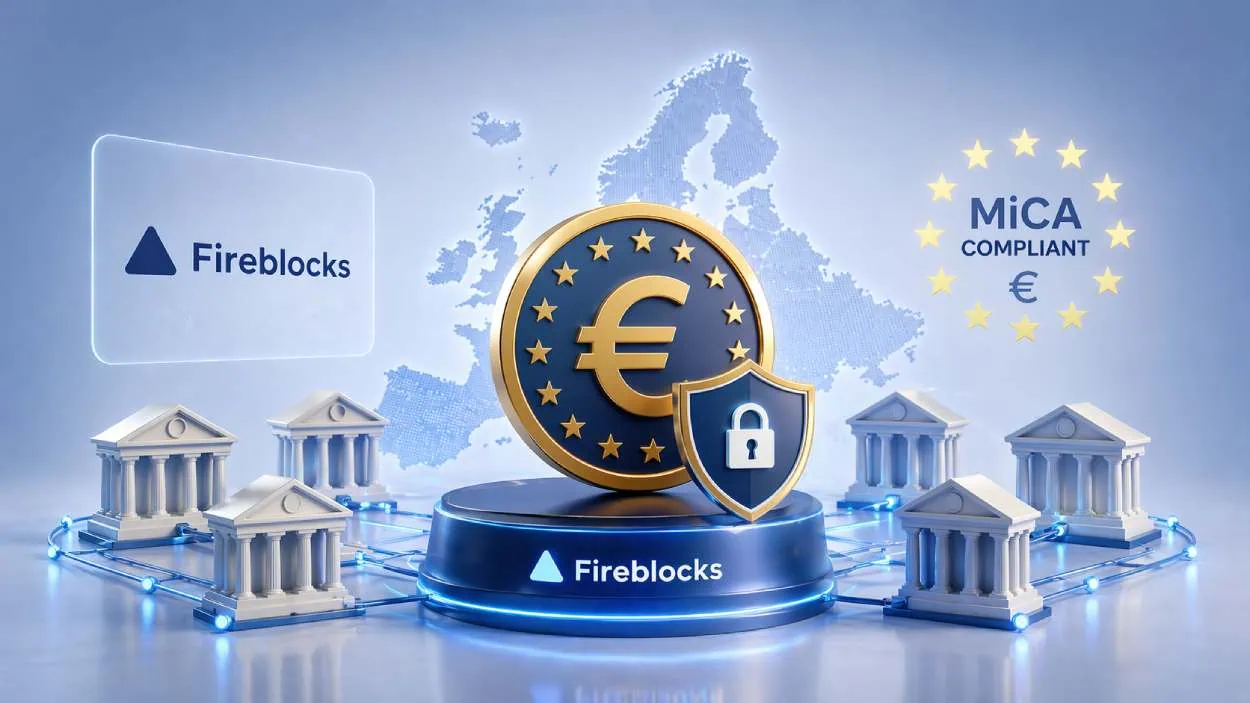






A group of twelve major European banks has partnered with Fireblocks to build a fully regulated euro-backed stablecoin under the EU’s MiCA framework, with a planned launch in 2026.
Key Takeaways
- Twelve European banks under the Qivalis consortium are developing a euro-backed stablecoin.
- Fireblocks will provide infrastructure including tokenization, custody, and compliance tools.
- The stablecoin will be fully MiCA compliant and regulated by the Dutch Central Bank.
- The project aims to challenge dollar dominance, which currently holds 99% of the stablecoin .market
What Happened?
A consortium of leading European banks has selected Fireblocks as the core infrastructure provider for a euro-denominated stablecoin. The project, led by Amsterdam-based Qivalis, is expected to launch in the second half of 2026, pending regulatory approval.
The initiative is designed to introduce a trusted, regulated euro alternative in a market currently dominated by dollar-backed stablecoins.
Euro stablecoins: $650M. Dollar stablecoins: $304B.
— Fireblocks (@FireblocksHQ) April 21, 2026
12 of Europe’s largest banks just picked @Fireblocks to close that gap.
Qivalis. MiCAR-compliant. H2 2026. https://t.co/ASO7FQXNiN pic.twitter.com/NEpIJO4Xws
European Banks Unite for a Euro Stablecoin
The Qivalis consortium brings together twelve major banks, including BBVA, BNP Paribas, ING, UniCredit, and others, to jointly develop a euro-backed digital currency. The goal is to create a 1:1 backed stablecoin structured as an electronic money institution under Dutch supervision.
Approval for the project will come from the Dutch Central Bank, ensuring compliance with the Markets in Crypto Assets Regulation framework introduced by the European Union.
This move reflects a broader push by European institutions to strengthen the euro’s position in digital payments and cross-border finance, especially as blockchain based settlement gains traction.
Fireblocks to Deliver Core Infrastructure
Fireblocks will play a central role by providing end-to-end infrastructure for the stablecoin. This includes:
- Tokenization technology for issuing the digital asset.
- Secure wallet and custody services.
- Treasury management and payment orchestration tools.
- Built in AML, KYC, and sanctions screening systems.
The platform will use an institutional grade token standard designed for permissioned access, governance controls, and audit readiness, ensuring full regulatory compliance.
Michael Shaulov, Co Founder and CEO – Fireblocks, said:

A Bid to Challenge Dollar Dominance
The global stablecoin market has grown rapidly, reaching over $300 billion, with transaction volumes hitting $33 trillion in 2025 alone. However, nearly 99% of this market is dominated by dollar-backed stablecoins, leaving euro-based alternatives with only a small share.
By introducing a regulated euro stablecoin, the Qivalis consortium aims to:
- Capture growing demand for institutional settlement solutions.
- Enable 24/7 cross-border payments.
- Support tokenized assets and programmable finance.
- Reduce reliance on dollar based digital currencies.
The euro remains the second most traded currency globally, making this initiative a strategic step toward balancing global digital finance.
Regulatory Push and Market Context
European regulators have increasingly emphasized the need for strong oversight in the stablecoin sector. The Bank for International Settlements has warned that some dollar stablecoins behave more like investment products due to their reliance on short term securities.
At the same time, policymakers in Europe have called for limits on non euro stablecoins in everyday payments to reduce risks during financial stress and avoid regulatory gaps.
The Qivalis project aligns with these concerns by offering a fully regulated, transparent alternative backed by established financial institutions.
Institutional Use Cases and Future Impact
Unlike retail focused crypto assets, this euro stablecoin is designed primarily for institutional use cases, including:
- Treasury operations and liquidity management.
- Settlement of financial instruments.
- Trade finance and securities processing.
- Tokenized asset transactions.
Each participating bank will also have the ability to offer custody and wallet services directly to clients, opening new revenue streams and strengthening their role in digital finance.
CoinLaw’s Takeaway
I see this as a major turning point for Europe’s role in digital finance. In my experience, the biggest gap in the stablecoin market has always been the lack of a credible, regulated euro alternative, and this project directly addresses that.
What stands out to me is the level of coordination between banks. I found that when traditional institutions move together like this, it usually signals long term commitment rather than experimentation. If executed well, this could genuinely reduce dependence on dollar stablecoins and reshape how cross-border payments work in Europe.