





Ethereum core developers scheduled Frame Transactions for inclusion in the Hegotá upgrade at their Aug. 27 call, committing the network to a change that lets people transact without holding any ether.
The Big Picture
- Frame Transactions would let an app or another account pay a user’s gas bill in ether directly on Ethereum.
- Ethereum still collects its fee in ether, so the user never has to buy or hold the coin.
- Vitalik Buterin is one of 10 authors on the proposal, which developers scheduled for the Hegotá upgrade in 2027.
- Wallets already offer sponsored fees through outside bundling services, and Frames moves that job into the ordinary transaction flow.
- The specification is still a draft, its details can change, and nobody can use Frames today.
Ethereum schedules Frame Transactions for Hegotá
A wallet can hold hundreds of dollars in stablecoins and still be unable to move them, because Ethereum charges its fee for every transaction in ether and a wallet without ether cannot pay it. That gap has sat under years of work on Ethereum gas fee costs, and the proposal that closes it is now a committed part of the blockchain’s next major upgrade.
Core developers moved EIP-8141 to Scheduled for Inclusion, which marks the feature as part of a scheduled network update. Changes to Ethereum arrive in bundles every year or so, each with a codename: Glamsterdam is due later this year, and Hegotá follows it in 2027.
“A lot of important progress on Frames (EIP-8141) has been quietly happening over the last few months,” wrote Buterin, the Ethereum co-founder listed first among the proposal’s authors.
A lot of important progress on Frames (EIP-8141) has been quietly happening over the last few months. Highly recommend reading this, also the updated EIP https://t.co/jYqeS55j6P
— vitalik.eth (@VitalikButerin) September 5, 2026
https://t.co/CPYONKnWZc
How Frames splits a transaction?
Frames breaks a transaction into separate steps. One checks that the user authorized it, one establishes who is paying the fee, and the rest carry out the instructions. The account sending the money and the account paying to move it no longer have to be the same.
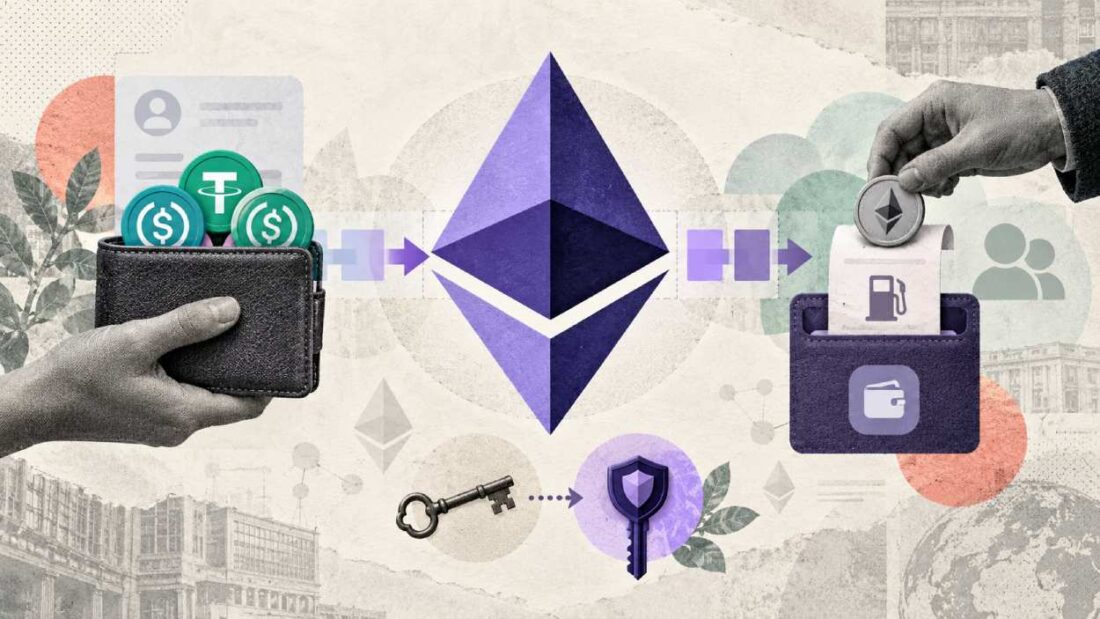
A payments app could cover the fee itself under the proposal, or take stablecoins from the user and settle the ether bill on their behalf. Ethereum gets paid in ether either way, and the user never has to buy any.
Some wallets already do this through separate services that bundle transactions and submit them. Frames would let the same thing happen inside Ethereum’s ordinary transaction flow, with no third party in the middle.
The proposal also groups steps that only make sense together. Trading a token today usually means approving an app to spend it and then submitting the trade; Frames bundles the two, so a failed trade withdraws the permission granted alongside it instead of leaving it in place.
Account keys stop being permanent
Every Ethereum account today is controlled by one private key, a long secret string that proves ownership and cannot be changed. Lose it and the funds are gone. The math behind the key is complex enough that a powerful quantum computer might in theory crack it eventually, though current technology cannot.
Frames would let an account define its own rules for approving transactions. The key controlling it could then be swapped for a new one, or for a type of key that quantum computers could not break, without moving anything to a new address. That removes the one setting a self-custodied account has never been able to change.
Nothing about this is live. Anyone using sponsored fees today is still going through a bundling service, and the practical step available now is knowing which service a wallet routes through and what it charges.

CoinLaw’s Takeaway
The change targets an onboarding problem rather than a technical one. Someone paid in stablecoins has had to acquire a second asset before touching the first, and Frames pushes that requirement onto the app instead of the person. Payment apps and wallets absorb the cost and the complexity, which is where both already sit for every other kind of digital payment.
The account key piece may matter more over a longer horizon. An address whose authorization rules can be rewritten in place fits the direction Buterin has laid out in his Ethereum roadmap revisions, where quantum safety sits near the top. Under today’s design, a user facing a compromised or obsolete key has one option, which is to move the funds. Frames offers a second.