





Almost 1,700 British investors filed a group claim at the London High Court on June 30, 2026, seeking at least £150 million from Binance and founder Changpeng Zhao (CZ). The claimants allege unauthorized sale of high-risk crypto derivatives to UK retail customers.
Key Takeaways
- Almost 1,700 UK claimants seek at least £150 million ($200 million) from Binance and CZ at the London High Court.
- It is the first UK case of its kind, according to KP Law, over unauthorized crypto derivatives sales to retail investors.
- The claim covers leveraged products, futures, options, and leveraged tokens sold from late 2019 onward.
- Defendants include Binance Holdings Ltd, UAE-based Nest Exchange Limited, and CZ personally and other entities.
- If successful, the claim would be the largest consumer-protection recovery ever brought against a crypto exchange in Britain.
What Happened?
KP Law filed the claim on behalf of the investor group, arguing Binance carried on regulated financial activity in the UK without Financial Conduct Authority (FCA) authorization. The case centers on the sale of leveraged products, futures contracts, options, leveraged tokens, and other complex derivatives to UK retail customers from late 2019 onwards.
KP Law describes it as the first case of its kind in the UK targeting unauthorized crypto derivatives sales to retail users.
The named defendants are Binance Holdings Ltd, registered in the Cayman Islands, and Nest Exchange Limited, a UAE-registered entity said to have operated the platform serving UK users. CZ is named personally, alongside unnamed individuals alleged to be platform operators.
KP Law said some claimants suffered losses it described as “life-changing,” ranging from tens of thousands to millions of pounds.
Nearly 1,700 UK investors filed a group lawsuit at the UK High Court against Binance, its founder CZ personally, and a UAE arm, seeking up to £150M ($200M) for losses from leveraged crypto derivatives sold in 2019-2020.
— BLOCKCAST.CC NEWS (@Blockcastcc) July 1, 2026
The core claim is that Binance promoted and sold these… pic.twitter.com/pKqNTZQL8H
The Legal Theory and Regulatory Backdrop
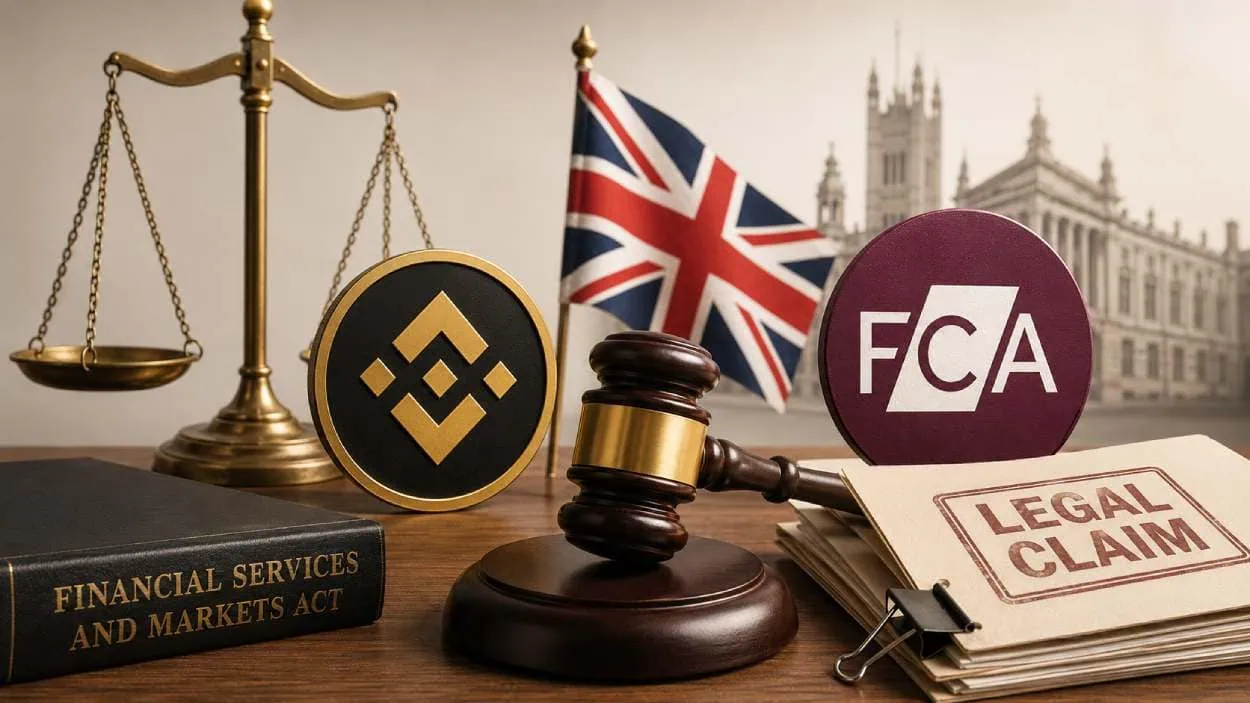
The claim rests on alleged breaches of the Financial Services and Markets Act (FSMA), the UK statute making it a criminal offense to carry on regulated financial activities without FCA authorization. The FCA’s public register states Binance is “not currently permitted to undertake any regulated activities without the prior written consent of the FCA,” and warns consumers they may not have access to UK compensation schemes if something goes wrong.
The FCA banned the sale, marketing, and distribution of derivatives and exchange-traded notes referencing unregulated cryptoassets to retail consumers, effective 6 January 2021.
After the ban, Binance introduced additional information requirements for UK users. Claimants argue those steps left retail access to high-risk leveraged products materially intact. That is the crux of the case: an authorization requirement doesn’t work if the product it is meant to gate stays reachable in practice.
The suit lands as Binance’s UK footprint has already been narrowing on the regulatory front. The exchange recently shut down service to its EU customers after its Markets in Crypto-Assets (MiCA) license was pulled. That leaves Binance facing authorization gaps in two of its largest European markets within the same year, not an isolated UK dispute.
Binance’s native token, BNB, was trading at $544, down about 1% over the past 24 hours, with daily trading volume above $680 million.
CoinLaw’s Takeaway
The size of the claimant pool and the FSMA framing turn this from a customer dispute into a test of liability exposure. The question is whether unauthorized crypto derivatives sales carry the same legal consequences as unauthorized sales of any other regulated financial product in the UK.
The FCA’s warning that consumers may lack compensation-scheme access was already public before this claim. The lawsuit asks a court to convert that warning into a monetary regulation.
The timing compounds the exposure. Binance’s EU service shutdown after its MiCA license was pulled shows a regulator willing to remove market access outright rather than negotiate remediation. The London claim now tests whether a UK court treats post-ban disclosure add-ons as sufficient compliance, or as evidence the underlying unauthorized activity continued.