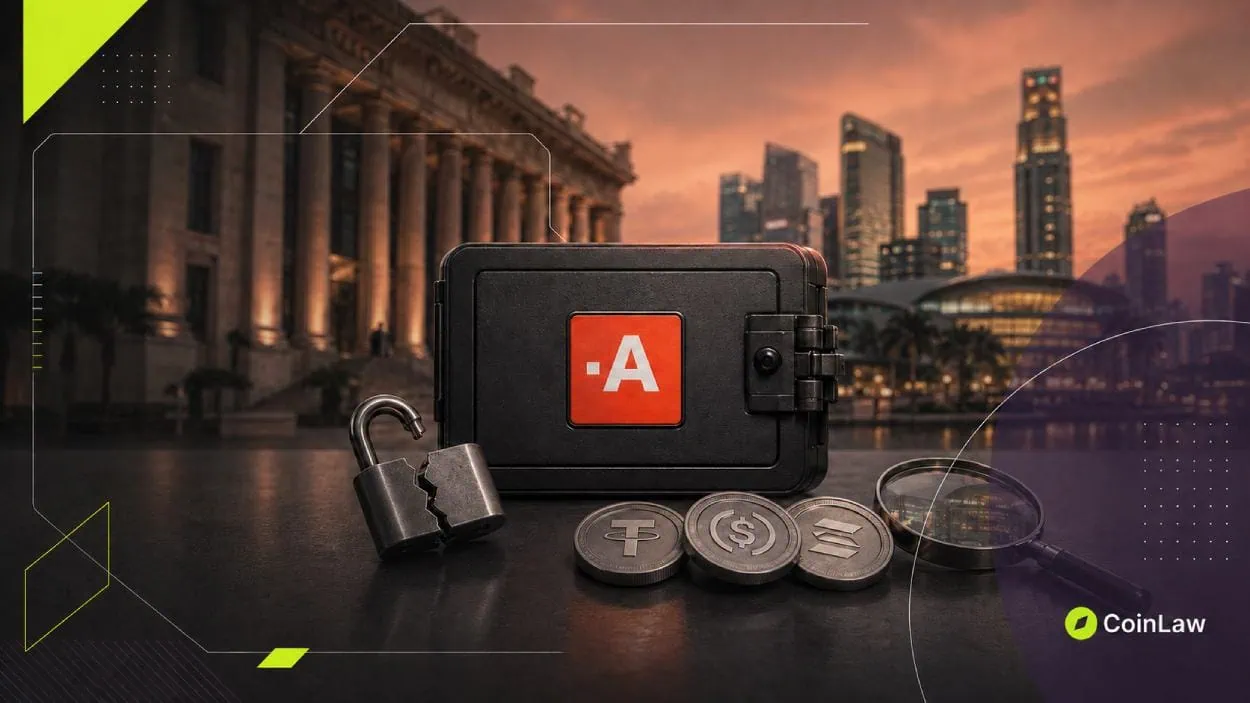






Triple-A identified unauthorized access to wallets holding its own digital assets on July 25, 2026, according to Triple-A’s own newsroom statement. Triple-A said client funds were not affected.
Key Takeaways
- Triple-A identified unauthorized access to wallets containing its own digital assets on July 25, 2026 and says the incident is now contained.
- The company states client funds were not affected because Triple-A does not hold client digital assets in custody. Those funds sit in separate trust accounts.
- Certain services went into maintenance mode for approximately three hours while engineers secured the affected infrastructure, then resumed normal processing.
- Triple-A says the loss is being fully absorbed from its own treasury reserves, with no dollar figure disclosed in the statement.
- The company is working with cybersecurity experts, blockchain forensics specialists, and the Singapore Police Force, per Triple-A, to investigate and trace the funds.
What Happened?
Triple-A, a payment institution licensed in the United States, Europe, and Singapore that runs stablecoin-based B2B payment rails, published a newsroom statement confirming unauthorized access to wallets holding company owned digital assets. The breach sits squarely in the territory CoinLaw tracks in Cryptocurrency Security And Fraud Statistics.
The financial impact is limited to specific operational accounts and is being fully absorbed from Triple-A’s treasury reserves.
The company says the incident was limited to wallets operated by Triple A Technologies Pte. Ltd., its Singapore entity, and no other Triple-A entities or operations were affected. Triple-A adds that all services have since been restored, and transactions and settlements are processing normally across all markets.
On 25 July 2026, Triple-A identified unauthorized access to certain wallets containing the company’s own digital assets.
— Triple-A (@TripleAHQ) July 27, 2026
Client funds were not affected. Triple-A does not provide digital assets custody on behalf of its clients, and client funds are held separately in trust… pic.twitter.com/CPQmMXAaOP
The Client-Funds Firewall
Triple-A’s core defense rests on a structural separation: the company does not provide digital asset custody on behalf of clients, and client funds are held separately in trust accounts maintained with safeguarding institutions that were not exposed. That structure is why a breach of Triple-A’s own wallets did not automatically become a client-loss event.
The firewall held here, but it only holds because Triple-A’s business model keeps client money outside its own hot wallet perimeter by design, not because the treasury side proved any more secure than the client side would have been. The company adds it remains well capitalised and able to meet all its liabilities, a claim that rests on Triple-A’s own assertion rather than independent verification.
What We Don’t Know?
The statement is notable for what it omits. Triple-A gives no dollar figure, token amount, or wallet count for the breach, and the release does not describe how the unauthorized access occurred. The only operational metric disclosed is the roughly three-hour maintenance window used to secure infrastructure and run security checks.
That silence is itself informative. A company that can state precisely how long its maintenance window ran, but not what the incident actually cost, is choosing containment language over disclosure completeness. Triple-A says recovery efforts are ongoing with internal and external cybersecurity experts, blockchain forensics specialists, and the Singapore Police Force, but it does not say whether any funds have been recovered or are expected to be.

Implications for Licensed Stablecoin Payment Rails
A payment institution licensed in the United States, Europe, and Singapore, specializing in stablecoin-based payment solutions for businesses worldwide, getting hit on its own treasury wallets raises a narrower question than a typical exchange hack: does licensing built around segregating client money do anything to protect a firm’s own operational balance sheet? Triple-A’s statement answers the client-fund question in detail and says nothing at all about wallet security standards for its own treasury, and that silence is the gap this incident exposes.
For the 1,000+ enterprise customers that send, receive, and convert money through Triple-A’s platform, the practical read is that the client protection structure functioned as designed this time. Whether that structure holds under a larger or more sophisticated intrusion is a separate question the company’s statement does not address.
CoinLaw’s Takeaway
The incident Triple-A identified on July 25, 2026 reads as a stress test of the segregated custody model that stablecoin payment institutions rely on to keep client losses out of their own security failures. The mechanism worked as described. Because Triple-A never held client assets in the wallets that were hit, the breach stayed contained to the company’s own balance sheet.
That structural separation, not any claim about wallet security itself, is the specific reason this disclosure did not turn into a run on client trust accounts.
What the statement leaves open matters more than what it confirms. No figure, no attack vector, and no independent verification of “well capitalised” claims means outside observers are taking Triple-A’s word for the scope of a breach on its own systems.
The involvement of the Singapore Police Force and outside forensics specialists suggests a formal investigation is underway, which is the right move. It also means the fuller picture, including any eventual dollar figure, will likely surface later through regulatory filings or law enforcement disclosures rather than the company’s own newsroom.