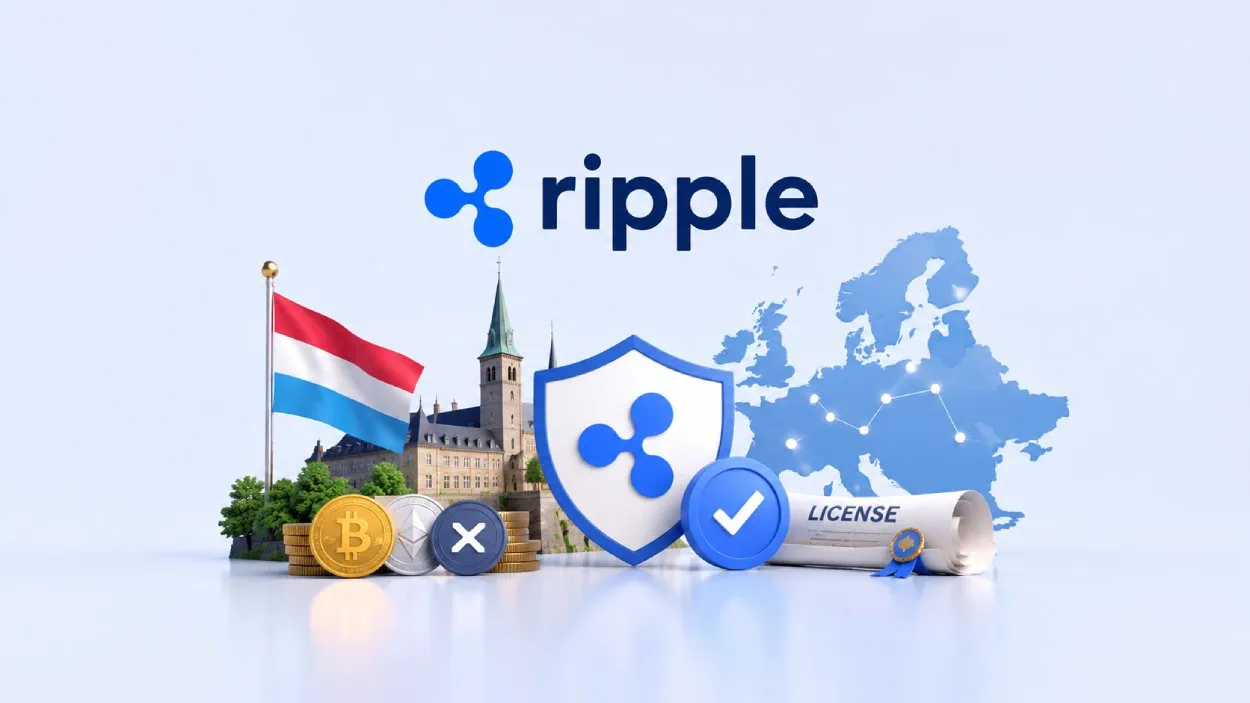






Ripple has secured preliminary approval for a key European crypto license in Luxembourg, bringing the company closer to offering regulated digital asset services across the European Economic Area.
Key Takeaways
- Ripple received preliminary approval for a Crypto Asset Service Provider license from Luxembourg’s financial regulator.
- The approval moves Ripple closer to offering regulated crypto and stablecoin services across 30 EEA countries under the EU’s MiCA framework.
- The license will complement Ripple’s existing Electronic Money Institution license in Luxembourg.
- Ripple says growing institutional demand for blockchain based payments and digital asset infrastructure is driving its European expansion.
What Happened?
Ripple announced that it has received preliminary approval for a Crypto Asset Service Provider license from Luxembourg’s Commission de Surveillance du Secteur Financier under the European Union’s Markets in Crypto Assets framework.
While the authorization is not yet final, it marks a significant regulatory milestone for the company and positions Ripple to expand its cryptoasset and stablecoin payment services throughout the European Economic Area once all conditions are met.
More licensing momentum!
— Ripple (@Ripple) June 23, 2026
Ripple has secured its preliminary Crypto Asset Service Provider (CASP) license in Luxembourg, paving the way for the full rollout of Ripple Payments across the EEA and full MiCA compliance: https://t.co/APQcYnCy9c
The next wave of regulated digital…
Ripple Moves Closer to Full MiCA Compliance
The preliminary approval, described by Ripple as a green light letter, signals that Luxembourg’s financial regulator intends to authorize the company as a Crypto Asset Service Provider. However, Ripple must still satisfy final regulatory conditions before receiving the full license.
Once granted, the authorization would allow Ripple to provide regulated cryptoasset services to financial institutions, fintech companies, and corporate clients across all 30 countries of the European Economic Area through MiCA’s passporting framework.
MiCA allows companies approved in one member state to offer services across the wider bloc without seeking separate licenses in each jurisdiction. This framework has become one of the most important regulatory developments for the digital asset industry in recent years.
Combined Licensing Strategy Expands Ripple’s Reach
The upcoming CASP license will work alongside Ripple’s existing Electronic Money Institution license in Luxembourg.
According to the company, the combined regulatory permissions would allow European clients to access Ripple’s cryptoasset and stablecoin payments infrastructure through a single integration. The system is designed to support the full payment cycle, including:
- Collection
- Exchange
- Settlement
- Payout
Ripple said this setup would simplify access to digital asset powered payment services for banks, fintech firms, and businesses operating across Europe.

Europe Remains a Key Market for Ripple
Ripple identified Europe as one of its most important markets, with customers that include several major financial institutions across the region.
Cassie Craddock, Managing Director for the UK and Europe at Ripple, highlighted growing institutional interest in blockchain based financial infrastructure.
Craddock noted that financial market infrastructure is increasingly moving onchain, with activity expanding across cross border payments, settlement, collateral management, and tokenized assets. She added that banks and fintech companies are actively developing digital asset capabilities to remain competitive in a changing financial landscape.
Regulatory Momentum Continues
The Luxembourg approval follows Ripple’s regulatory progress in the United Kingdom. Earlier this year, the company secured an Electronic Money Institution registration and cryptoasset registration from the Financial Conduct Authority, extending its regulatory footprint across both the UK and Europe.
Ripple says it now holds more than 75 regulatory licenses worldwide, reflecting its strategy of building regulated operations across major financial markets.
Matthew Osborne, Ripple’s Head of Policy for the UK and Europe, praised Luxembourg’s regulatory approach during the licensing process.
Osborne also described Luxembourg as a natural choice for Ripple’s European headquarters due to its strong financial services sector and established regulatory framework for digital assets.
Competition Intensifies Under MiCA
Ripple’s approval comes as crypto firms race to secure authorization before Europe’s transitional MiCA period ends on July 1.
Several industry players have already obtained full MiCA approvals, including major exchanges and financial firms operating across the region. Unlike many retail focused crypto platforms, Ripple is positioning itself around institutional payments, stablecoin settlement, and enterprise financial infrastructure.
The company also continues to expand its payments business globally. Last year, Ripple agreed to acquire stablecoin payments firm Rail for $200 million, strengthening its payment network and banking connectivity capabilities.
CoinLaw’s Takeaway
In my experience, this approval is less about another regulatory license and more about Ripple strengthening its position in Europe’s rapidly evolving digital asset market. The company has consistently focused on institutional payments rather than retail trading, and MiCA gives it a clearer path to scale those services across the region.
I found the combination of a CASP license and an EMI license particularly important because it could allow Ripple to offer a more complete payment solution than many competitors. If final approval arrives soon, Ripple could be well positioned to benefit from increasing demand for regulated blockchain based payment infrastructure among banks and financial institutions.