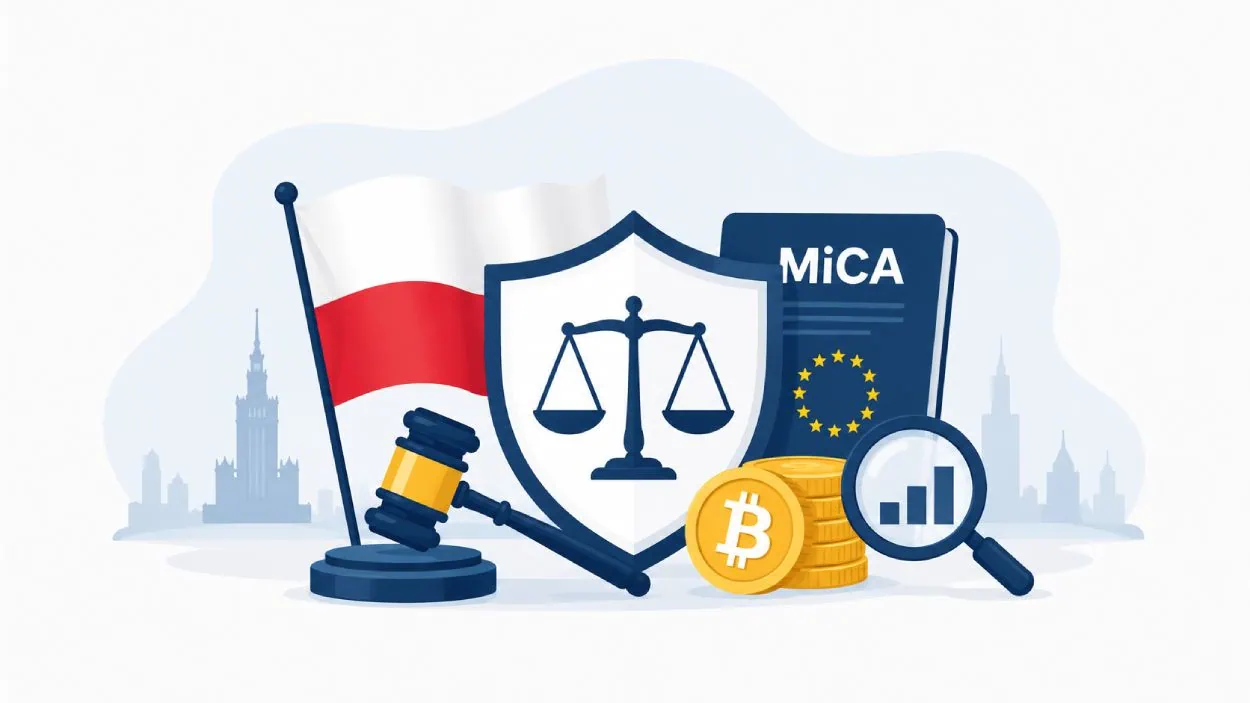






Poland has approved a long awaited cryptocurrency regulation bill tied to the European Union’s MiCA framework as authorities continue investigating the collapse of crypto exchange Zondacrypto.
Key Takeaways
- Polish lawmakers approved legislation implementing the EU’s MiCA crypto rules.
- The move comes amid an ongoing fraud investigation into Zondacrypto involving losses of more than $95 million.
- Prime Minister Donald Tusk linked the case to alleged Russian criminal influence.
- Poland faced a July deadline to adopt MiCA or risk local firms losing authorization to offer crypto services.
What Happened?
Poland’s parliament passed a new cryptocurrency regulation bill on Friday, officially moving the country closer to implementing the European Union’s Markets in Crypto Assets Regulation, commonly known as MiCA.
The legislation arrives at a tense moment for Poland’s crypto industry as prosecutors continue investigating the collapse of Zondacrypto, once considered the country’s largest cryptocurrency exchange. Authorities estimate user losses have exceeded 350 million zlotys, or around $95.93 million.
🇵🇱JUST IN: Polish lawmakers adopted a bill regulating cryptocurrencies as the collapse of the country’s biggest exchange deepens scrutiny of the sector.
— Coin Bureau (@coinbureau) May 15, 2026
The bill brings Poland in line with the EU’s MiCA framework, which the country must approve by July. pic.twitter.com/43IGLPUvuz
Poland Moves to Align With EU Crypto Rules
The newly adopted bill is designed to bring Poland in line with the European Union’s MiCA framework, which establishes unified crypto regulations across member states. Poland must finalize the implementation by July to ensure domestic crypto firms can continue legally offering digital asset services.
According to Poland’s financial watchdog, failure to implement the framework on time could result in local crypto businesses losing authorization to operate within the market.
The legislation had previously faced political resistance. President Karol Nawrocki vetoed two earlier versions of the bill, arguing the proposed rules placed excessive burdens on crypto firms and included harsh penalties for violations.
Nawrocki later introduced an alternative proposal with lower penalties, though lawmakers ultimately moved forward with the government backed version.
Zondacrypto Investigation Intensifies
The passing of the crypto bill comes as scrutiny surrounding Zondacrypto continues to grow. Thousands of users reportedly remain unable to withdraw their funds from the exchange.
Polish prosecutors have launched a major fraud investigation into the platform, with estimated losses crossing $95 million. The case has quickly evolved beyond financial concerns and entered the political spotlight.
Prime Minister Donald Tusk recently accused the exchange of having connections to Russian criminal networks. During a government meeting earlier this month, Tusk said:
Tusk referenced information from Polish security services but did not provide additional details publicly.
The allegations have fueled concerns about foreign influence and national security risks tied to unregulated cryptocurrency activity. The Polish government has previously warned that Russia allegedly uses cryptocurrencies to finance sabotage operations inside Poland. Moscow has repeatedly denied involvement in sabotage activities across Europe.

Missing Founder and Extradition Challenges
The controversy surrounding Zondacrypto has also raised questions about the whereabouts of key executives linked to the exchange.
The company’s founder, Sylwester Suszek, reportedly disappeared in 2022. Meanwhile, Polish media reports suggest his successor, Przemyslaw Kral, is currently in Israel, where he also holds citizenship. That situation could complicate any future extradition efforts connected to the investigation.
Reuters reported it was unable to reach either Suszek or Kral for comment.
Why the MiCA Law Matters?
The approval of MiCA rules marks a significant step for Poland’s crypto industry. The European framework is intended to create stronger investor protections, clearer licensing requirements, and stricter oversight for digital asset companies operating across the bloc.
Supporters believe the law could improve trust in the crypto sector following major exchange failures and fraud allegations. Critics, however, continue to argue that overly strict regulations may drive innovation and crypto firms out of the country.
The Zondacrypto case is now likely to become one of Poland’s biggest tests for balancing crypto innovation with consumer protection and national security concerns.
CoinLaw’s Takeaway
In my experience, major crypto regulations usually gain momentum only after investors suffer heavy losses, and Poland appears to be following the same pattern. I found it notable that the MiCA bill moved forward during a politically charged investigation involving alleged Russian criminal links. That combination of financial risk and national security concerns could push more European governments to tighten oversight of crypto exchanges much faster than expected.