





A global law enforcement operation led by the United States has disrupted more than $45 million in crypto fraud and frozen $12 million in stolen funds.
Key Takeaways
- $45 million in crypto fraud disrupted across multiple countries.
- $12 million in stolen funds frozen with plans to return to victims.
- 20,000+ wallet addresses identified across over 30 countries.
- Approval phishing scams targeted as a growing global threat.
What Happened?
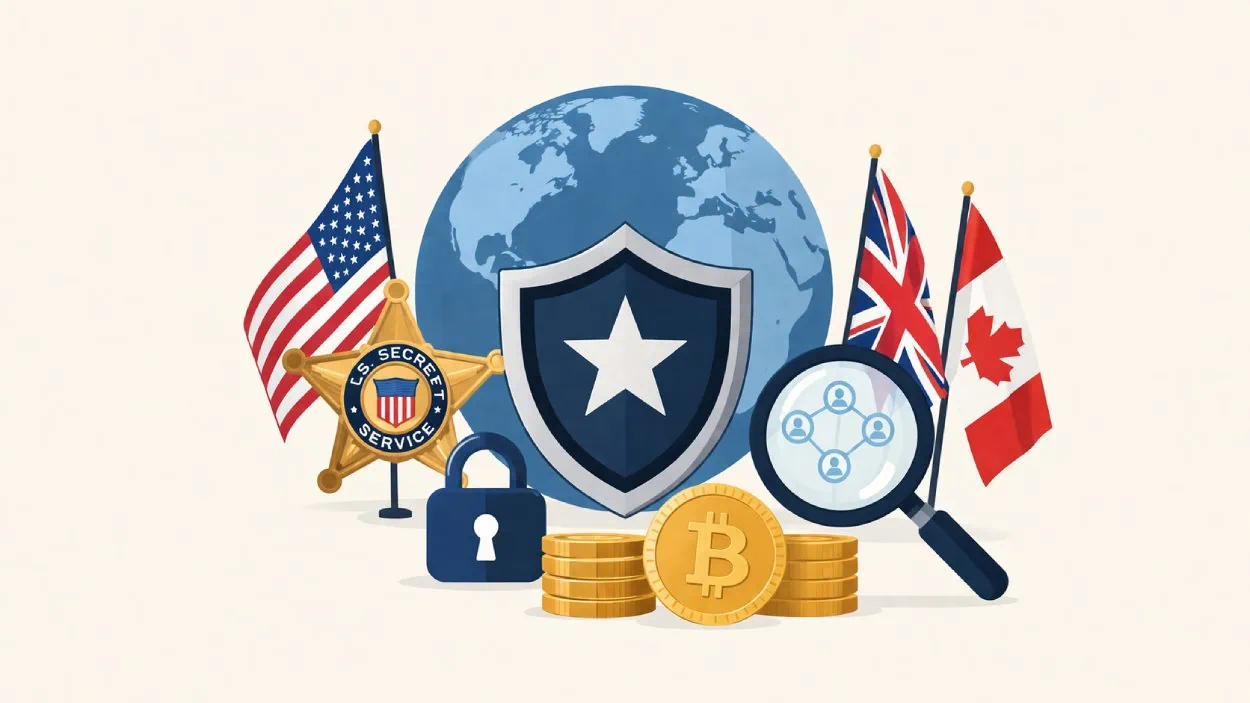
Operation Atlantic was a week long international crackdown led by the U.S. Secret Service alongside agencies in the United Kingdom and Canada. The operation focused on approval phishing scams that trick users into giving full access to their crypto wallets.
Authorities identified thousands of victims, froze stolen funds, and disrupted scam infrastructure including over 120 malicious web domains.
Fraudsters targeting cryptocurrency stopped and $12 million frozen in NCA-led Operation Atlantic.
— National Crime Agency (NCA) (@NCA_UK) April 9, 2026
Read the full story ➡️ https://t.co/9pV732unid pic.twitter.com/gkG9ce232x
Global Crackdown on Crypto Fraud
Operation Atlantic brought together major enforcement agencies including the U.S. Secret Service, the UK’s National Crime Agency, and Canadian authorities such as the Ontario Provincial Police and Ontario Securities Commission.
The operation uncovered a massive network of fraud activity:
- More than 20,000 wallet addresses linked to victims.
- Victims spread across 30+ countries including the U.S., UK, and Canada.
- Over $33 million in suspected fraud funds still under investigation.
Officials stressed that international cooperation played a key role in the operation’s success.
Brent Daniels, Assistant Director for the U.S. Secret Service’s Office of Field Operations.
Miles Bonfield of the UK’s National Crime Agency added that the effort helped safeguard thousands of victims and stopped criminals in their tracks.
How Approval Phishing Scams Work?
The operation primarily targeted approval phishing scams, a deceptive tactic increasingly used in crypto fraud.
These scams typically involve:
- Fake pop ups or alerts posing as trusted crypto platforms.
- Requests asking users to “approve” access to their wallets.
- Full control handed over to scammers once approval is granted.
Once access is given, criminals can transfer funds instantly, and these transactions are often irreversible.
Authorities also noted a worrying trend where such scams are moving beyond digital channels.
Recent reports show users receiving physical letters impersonating hardware wallet providers like Ledger and Trezor. These letters prompt users to scan QR codes or visit fake websites, often using urgency to manipulate victims.

Disrupting Scam Infrastructure
Beyond identifying victims, Operation Atlantic took direct action against scam networks:
- Over 120 fraudulent web domains taken down.
- Thousands of at risk users contacted directly.
- Ongoing investigations into additional fraud linked funds.
Law enforcement agencies worked closely with private sector partners, whose data and technical support helped track fraudulent transactions and prevent further losses.
Bonnie Lysyk from the Ontario Securities Commission highlighted the continued focus on investor protection and advanced enforcement techniques to combat crypto enabled fraud.
Rising Threat of Crypto Scams
The findings from Operation Atlantic highlight how crypto scams are evolving rapidly and operating on a global scale.
Fraudsters are increasingly leveraging:
- Social engineering tactics.
- Stolen personal data from past breaches.
- Multi channel approaches including digital and physical scams.
Authorities warned that as scams become more sophisticated, users must remain cautious when interacting with unknown links, pop ups, or unsolicited communications.
CoinLaw’s Takeaway
In my experience, this case shows just how serious crypto fraud has become and how quickly it can spread across borders. What stood out to me is the scale, with tens of thousands of wallets affected and millions already lost.
I found the shift toward physical scam tactics especially alarming. It tells me that scammers are adapting faster than many users can keep up. At the same time, I believe operations like this prove that global cooperation can make a real difference.
Still, prevention matters more than recovery. Once crypto is gone, it is usually gone for good. That is why staying alert is not optional anymore, it is essential.