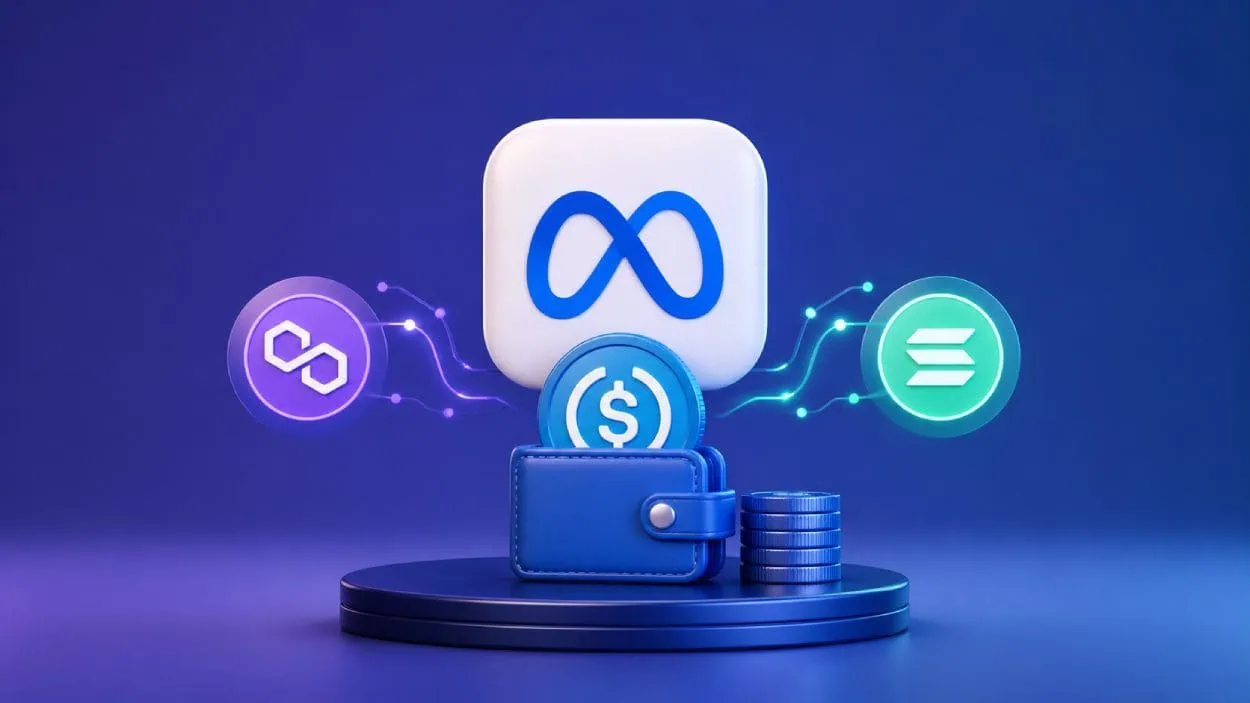






Meta has begun offering select creators the option to receive payouts in USDC stablecoin, marking its return to crypto payments after stepping away from earlier blockchain projects.
Key Takeaways
- Meta is testing USDC payouts for creators using Solana and Polygon networks.
- The feature is currently limited to users in Colombia and the Philippines.
- Stripe powers the infrastructure and handles payment processing and reporting.
- The move signals Meta’s renewed interest in crypto after shutting down its Diem project.
What Happened?
Meta has introduced a new payment option that allows creators to receive earnings in stablecoins directly into their crypto wallets. The rollout is currently limited but reflects a broader strategy to explore blockchain based financial tools.
Meta Rolls Out USDC Payouts to Creators in Colombia and the Philippines
— Wu Blockchain (@WuBlockchain) April 29, 2026
After shutting down its Libra (later Diem) project in 2022 amid regulatory pressure, Meta has resumed efforts in blockchain-based payments by rolling out stablecoin payouts to select creators. The initial… pic.twitter.com/L0QTIutT4n
Meta Tests Stablecoin Payments for Creators
Meta Platforms has started enabling select creators to receive payments in USDC, a dollar-backed digital asset issued by Circle. The payouts are processed on blockchain networks including Solana and Polygon.
Creators who are eligible can link their crypto wallets and receive earnings without relying on traditional banking systems. Supported wallets include popular options like MetaMask, Phantom, and Binance wallets, making the system accessible for users already familiar with crypto tools.
The payments infrastructure is powered by Stripe, which also manages compliance and reporting requirements. According to Stripe, creators may receive tax documentation related to both fiat earnings and digital asset transactions.
Jay Shah, head of Link at Stripe, confirmed the collaboration, stating:
Limited Rollout Focused on Emerging Markets
The feature is currently available only to a small group of creators in Colombia and the Philippines. This choice reflects Meta’s strategy of testing new financial tools in regions where crypto adoption is growing rapidly and access to traditional banking can be limited.
Stablecoins like USDC are often seen as a faster and more efficient way to move money across borders. By using blockchain networks, payments can settle more quickly and at lower cost compared to conventional systems.
Meta highlighted that it is not creating its own digital currency. A company spokesperson said:

A Strategic Return to Crypto
This initiative marks a notable shift for Meta, which previously exited the crypto space after shutting down its Libra project, later renamed Diem, in 2022 due to regulatory pressure.
The new approach is more cautious. Instead of building its own token, Meta is relying on established infrastructure and existing stablecoins. This reduces regulatory risk while still allowing the company to experiment with blockchain based payments.
The broader industry is also moving in a similar direction. Stablecoins are gaining traction as practical tools for real world payments. Large firms like Visa have reported billions in transaction volume tied to stablecoin settlement networks, signaling growing adoption.
With over three billion users across its platforms, Meta’s entry into stablecoin payouts could have a significant impact if expanded globally.
CoinLaw’s Takeaway
I see this as a smart and measured comeback from Meta. Instead of repeating past mistakes with building its own coin, the company is now using proven players like USDC and Stripe. In my experience, this kind of approach reduces friction and builds trust faster. What stands out to me is the focus on emerging markets. That is where crypto actually solves real problems. If this pilot succeeds, I believe Meta could quietly become one of the biggest drivers of stablecoin adoption worldwide.