





Cash App has officially rolled out USDC payments and transfers for millions of users, marking one of the biggest stablecoin integrations ever launched by a mainstream fintech platform.
Key Takeaways
- Cash App now supports USDC transfers across Solana, Ethereum, Polygon and Arbitrum.
- Around 60 million monthly users are expected to gain access to the feature.
- Users can send and receive stablecoins without setting up a separate crypto wallet.
- Block says the rollout supports its broader vision of internet native payments and Bitcoin adoption.
What Happened?
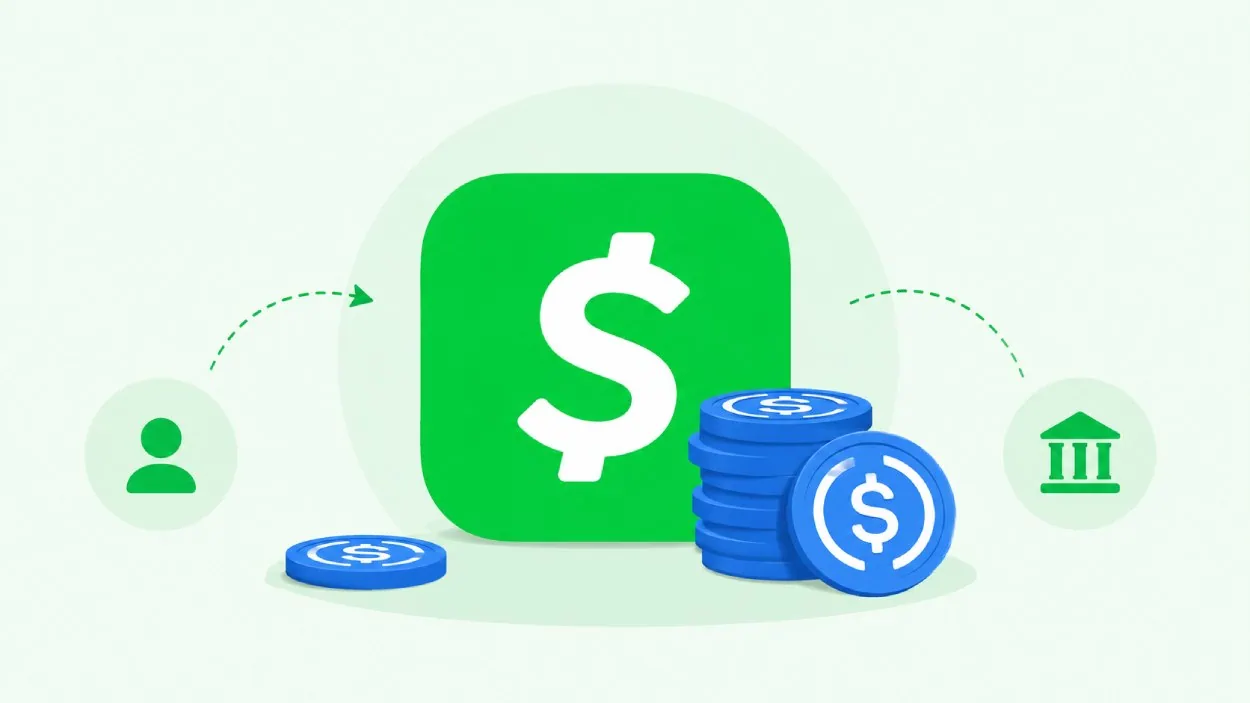
Block’s Cash App has started rolling out support for USD Coin, better known as USDC, allowing users to send, receive, deposit and withdraw stablecoins directly within the app. The feature initially launched to around 25% of users and is expected to expand to all eligible users by the end of the week.
The update allows customers to move USDC across Solana, Ethereum, Polygon and Arbitrum while automatically converting stablecoins into their existing USD Cash App balance. The company said the feature comes with zero fees for a limited time.
We just shipped stablecoins on @CashApp.
— Miles 🌞 (@milessuter) May 27, 2026
Everything runs from your existing USD balance – no separate wallet, no managing multiple chains, no extra setup, and importantly no fees.
Send and receive USDC on SOL, ETH, POL, and ARB.
The most seamless integration in the world imo. pic.twitter.com/VD4KqplPkW
Cash App Expands Beyond Bitcoin
Cash App has long been associated with Bitcoin services, offering users the ability to buy, sell and transfer BTC through the platform. The new USDC rollout signals a broader digital asset strategy from Block as stablecoins continue gaining traction in payments and remittances.
The company first revealed plans for stablecoin support in November 2025, promising tighter integration between crypto payments and traditional dollar balances. The latest launch now delivers on that roadmap.
According to Block, users do not need to manage private keys, blockchain bridges or separate crypto wallets. The company intentionally designed the feature to keep blockchain infrastructure hidden within the app experience.
Each user receives a dedicated blockchain deposit address for USDC transactions, allowing transfers from external wallets into Cash App accounts. Payments can also move out to supported blockchain networks.
Solana Plays a Major Role
Although Cash App supports four blockchain networks, Solana appears to be central to the rollout because of its fast transaction speeds and low costs.
The company highlighted how low fee networks make small consumer payments more practical compared to higher cost blockchain environments. Solana’s low transaction fees allow users to move small amounts of money without worrying about expensive network costs.
Industry observers believe the integration could significantly increase transaction activity across Solana as millions of retail users gain access to stablecoin transfers through Cash App.
The rollout may also strengthen Circle’s position in the stablecoin market. USDC currently competes with Tether’s USDT for dominance in the global stablecoin sector. Expanding access through a major fintech platform could help increase USDC circulation and usage.

Jack Dorsey Still Prefers Bitcoin
Despite the stablecoin expansion, Block co-founder Jack Dorsey has made it clear that Bitcoin remains his preferred digital asset.
In an earlier interview with WIRED, Dorsey acknowledged the company’s move into stablecoins while distancing himself from the strategy personally. Dorsey said:
At the same time, Block executives framed stablecoins as a stepping stone toward broader crypto adoption. Miles Suter, Bitcoin product lead at Block, said the company still views Bitcoin as the ultimate goal for internet native payments.
“Making Bitcoin Everyday Money remains my top goal,” Suter wrote on X.
He also described the new integration as “the most seamless in the world,” noting that users can move money on blockchain rails without needing to understand wallet management or network selection.
Stablecoins Continue Moving Into Mainstream Finance
Cash App joins a growing list of financial technology firms embracing stablecoins for payments infrastructure. PayPal has already launched its own stablecoin product, while Stripe recently expanded its stablecoin ambitions through the acquisition of Bridge.
Analysts say stablecoins could become a major challenge to traditional remittance companies because blockchain based payments can reduce transfer costs and settlement times.
Still, regulatory uncertainty remains a major issue for the sector. Stablecoin legislation in the United States is still evolving, and future rules could impact how fintech firms operate these services.
Cash App also warned users that blockchain transactions remain irreversible. Sending USDC to an unsupported address or incorrect network can permanently result in lost funds.
CoinLaw’s Takeaway
I think this is one of the clearest signs yet that stablecoins are becoming part of mainstream consumer finance. In my experience, most crypto products still feel too technical for everyday users, but Cash App is trying to remove that complexity completely. The biggest shift here is not just adding USDC support. It is putting blockchain payments in front of tens of millions of regular users who may never have interacted with crypto before.
I also found it interesting that Block continues balancing its Bitcoin first philosophy while acknowledging that users currently prefer dollar stable assets for payments. That tension could shape how fintech companies approach crypto adoption over the next few years.