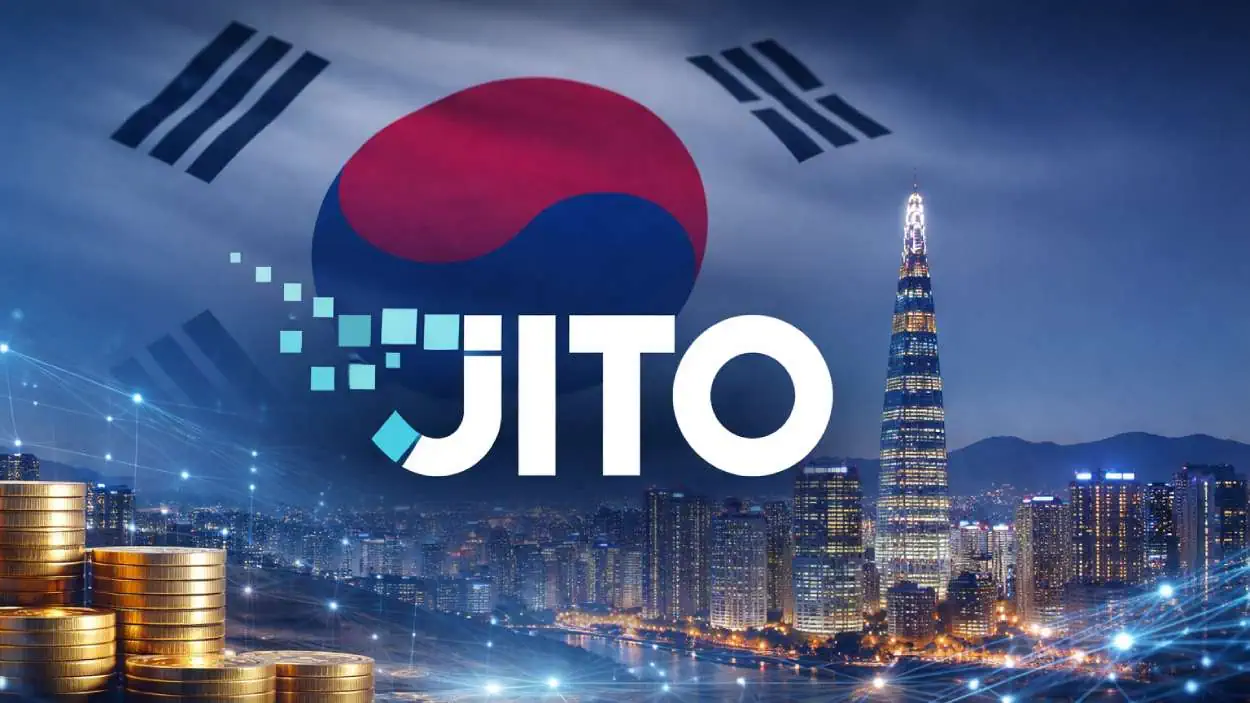






Jito Foundation is expanding into South Korea through a new partnership with KODA to bring institutional staking and custody solutions for JitoSOL.
Key Takeaways
- Jito Foundation signed an MoU with KODA to expand institutional access to JitoSOL in South Korea.
- The partnership focuses on custody, staking infrastructure, and investor education.
- South Korea is preparing a comprehensive crypto regulatory framework expected by 2026.
- JitoSOL is gaining traction with ETF exploration and growing institutional demand globally.
What Happened?
Jito Foundation announced a memorandum of understanding with KODA, South Korea’s leading digital asset custodian, to introduce institutional custody and staking services for JitoSOL. The move comes as the country prepares to finalize its digital asset regulations, creating a clearer path for institutional participation.
The capital layer of Solana is coming to Korea! 🇰🇷
— Jito (@jito_sol) April 13, 2026
Jito Foundation has signed an MOU with KODA, Korea’s largest digital asset custodian, to expand institutional access to JitoSOL across the Korean market.
“𝘖𝘶𝘳 𝘪𝘯𝘴𝘵𝘪𝘵𝘶𝘵𝘪𝘰𝘯𝘢𝘭 𝘤𝘭𝘪𝘦𝘯𝘵𝘴 𝘢𝘳𝘦… pic.twitter.com/DBIfkwjQo4
Jito Expands Institutional Footprint In South Korea
The Jito Foundation has taken a major step into the South Korean market by partnering with Korea Digital Asset Co. Ltd. (KODA). The agreement is focused on enabling institutional investors to access JitoSOL, a liquid staking token built on the Solana network.
As part of the collaboration, both firms will work on:
- Developing compliant custody solutions for institutional clients.
- Building staking infrastructure tailored to regulatory requirements.
- Educating institutional investors about staking opportunities and yield generation.
Marc Liew, Head of APAC at Jito Foundation, highlighted the growing interest in JitoSOL, especially among financial institutions exploring next generation wealth products and corporate treasuries seeking yield generating assets.
He said:
Strong Institutional Infrastructure Backing The Partnership
KODA brings a robust custody framework that includes:
- Cold wallet storage for enhanced asset security.
- MPC based key management systems.
- Institutional staking services.
- $20 million digital asset insurance coverage.
The company is backed by major financial players such as KB Kookmin Bank, along with support from Hanwha Securities and Kyobo Securities. It also holds a registered VASP license and ISMS certification, positioning it as a trusted infrastructure provider in South Korea.
This partnership allows institutions to seamlessly convert SOL into JitoSOL directly within a secure custody environment, simplifying access to staking rewards.

JitoSOL Gains Global Institutional Traction
JitoSOL is one of the leading liquid staking tokens on Solana, allowing users to stake SOL while maintaining liquidity for use across decentralized finance applications.
The token continues to see growing institutional adoption:
- It already has exposure in Europe through a 21Shares exchange traded product.
- Custodians such as BitGo and Hex Trust support staking directly from custody accounts.
- Its market capitalization is estimated between $930 million and $1.77 billion, depending on market conditions.
In South Korea, Jito is also working with Hanwha Asset Management to explore a potential JitoSOL exchange traded fund, although this remains subject to regulatory approval.
South Korea Tightens Crypto Regulations Amid Growth
Jito’s expansion comes at a time when South Korea is actively tightening oversight of the crypto sector while building a structured regulatory environment.
Key regulatory developments include:
- Stricter licensing requirements for virtual asset service providers.
- Proposed limits on ownership stakes in domestic exchanges.
- New reconciliation rules for exchange accounting and onchain balances.
- Plans to classify stablecoins as foreign exchange instruments.
- Requirements for tokenized assets to be backed by assets held in trust.
The regulatory push intensified after a major incident at Bithumb, where users mistakenly received 620,000 Bitcoin instead of 620,000 Korean won, exposing gaps in exchange controls.
Additionally, the Bank of Korea has called for stronger safeguards, including circuit breakers and tighter internal controls, warning that the crypto industry still lacks protections seen in traditional finance.
CoinLaw’s Takeaway
In my experience, this move by Jito Foundation is not just about entering a new market, it is about timing. South Korea is clearly preparing for a more mature and regulated crypto environment, and Jito is positioning itself early to capture institutional demand.
I found this partnership particularly important because it combines strong infrastructure with regulatory alignment, which is exactly what institutions look for before committing capital. If the regulatory framework rolls out as expected, South Korea could quickly become a major hub for institutional staking and tokenized finance, and Jito seems ready to lead that wave.