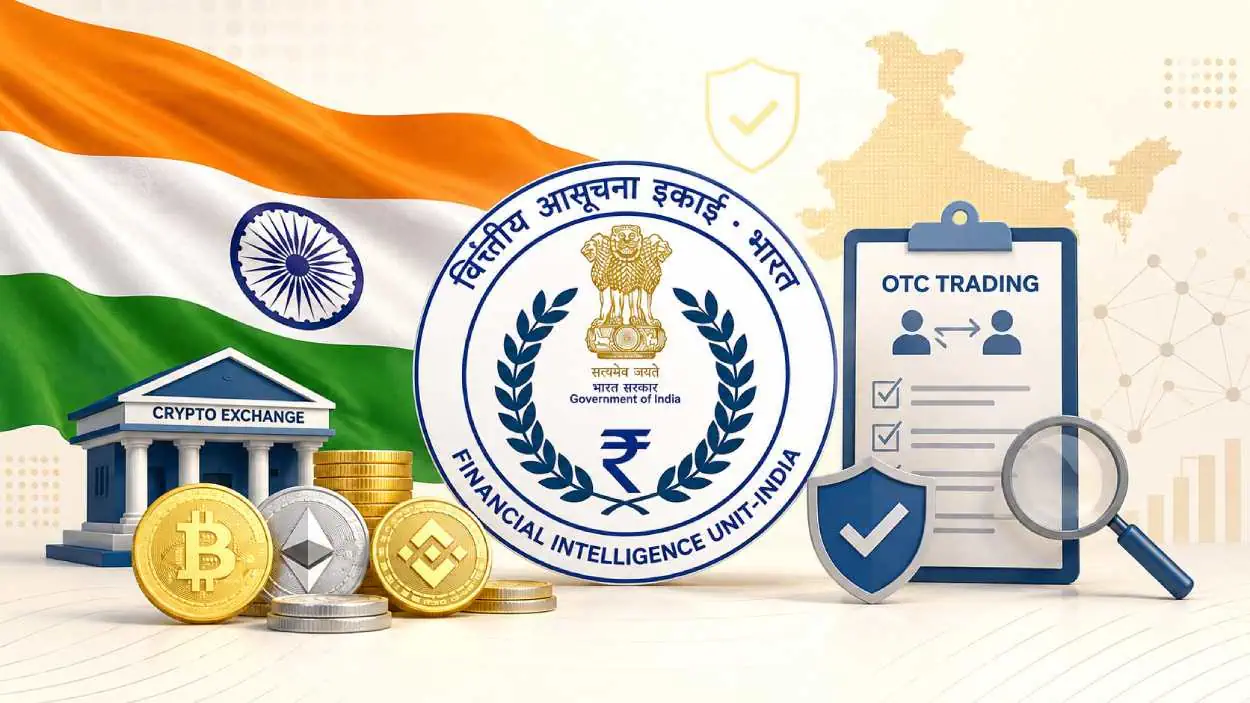






India’s Financial Intelligence Unit is tightening oversight of the crypto sector by seeking records of large over the counter transactions from major exchanges.
Key Takeaways
- India’s FIU has asked at least three major crypto exchanges to provide records of OTC crypto transactions exceeding $10,000.
- The watchdog is focusing on beneficial ownership verification, particularly involving private companies, trusts, and intermediaries.
- Exchanges have been instructed to preserve and trace relevant OTC records from January 2026 onward.
- The move marks another step in India’s broader effort to strengthen anti money laundering compliance across the crypto industry.
What Happened?
India’s Financial Intelligence Unit (FIU), the country’s primary anti-money laundering watchdog, has reportedly asked at least three major cryptocurrency exchanges to share details of over the counter (OTC) transactions worth more than $10,000. The request follows a meeting between regulators and exchange operators in late May and signals growing scrutiny of large private crypto trades.
The directive is aimed at improving transparency around high value transactions that take place outside public exchange order books, where regulators believe ownership structures and fund origins can be more difficult to verify.
India FIU Seeks Crypto OTC Trade Records Above $10,000 From Major Exchanges
— Wu Blockchain (@WuBlockchain) June 23, 2026
India’s Financial Intelligence Unit, the country’s anti-money laundering watchdog, has asked three major crypto exchanges to submit information on OTC transactions above USD 10,000, with a focus on… pic.twitter.com/GCU8aWjJDz
India Expands Oversight of Crypto OTC Markets
The FIU’s latest request focuses on OTC transactions, a segment of the crypto market commonly used by institutional investors, high net worth individuals, and large buyers seeking to avoid market volatility when executing sizeable trades.
Unlike trades conducted through public exchange order books, OTC transactions are negotiated privately and settled directly between parties. While this structure can reduce price slippage, it also creates challenges for regulators attempting to track the movement of funds and identify the individuals or entities behind transactions.
According to reports, exchanges have been asked to submit records of OTC trades exceeding $10,000 and maintain traceable records beginning January 2026. The identities of the exchanges involved have not been publicly disclosed.
Beneficial Ownership Becomes a Key Focus
A major element of the FIU’s request centers on beneficial ownership verification.
Regulators are particularly interested in transactions involving private companies, intermediaries, trusts, and closely held entities where ownership structures may be layered or difficult to identify. Such arrangements can make it harder for exchanges to determine who ultimately controls funds used in crypto transactions.
An official from a crypto intermediary told The Economic Times:
The concern stems from the possibility that shell companies, false documentation, or intermediary structures could be used to obscure the true source of funds. Regulators are therefore placing greater emphasis on identifying ultimate beneficial owners and verifying the legitimacy of transaction participants.

Part of India’s Broader AML Push
The latest directive builds on a wider regulatory effort that has steadily increased compliance requirements for crypto businesses operating in India.
Earlier in 2026, the FIU introduced stricter customer verification requirements that included live selfie verification, geolocation checks, IP tracking during onboarding, and more frequent updates of customer records based on risk profiles.
India has also taken enforcement action against crypto firms that failed to meet compliance standards. Previous actions included penalties against Binance related to anti-money laundering obligations and notices issued to offshore virtual digital asset service providers serving Indian users without proper FIU registration.
The Financial Intelligence Unit derives its authority from India’s Prevention of Money Laundering Act (PMLA), under which crypto exchanges are classified as reporting entities. These entities are required to maintain transaction records, file suspicious transaction reports, and cooperate with regulatory investigations.
As of early 2026, 49 crypto exchanges were reportedly registered with FIU India, including both domestic and offshore platforms serving Indian customers.
What It Means for Exchanges and Investors?
For retail traders using standard exchange trading platforms, the immediate impact is expected to be limited. However, OTC desks and large market participants may face significantly stricter documentation requirements.
Exchanges may be required to collect additional information related to:
- Source of funds
- Transaction purpose
- Beneficial ownership details
- Destination wallet information
- Counterparty identification records
Industry observers believe exchanges may need to strengthen compliance systems and reporting infrastructure to satisfy future regulatory expectations.
Despite the significance of the development, there has been no major reaction in crypto prices or trading volumes since the request became public. Market participants appear to be taking a cautious wait and watch approach as details regarding enforcement and future reporting obligations remain unclear.
Why This Matters?
The FIU’s latest move demonstrates that regulators are no longer focusing solely on activity visible through public exchange trading platforms. Attention is increasingly shifting toward private transaction channels where large amounts of capital can move outside traditional market visibility while still interacting with regulated exchanges.
If implemented as an ongoing requirement, the reporting framework could establish a new compliance standard for crypto OTC trading in India and further align the country’s digital asset regulations with international anti-money laundering practices, including standards promoted by the Financial Action Task Force.
CoinLaw’s Takeaway
In my experience, this is less about restricting crypto and more about bringing large private transactions under the same transparency standards that exist in traditional finance. I found the focus on beneficial ownership particularly important because regulators worldwide are increasingly targeting the people behind corporate structures rather than just the transactions themselves. While additional compliance may slow some high value crypto deals, it could also strengthen confidence in India’s regulated crypto market and make institutional participation more attractive over time.