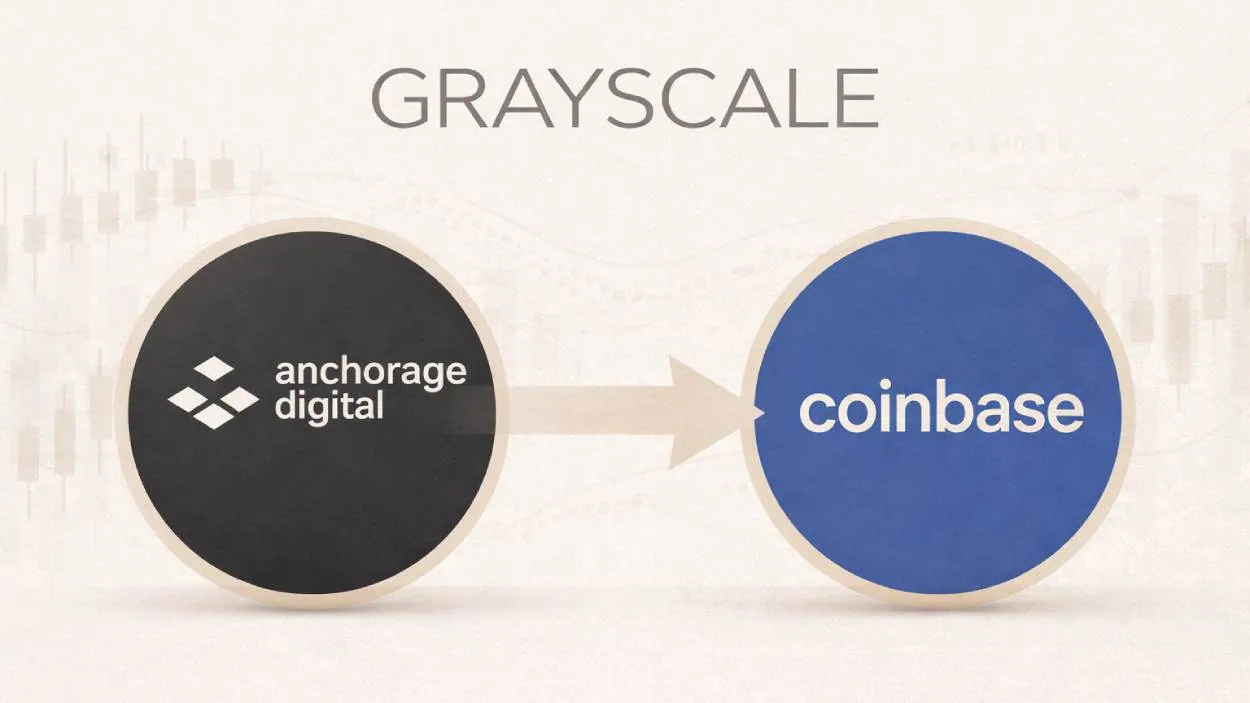






Grayscale has updated its Hyperliquid ETF filing, replacing Coinbase with Anchorage as the primary custodian in a notable shift for the crypto ETF market.
Key Takeaways
- Grayscale has named Anchorage Digital Bank as the new custodian for its proposed HYPE ETF.
- Coinbase, which dominates crypto ETF custody, has been removed from this role.
- The move signals growing competition in crypto custody services.
- The ETF, if approved, will trade on Nasdaq under the ticker GHYP.
What Happened?
Grayscale has amended its filing with the U.S. Securities and Exchange Commission to designate Anchorage Digital Bank as the primary custodian for its proposed Hyperliquid ETF. This replaces Coinbase, which previously held both custodian and prime broker responsibilities for the fund.
The update reflects a broader shift in Grayscale’s strategy as it expands its crypto investment products under a more favorable regulatory environment.
LATEST: Grayscale submits amended Hyperliquid ETF filing as more signs of movement emerge between issuers and the SEC, with Anchorage confirmed as custodian pic.twitter.com/HTSLZbQCDr
— crypto.news (@cryptodotnews) April 21, 2026
Grayscale Makes a Strategic Custody Shift
Grayscale’s decision to move away from Coinbase is significant given Coinbase’s dominant position in the crypto ETF space. Coinbase Custody currently safeguards assets for nearly all spot Bitcoin ETFs in the United States, with Fidelity being one of the few exceptions.
Grayscale itself continues to rely on Coinbase as the primary custodian for its Bitcoin and Ethereum trusts. However, the firm had already introduced Anchorage as a secondary custodian for portions of those holdings in August last year. This latest move suggests a deeper shift toward diversification in custody partnerships.
Anchorage Digital Bank, founded in 2017, holds the distinction of being the first federally chartered crypto bank in the United States. In recent months, the company has expanded its services into areas such as stablecoin support, wealth management, and token lifecycle management. Its growing institutional footprint appears to have positioned it as a serious competitor to established players.
Growing Competition in Crypto Custody
The change highlights how the crypto custody landscape is evolving. While Coinbase remains the dominant provider, newer players like Anchorage are gaining traction by offering broader institutional services and regulatory clarity.
Anchorage has also made headlines with recent developments. The firm onboarded Tron as a supported network following regulatory scrutiny around its founder and is preparing to introduce staking services tied to the ecosystem. It has also attracted significant investment, including a $100 million equity investment from Tether, pushing its valuation to $4.2 billion.
Reports suggest Anchorage may be preparing for a public listing, signaling further ambitions to scale its operations globally.

Hyperliquid ETF Details and Market Context
The proposed ETF will track HYPE, the native token of Hyperliquid, which operates the largest on chain perpetuals decentralized exchange by trading volume. Despite its rapid growth, the platform remains unavailable to users in the United States.
The ETF filing notes that staking functionality may be included, although this remains subject to regulatory approval. Pricing for the fund will rely on CoinDesk Hyperliquid Benchmark Extended Rate data.
The Bank of New York Mellon will continue to serve as the transfer agent for the fund. If approved, the ETF is expected to trade on Nasdaq under the ticker GHYP.
Grayscale initially filed for the product on March 20, following similar filings from firms like 21Shares and Bitwise. The company has been actively expanding its product pipeline, including offerings tied to assets such as BNB, Zcash, and Chainlink.
Institutional Push Behind Hyperliquid
Hyperliquid has emerged as a major force in the decentralized derivatives market, with a valuation exceeding $9 billion. The project has also taken steps to strengthen its regulatory positioning by launching the Hyperliquid Policy Center in Washington, D.C.
Meanwhile, Coinbase itself has shown interest in expanding its derivatives presence, including listing the HYPE token earlier this year and pursuing acquisitions to grow its market share.
CoinLaw’s Takeaway
From my perspective, this move is more than just a routine filing update. I see it as a clear signal that institutional crypto infrastructure is maturing fast. When a major player like Grayscale starts reducing its reliance on Coinbase, it tells me that competition is finally catching up in a space that was once heavily concentrated.
In my experience, diversification like this is healthy for the market. It reduces risk, encourages innovation, and gives institutions more confidence to participate. I also find it interesting that Anchorage is quietly building momentum across multiple fronts, from custody to staking to potential public listing. This could be the beginning of a much larger shift in how crypto assets are managed at scale.