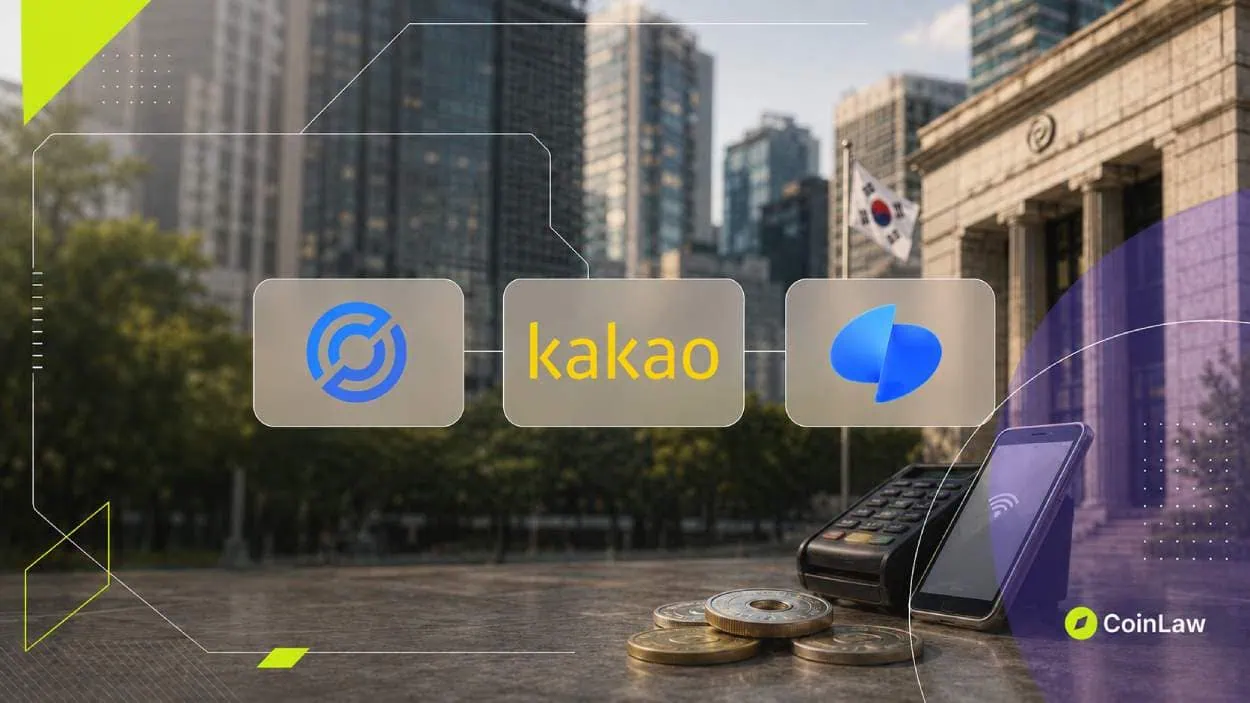






Circle signed separate memoranda of understanding (MOUs) with Kakao Group and Toss on July 23, 2026, to explore won-linked digital assets and blockchain payment infrastructure in South Korea. Neither deal commits either company to issuing a won stablecoin.
Key Takeaways
- Circle, the US issuer of the USDC stablecoin, signed separate MOUs with Kakao Group and Toss to explore won-pegged digital assets and payment rails.
- The deals supplement earlier agreements Circle struck in April with KB Kookmin Bank, Shinhan Bank, Hana Bank, Upbit and Bithumb.
- South Korea still has no stablecoin-specific law, and domestic issuance of a won-pegged token remains illegal under current rules.
- Regulators remain split on who could issue a future won stablecoin, with the Bank of Korea pushing bank-led consortia over non-bank applicants.
- Circle’s chief strategy officer warned Korea risks falling behind on digital-asset adoption if regulatory clarity stalls.
Circle Signs Separate MOUs With Kakao and Toss
Kakao, KakaoPay and KakaoBank said on July 23 that they signed a strategic business agreement with Circle Internet Group, a US-based stablecoin issuer, to explore won-linked digital assets and blockchain payment services. Circle separately announced a partnership with Toss for blockchain payment infrastructure the same day. Toss is operated by Viva Republica, a South Korean fintech that runs a widely used financial super-app, so Circle’s outreach now touches two of the country’s most active consumer platforms at once.
The companies said they will review the feasibility of won-pegged digital assets and tokenized financial services based on domestic regulations and market conditions. They will also discuss using Circle’s infrastructure for overseas payments and remittances. Both deals stop short of a launch commitment.
Circle says these Kakao and Toss agreements supplement earlier partnerships it struck with KB Kookmin Bank, Shinhan Bank, Hana Bank, Upbit and Bithumb during CEO Jeremy Allaire’s April visit, meaning Circle now has exploratory ties with seven separate Korean institutions without a single won stablecoin issued.
The urgency, I believe, isn’t widely understood nor shared (in Korea), said Dante Disparte, Chief Strategy Officer of Circle, at a Seoul briefing. Disparte added that Korea “can afford” cautious regulation but that institutions should not “be late to the technology” as blockchain converges with artificial intelligence.
Circle 🤝 Kakao Group
— Circle (@circle) July 23, 2026
Circle and Kakao Group have signed an MOU to explore blockchain-based payment infrastructure and digital asset technologies in Korea.
Together, we’ll assess opportunities for USDC and Circle’s global payment rails across payments, settlement, and digital… pic.twitter.com/MmZRd19iIH
Korea’s Won-Stablecoin Rules Are Still Unwritten
South Korea still lacks a stablecoin specific framework, and domestic issuance of a won-pegged token remains illegal under current rules while several bills are under review. Draft proposals could allow non-bank issuers, but the Bank of Korea, the country’s central bank, has pushed for bank led consortia, leaving unresolved who can legally issue a won stablecoin.
That unresolved fight is the backdrop every Kakao, Toss and bank announcement is written against. Kakao’s own blockchain work already ties into the merged Kaia network, including a won stablecoin pilot with KB Kookmin covering merchant payments and remittances.
Separately, eight South Korean banks are forming a joint venture for a won stablecoin, targeted for late 2025 or early 2026 and still pending approval.
Why Circle Is Selling Rails, Not a Won Coin?
Circle is notably not asking Korean regulators for permission to issue a won stablecoin itself. Both MOUs frame Circle’s role as infrastructure: USDC-based settlement and remittance rails that a future, regulator-approved won token could plug into.
That reads as a deliberate hedge against Korea’s unresolved issuer question rather than a bid to become an issuer itself. Circle framed the deals as helping Korean institutions move “from prototyping to production” and said it plans to expand beyond traditional finance into Korea’s startup sector.
Disparte cautioned against South Korea becoming isolated within a “digital currency firewall,” arguing the country should stay interconnected with global digital-currency developments rather than build a closed system. That framing doubles as a pitch against a bank-only won stablecoin.

CoinLaw’s Takeaway
Two MOUs signed the same day in 2026 add up to a signal, not a commitment. Circle now holds exploratory ties with seven separate Korean institutions, and it is stacking those deals across banks, exchanges and consumer platforms so that whichever entity regulators eventually allow to issue a won stablecoin, USDC’s rails are already wired into its infrastructure. That is a lower-risk bet than lobbying to become the issuer directly, and it sidesteps a regulatory fight Circle cannot win from outside the country.
The real constraint remains Seoul’s own indecision. Until the Bank of Korea and the legislature settle whether banks or non-bank firms can issue a won-pegged token, every announcement from Kakao, Toss or the eight-bank consortium is a position, not a product. Investors reading these MOUs as evidence of an imminent Korean stablecoin launch are ahead of the actual regulatory timeline.