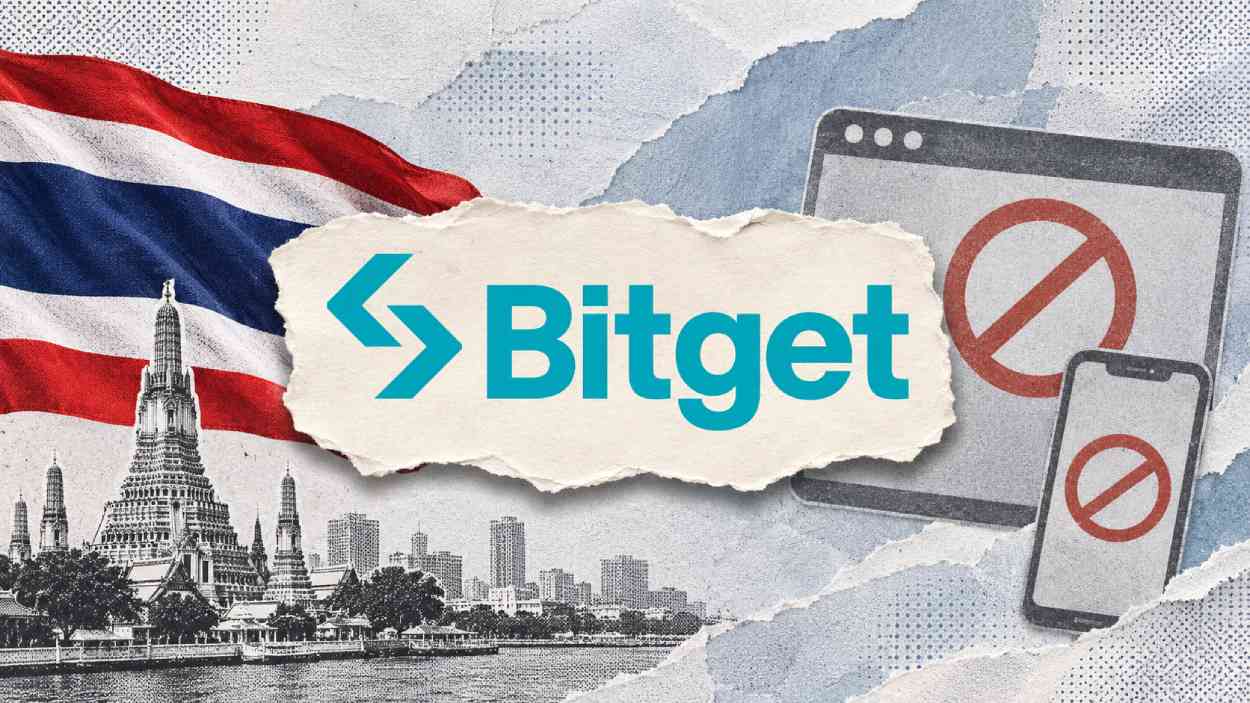





Thailand’s Securities and Exchange Commission filed a criminal complaint on Nov. 5 against BG Limited, the operator of crypto exchange Bitget. The regulator also asked the digital economy ministry to block Bitget’s website, domains and app from Dec. 5.
The Brief
- The Thai SEC says Bitget ran a trading service, charged fees and marketed in Thai from 2022 to 2025 without a license.
- Ministry of Digital Economy and Society officials will cut access to Bitget’s main site, related domains and mobile app on Dec. 5.
- Promoter Kritsana Kritsananuwat, already accused in March 2025 over OKX promotions, is also named in the new complaint.
- Bitget’s planned purchase of a licensed Bangkok exchange, announced in October, still needs Thai regulatory approval.
Thai-language marketing sits at the center of the case
Investigators pointed to a Thai-language Bitget website that quoted crypto prices in baht. They also cited an X account called “Bitget Thailand,” a Telegram group named “BGB Thai Holder” and a TikTok account, “bitgetthailand.”
🇹🇭NEW: Thailand plans to block access to Bitget’s website and app from Dec. 5 after the SEC accused the exchange of operating without a license. https://t.co/n73atLT4Ra
— Crypto Briefing (@Crypto_Briefing) November 5, 2026
The SEC said that activity met the definition of a digital asset exchange under the 2018 Emergency Decree on Digital Asset Businesses. Running one without a license breaches Section 26 of the decree, according to the regulator.
Kritsana runs the “Srisiam” Facebook page and YouTube channel, and the complaint treats him as a supporter of the alleged offense. He was one of nine individuals named in the regulator’s OKX complaint last year.
The case now sits with the Economic Crime Suppression Division. Police investigate first, prosecutors decide whether to charge, and only a court can rule on criminal liability. Bitget has not publicly addressed the complaint.
Bitget users have a month before the cutoff
The block relies on Thailand’s 2025 Royal Decree on Measures for Preventing and Suppressing Technology-Related Crimes. That decree lets the ministry restrict unlicensed trading platforms. The SEC described the step as investor protection and a guard against money laundering through unlicensed venues.
Customers holding assets on Bitget were told to act before the cutoff. The notice does not order liquidation or require anyone to sell. The SEC also pointed users to its SEC Check First app to confirm whether a provider holds a Thai license.
Five platforms went through the same process in June 2025: Bybit, OKX, CoinEx, XT.COM and 1000x.live.
A licensed Thai unit may not shield BG Limited
Bitget said on Oct. 20 that it would buy GMO-Z.com Cryptonomics (Thailand), operator of the licensed Z.com EX platform. The purchase runs through BTGT Management (Thailand), in which Bitget holds an interest. GMO Internet and its Thai subsidiary held a combined 99.94% stake, and the share transfer had been scheduled for Oct. 31, subject to regulatory approval.
Bitget CEO Gracy Chen said at the time:
The timing looks awkward. The SEC’s investor alert flagging Bitget as an unlicensed business carried an Oct. 19 update, one day before the deal went public. Bitget’s own October user agreement already listed Thailand as a restricted jurisdiction.
The regulator has also shown that a local license does not cover an offshore sibling. In February 2026, it filed a complaint against licensed broker Bitazza and its overseas platform, Bitazza Global, alleging they jointly ran an unlicensed exchange. Law firm Tilleke & Gibbins said that case shows offshore platforms “may not rely on local licensed entities” to serve Thai users.

The Bottom Line
Taken together, the two cases point to a narrow path. The Cryptonomics deal could give Bitget a compliant door into Thailand. The complaint over BG Limited’s past conduct is a separate matter, though, and the offshore site still faces the block. Thai licensing rules keep moving too, as the SEC’s recent crypto derivatives licensing changes show.
Bitget is retreating elsewhere too. It restricted users in Russia and Belarus in October and plans to exit Japan by Dec. 31, 2026.
The next fixed marker is the ministry’s block on Bitget’s site, domains and app, which takes effect on Dec. 5. The Cryptonomics transfer cannot close until Thai regulators approve the change of control. Any criminal case moves at the investigators’ pace.