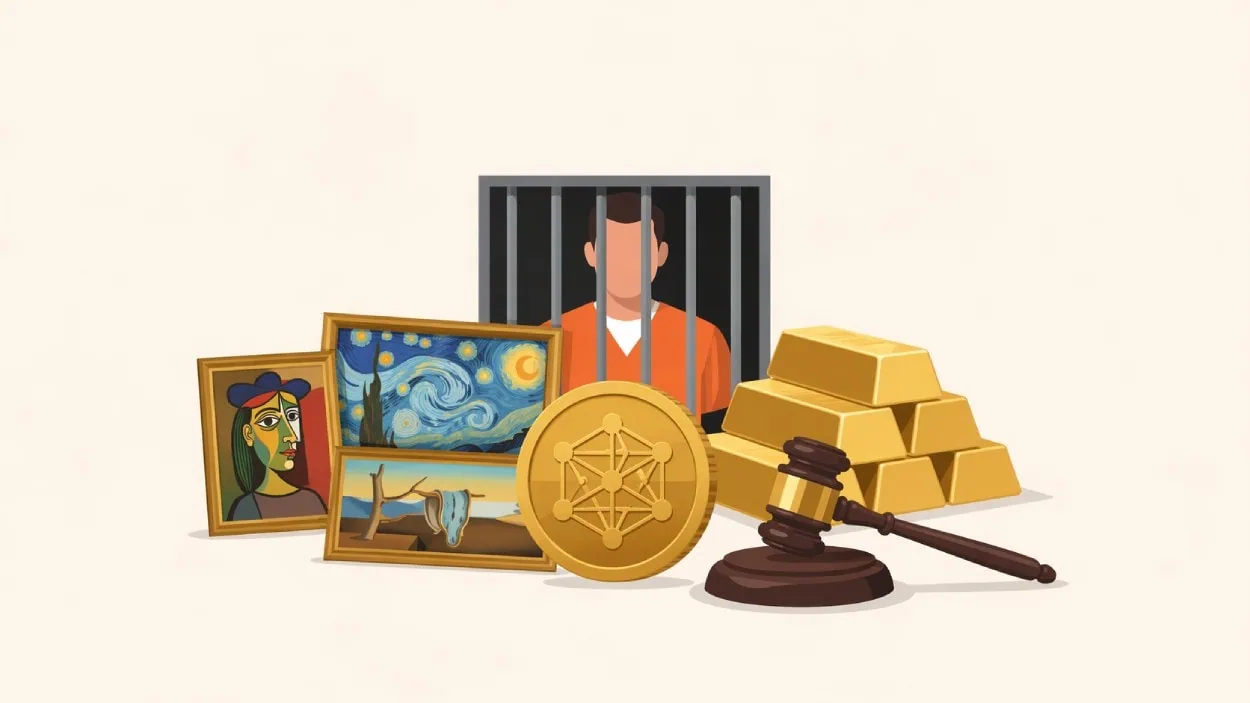






A Texas man has been sentenced to 23 years in prison for running a fraudulent crypto scheme that falsely claimed backing from billions in gold and famous artwork.
Key Takeaways
- Robert Dunlap scammed over 1,000 investors out of more than $20 million through a fake crypto project.
- The scheme promoted Meta 1 Coin as being backed by $44 billion in gold and $1 billion in art.
- Claims of ownership of works by Pablo Picasso, Vincent Van Gogh, and Salvador Dali were false.
- A federal court sentenced Dunlap to 23 years in prison and ordered restitution to victims.
What Happened?
A federal judge in Illinois sentenced Texas resident Robert Dunlap to 23 years in prison after he was found guilty of running a large scale crypto fraud. The scheme misled investors with false claims about asset backing and security. Authorities say the case impacted nearly 1,000 victims, many of whom lost their life savings.
Texas Man Sentenced To 23 Years For $20M Meta-1 Coin Cryptocurrency Scam
— BSCN (@BSCNews) April 16, 2026
A federal judge has sentenced Robert Dunlap, 55, of Houston, Texas, to 23 years in prison for orchestrating a cryptocurrency fraud scheme that took more than $20 million from nearly 1,000 investors,… pic.twitter.com/Tih40eyCwl
How the Meta 1 Coin Scam Worked?
Robert Dunlap, 55, of Houston, operated a crypto investment scheme between 2018 and 2023 through an entity called Meta 1 Coin Trust. He marketed a digital asset known as Meta 1 Coin, presenting it as a secure and asset backed investment.
According to federal prosecutors in the Northern District of Illinois, Dunlap built his pitch around completely fabricated reserves. He claimed that the token was supported by:
- Up to $1 billion worth of fine art, including works attributed to Pablo Picasso, Vincent Van Gogh, and Salvador Dali.
- Approximately $44 billion in gold reserves, which he said had been audited and verified by an accounting firm.
These claims were entirely false. Investigators found that Dunlap did not own the gold or the artwork he advertised. To maintain the illusion, he created fake documents and made misleading statements to both existing and potential investors.
Impact on Investors
The scam affected more than 1,000 individuals, with total losses exceeding $20 million. Prosecutors stated that many victims invested significant portions of their savings, believing the project offered a safe and high value opportunity.
Adam Jobes, special agent in charge of IRS Criminal Investigation in Chicago, said:
Authorities emphasized that crimes like this go beyond financial damage, often disrupting lives and long term plans for victims.

Conviction and Sentencing Details
A federal jury in the Northern District of Illinois convicted Dunlap on mail fraud charges in November 2025. The case was led by federal prosecutors, with support from the FBI Chicago Field Office, IRS Criminal Investigation, the Securities and Exchange Commission, and the US Attorney’s Office for the Eastern District of Virginia.
US District Judge LaShonda A. Hunt delivered the 23 year sentence and ordered Dunlap to pay restitution to affected investors.
In the government’s sentencing memorandum, Assistant US Attorneys Jared Hasten and Paige Nutini stated:
Wider Context Around Crypto Fraud
This case highlights ongoing concerns around fraud in the crypto space, especially schemes that promise asset backing without transparency. False claims about audits, reserves, and high value assets remain a common tactic used to gain investor trust.
Regulators continue to warn investors to verify claims and remain cautious when dealing with projects that promise guaranteed security or unusually high valuations.
CoinLaw’s Takeaway
In my experience, cases like this show how easily trust can be manipulated when big names and massive numbers are involved. When I see claims like billions in gold or famous artwork backing a token, it raises immediate red flags. I believe this case sends a strong message that regulators are taking crypto fraud seriously, and those who exploit investors will face real consequences.