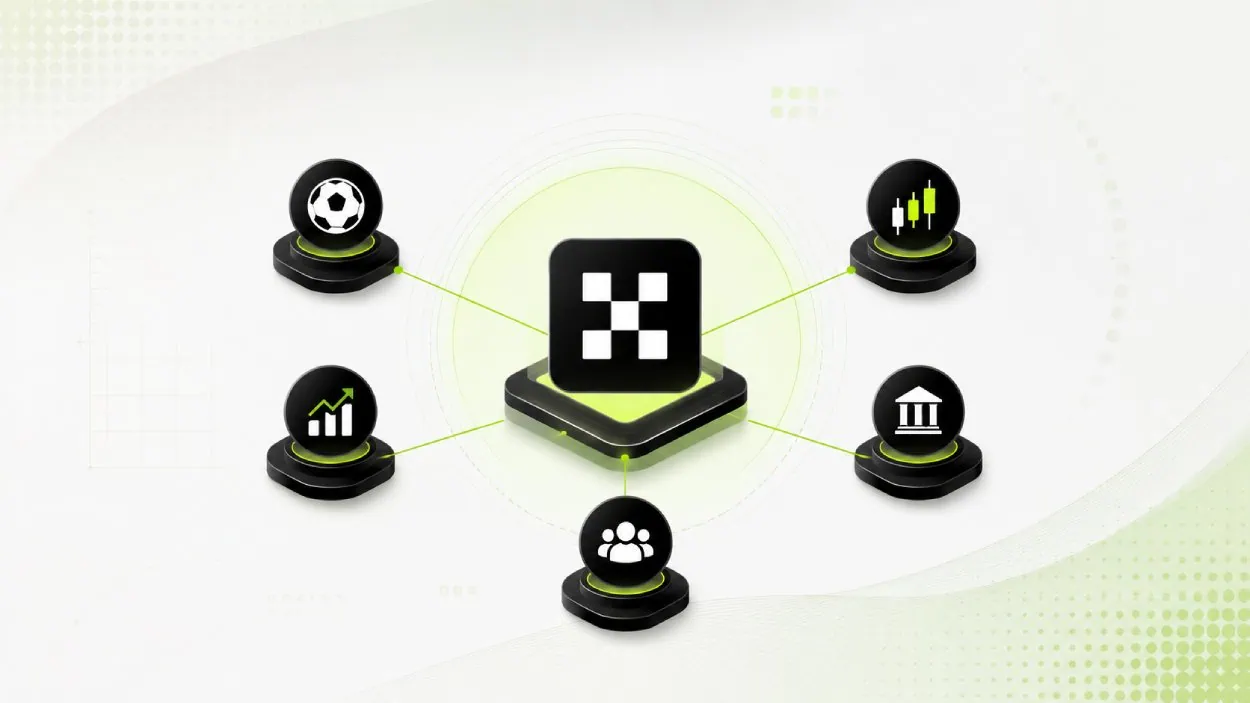






OKX has launched Exchange OS on X Layer, allowing developers and institutions to create their own onchain trading markets using shared infrastructure.
Key Takeaways
- OKX introduced Exchange OS, a new protocol upgrade built on X Layer for deploying custom trading venues.
- The infrastructure supports spot markets, perpetual futures, and outcome markets without centralized approval.
- The first venue launching in June will focus on 2026 World Cup outcome trading markets.
- OKX says the system is designed to solve fragmented onchain trading infrastructure by offering shared execution and settlement layers.
What Happened?
OKX has officially introduced Exchange OS, a major infrastructure upgrade for its Ethereum compatible Layer 2 network, X Layer. The new framework allows developers, institutions, and ecosystem participants to launch custom onchain trading venues using the same infrastructure stack that powers OKX’s own exchange systems.
According to the newly released Exchange OS whitepaper and official announcement, the protocol is designed to support multiple market types, including spot trading, perpetual futures, and outcome based markets, while giving builders flexibility over compliance settings, revenue models, assets, and user experiences.
Introducing Exchange OS, a major upgrade to X Layer.
— OKX (@okx) May 26, 2026
Deploy institutional-grade or Web3-native trading venues on open, permissionless infrastructure without rebuilding from scratch, and use customizable compliance controls to fit your framework.
Read the whitepaper:… https://t.co/0xzVSdhFWa
OKX Wants to Simplify Market Creation
The company said one of the biggest problems in decentralized finance today is fragmented infrastructure. While blockchains made asset issuance more open, trading systems, settlement layers, liquidity management, and risk controls still remain spread across isolated applications and venues.
Through Exchange OS, OKX aims to move core exchange functions directly to the protocol layer. These include matching engines, margin systems, liquidation processes, settlement infrastructure, and risk management tools.
The company stated in its announcement:
Instead of forcing builders to rely on centralized systems or create complex exchange infrastructure from scratch, Exchange OS allows operators to deploy markets using configurable components already built into X Layer.
Developers Can Launch Markets Without Approval
One of the biggest features of Exchange OS is permissionless deployment. Developers and institutions can launch trading venues through the X Layer Improvement Proposal for Exchange OS without requiring direct approval from OKX.
Builders can customize several elements of their platforms, including:
- Asset selection
- Oracle systems
- Revenue structures
- Market models
- Compliance frameworks
OKX said the system is flexible enough to support both regulated and permissionless environments. For example, traditional institutions can build fully KYC compliant markets, while Web3 native teams can launch open decentralized trading venues using the same infrastructure.
However, deployers must first stake OKB in the X Layer staking contract before launching a venue.

First Market Launches in June
To demonstrate the capabilities of Exchange OS, OKX confirmed that the first venue built on the infrastructure will launch in June.
The platform will feature 2026 World Cup Outcomes, a simulated prediction market focused on sports related event contracts. Users will be able to trade Yes or No positions tied to real world outcomes connected to the tournament.
OKX noted that references to FIFA or the World Cup do not indicate endorsement from FIFA.
The company explained that it chose to launch its own venue first before expanding the infrastructure more broadly across the ecosystem.
Shared Infrastructure With High Performance
OKX claims that every venue launched through Exchange OS will operate using the same institutional grade infrastructure stack behind its exchange operations.
According to the company, the system supports:
- Millisecond level matching latency
- Unified settlement systems
- Shared margin infrastructure
- Up to 300,000 transactions per second throughput
The framework also allows traders to move capital across spot, derivatives, and outcome markets without splitting liquidity across disconnected platforms.
Ecosystem Expansion Continues
The Exchange OS rollout follows several recent expansions tied to X Layer.
Earlier this year, Uniswap launched on X Layer, giving users access to swaps and liquidity tools for assets such as xBTC, USDT, and USDG. In March, Aave also expanded to the network, enabling OKX Wallet users to lend, borrow, and earn yield directly on X Layer.
OKX has also integrated payment infrastructure through its Payment SDK, allowing developers to process one time, batch, and pay as you go transactions with low or zero gas costs.
The company said the broader vision behind Exchange OS is to create more open and interoperable financial markets where liquidity, trading strategies, and assets can move efficiently across venues.
Several ecosystem partners were also named in the announcement, including Chainlink, Pyth Network, Chainalysis, Alibaba Cloud, Optimism, Maple Finance, and Amber Group.
CoinLaw’s Takeaway
I think OKX is making a serious attempt to push onchain finance closer to traditional exchange level performance while keeping decentralization principles intact. In my experience, one of the biggest issues in crypto trading today is that liquidity and infrastructure remain scattered across too many isolated ecosystems.
I found the idea of shared market infrastructure particularly interesting because it could reduce friction for both builders and traders. If Exchange OS gains adoption, it may help create a more connected onchain trading environment where launching a market becomes as simple as deploying an application.