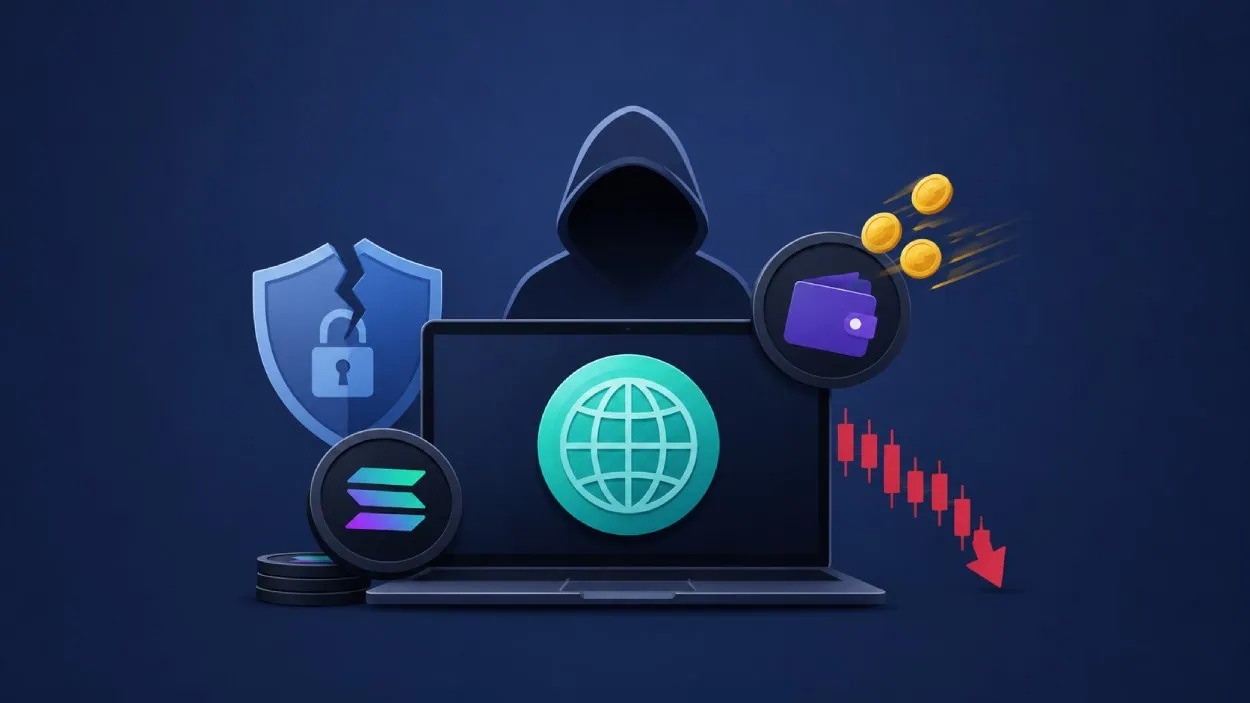






Crypto trader James Wynn denied involvement in the sudden collapse of the Solana based $WORLD memecoin after claiming his X account had been hacked during the token launch.
Key Takeaways
- James Wynn claimed his X account was hacked after posts promoting the Solana based $WORLD token appeared online.
- Blockchain trackers including Lookonchain alleged the token was rugged shortly after launch, with attackers reportedly extracting around 3.2 SOL.
- The token briefly reached a market cap between $30,000 and $35,000 before crashing within minutes.
- The controversy reignited concerns around influencer backed memecoins, hacked social accounts, and Solana pump.fun scams.
What Happened?
The controversy started after posts from James Wynn’s X account promoted a newly launched Solana memecoin called $WORLD. The token was reportedly created through pump.fun and quickly gained attention due to Wynn’s large online following and reputation as a high risk crypto trader.
Within minutes of launch, the token collapsed after liquidity disappeared, leading blockchain investigators and crypto users to accuse the project of being a rug pull. Wynn later denied involvement and stated publicly, “If it’s not obvious already my account was hacked.”
James Wynn(@JamesWynnReal) just launched a token called $WORLD and rugged it.
— Lookonchain (@lookonchain) May 28, 2026
He made only 3.2 $SOL($260) from it.https://t.co/ZVWYPylm9l pic.twitter.com/DrXUFFlpSo
$WORLD Token Collapse Triggers Fresh Controversy
According to on chain tracker Lookonchain, the wallet linked to the $WORLD launch allegedly removed liquidity shortly after trading activity started. The reported proceeds from the incident totaled roughly 3.2 SOL, worth around $260 at the time.
Blockchain records shared by users on X and Solscan appeared to show the token creator wallet launching the token, injecting initial liquidity, and rapidly swapping out SOL as buyers entered the market. The token briefly surged to a market capitalization estimated between $30,000 and $35,000 before collapsing close to zero within minutes.
Several users claimed the liquidity removal happened less than ten minutes after launch, making the incident one of the fastest memecoin collapses discussed on crypto X this week.
The unusual part of the story was not the amount stolen, but the profile involved. Wynn has built a reputation in crypto markets through massive leveraged Bitcoin trades, high risk memecoin positions, and public trading activity on HyperLiquid. Because of that visibility, even a small incident quickly gained traction online.
James Wynn Says His Account Was Compromised
Shortly after the backlash intensified, Wynn denied launching the token and blamed the incident on a hacked X account.
The promotional posts included a stylized image of Wynn alongside the phrase “WELCOME TO THE REAL WORLD JAMES,” which helped attract early buyers before the token crashed.
While some traders accepted the hacking explanation, others remained skeptical and pointed to previous controversies connected to Wynn’s name. Community members circulated screenshots, wallet data, and older posts as debate around the incident intensified.
The situation also reopened discussions around previous memecoin projects linked to Wynn, including tokens such as YEPE, ASSDAQ, and MOONPIG, all of which previously attracted criticism from sections of the crypto community.

Solana Memecoin Risks Remain a Major Concern
The incident has once again highlighted growing risks across Solana’s memecoin ecosystem, particularly on platforms like pump.fun where token creation requires minimal cost and technical knowledge.
Crypto security analysts have repeatedly warned that hacked influencer accounts are increasingly being used to push fake token launches and short lived speculative scams. A verified or recognizable profile can create immediate trust among traders, allowing attackers to attract liquidity before users verify the legitimacy of a project.
The $WORLD case followed a familiar pattern seen in many recent memecoin scams:
- A recognizable social media account promotes a new token.
- Artificial activity creates early momentum.
- Retail traders rush into low liquidity markets.
- Liquidity disappears shortly after launch.
For traders, the incident serves as another reminder to verify token details, creator wallet activity, holder concentration, and account recovery status before buying newly launched memecoins.
Why the Story Spread So Quickly?
Although the reported payout was relatively small compared to major crypto exploits, the controversy exploded because it combined several high attention elements at once.
The story involved:
- A well known crypto personality.
- A hacked social media account claim.
- A fast moving Solana memecoin launch.
- Allegations of a rug pull.
- On chain wallet investigations happening in real time.
That combination helped turn a minor financial incident into one of the most discussed crypto stories across X.
For James Wynn, the fallout appears more reputational than financial. But for the broader crypto market, the episode underscores how quickly trust can collapse when social media influence, memecoin speculation, and on chain transparency collide in real time.
CoinLaw’s Takeaway
In my experience, stories like this show that crypto markets still react more to narrative and personality than actual dollar value. A $260 rug pull normally would not become global crypto news, but when a high profile trader is involved, every wallet movement gets amplified instantly.
I found the bigger issue here is not the amount lost, but how easily hacked accounts and influencer credibility can still manipulate trader behavior in minutes. The Solana memecoin ecosystem continues to reward speed over verification, and that creates the perfect environment for scams, confusion, and panic buying.