





Circle rebuffed court orders in Wisconsin and New York meant to help recover stolen crypto-scam funds, prosecutors allege, in an investigation published July 8, 2026. Walworth County, Wisconsin, filed a rare criminal complaint against the $17-billion stablecoin issuer over a single scam case.
Key Takeaways
- Wisconsin prosecutors filed a criminal complaint against Circle, alleging the company disobeyed a court order to recover approximately 381,000 stolen USDC.
- Circle called the Wisconsin complaint meritless and said it lacked the technical capability to invalidate and reissue the frozen tokens.
- Blockchain researcher Yury Serov estimates Circle keeps at least 119 million USDC tokens frozen, funds New York prosecutors say it does not return to victims.
- Tether told ICIJ it has reissued $1.1 billion in illicitly obtained tokens and helped freeze about $4.7 billion tied to illicit activity.
- Circle disclosed a new agreement with federal prosecutors to freeze and reissue USDC for victim compensation, without confirming it applies to the Wisconsin case.
What Happened?
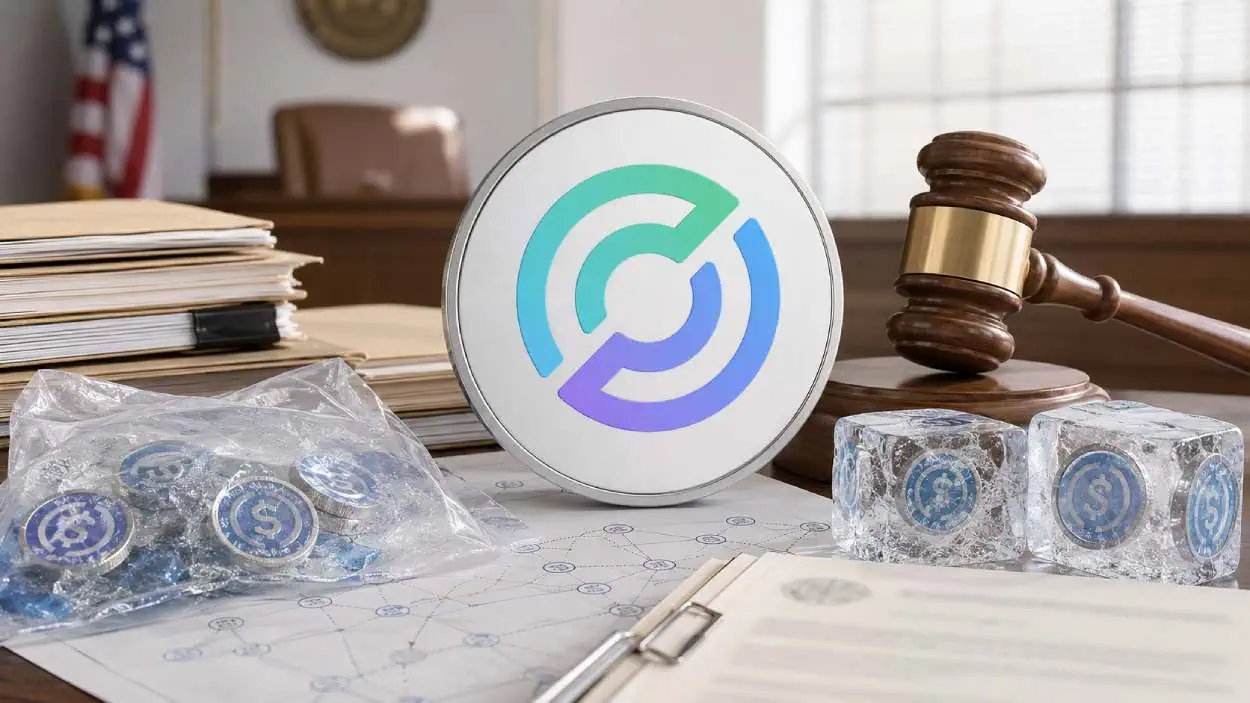
A Walworth County court ordered Circle to freeze the approximately 381,000 stolen USDC that August, after the funds moved through a romance-investment scam into a private crypto wallet. Circle froze the funds.
In early December, a Wisconsin judge signed a warrant ordering Circle to invalidate the frozen tokens and transfer an equal amount of new USDC to a wallet owned by the Walworth County Sheriff’s Office. After Circle said it could not comply, prosecutors filed a single misdemeanor count complaint, alleging Circle did intentionally disobey, resist, or obstruct the court.
Karen Greenway, a former FBI agent and financial crime expert, called it highly unusual for a state prosecutor to level a criminal charge against a major financial firm like Circle. Prosecutor Thomas Binger was blunt: The tools that are at our disposal are not keeping up with the tools the criminals are using.
Circle called the complaint meritless, said it lacked the technical capability to comply, and argued the Wisconsin court had no jurisdiction to issue the order. The dispute reaches beyond one county: Milwaukee County detective Scott Simons said he has seen more than a dozen cases nationwide where Circle declined a freeze request or a court order arrived too late.
ICIJ: Circle Faces Criminal Complaint in Wisconsin Over Refusal to Recover Scam Victim Funds
— Wu Blockchain (@WuBlockchain) July 9, 2026
An ICIJ investigation reported that law enforcement authorities in Wisconsin and New York accused Circle of refusing to assist in freezing or recovering scam victims’ USDC. Wisconsin… pic.twitter.com/QZv7PNN0Du
Circle’s Capability Defense, Tested Against Tether
Circle maintained in its filing that it did not have the ability to invalidate and reissue the frozen tokens. Tether’s software, by contrast, lets the company destroy or “burn” tokens in illicit wallets and reissue an equal amount to law enforcement, and Tether told ICIJ it has reissued $1.1 billion worth of tokens obtained illicitly through various financial crime typologies.
Joshua Cooper-Duckett, a cryptocurrency tracing expert at Cryptoforensic Investigators, said Circle could update the code that governs its tokens to allow the same kind of burning. He called it the excuse of not being able to burn and reissue, a line Circle repeats.
Circle’s own disclosure undercut that defense. In a footnote to its Wisconsin filing, Circle said it reached a general agreement with federal prosecutors on a mechanism for compensating victims: certain USDC would be permanently frozen and an equal value of new tokens reissued, functionally the same burn-and-reissue outcome Circle told the Wisconsin court it could not perform. Circle did not say whether that method could apply to the Wisconsin case or whether the federal arrangement is a binding settlement.
The Regulatory Gap Behind the Freeze
New York prosecutors and the state’s attorney general wrote to U.S. Senators in January that Circle denies law-enforcement freeze requests lacking a court order and has not honored court orders to return stolen funds to victims. The letter tied it to Circle’s balance sheet: Circle’s motive for not assisting law enforcement becomes crystal clear: it is financially preferable to only freeze cryptocurrency deemed to have been stolen, but not return the underlying asset to law enforcement or any fraud victim, because Circle can continue to collect the interest through investment of the underlying funds.
The 2025 GENIUS Act gave stablecoins federal legitimacy but wrote no rule for what happens once tokens reach a scammer’s wallet. Its reserve and disclosure duties bind issuers at the point of minting, yet impose no obligation to claw stolen funds back to victims. That silence is the statutory gap New York’s letter asks Congress to close.

CoinLaw’s Takeaway
This case layers two disputes together. One is jurisdictional: can a county court force a global stablecoin issuer to invalidate and reissue tokens, or is that authority reserved for federal actors? Circle’s jurisdiction defense, not the underlying scam, is what will decide whether Wisconsin’s approach becomes a template other prosecutors copy.
The other is credibility: the same filing that pleads incapability footnotes a federal freeze-and-reissue mechanism Circle told the court it could not deliver.
Circle’s USDC is a $17-billion stablecoin franchise, marketed as the compliant, regulated alternative to Tether, yet Tether’s disclosed record on illicit tokens now sets the practical bar. Simons put it bluntly: victims get told law enforcement is kind of out of luck. Until Congress or a court forces the question, the gap between what Circle can do and what it says it can do keeps landing on the victims prosecutors are trying to help.