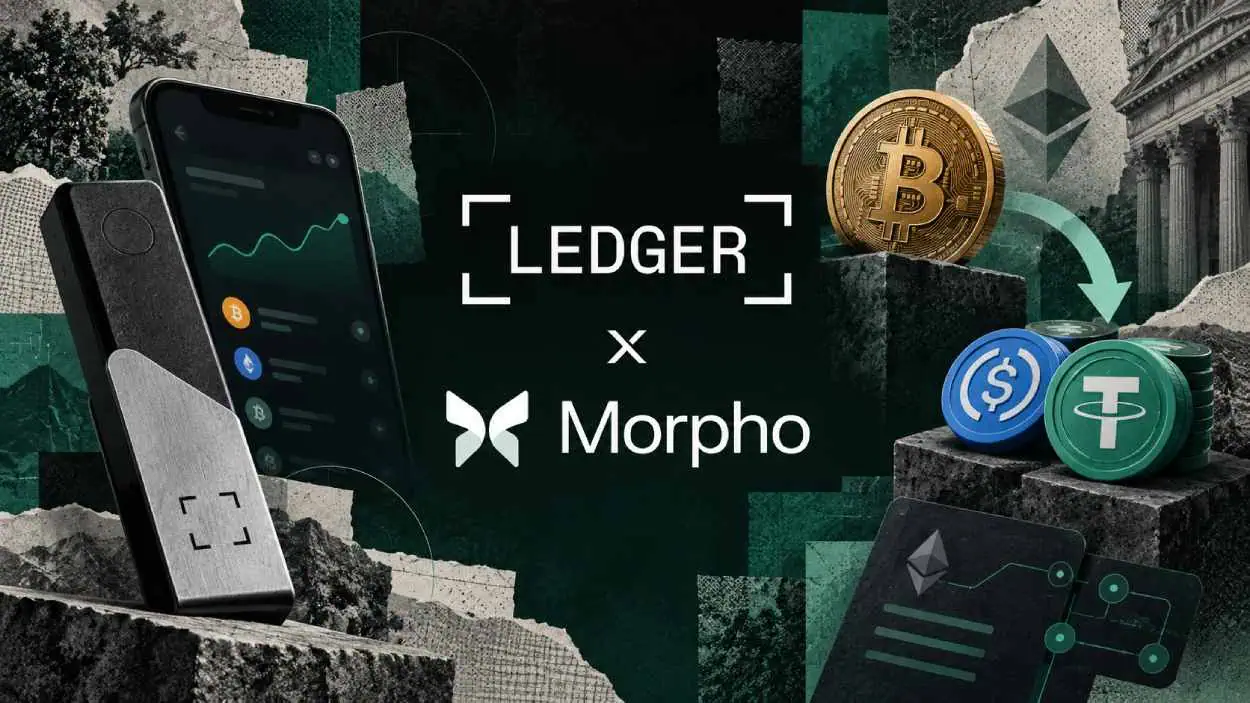






Ledger began rolling out Crypto Loan on October 7, 2026, letting eligible Ledger Wallet users borrow USDC or USDT against wrapped Bitcoin through Morpho. The device signs every step a borrower takes, yet a liquidation can claim the collateral with no approval from it.
What Happened?
- Ledger Wallet users can borrow USDC or USDT against WBTC or cbBTC in four Morpho lending markets on Ethereum.
- Morpho runs loan origination, Yield.xyz built the integration, and Ledger neither lends nor holds the pledged assets.
- Private keys stay on the Ledger device, while pledged tokens move into a Morpho smart contract with its own liquidation rules.
- Outside liquidators can repay an unhealthy loan and take collateral plus a bonus without any sign-off from the borrower’s device.
Clear Signing covers each step a borrower starts
Crypto Loan runs in Ledger’s desktop and mobile apps and pairs either wrapped Bitcoin token with either stablecoin. Borrowers read each transaction in plain language on the device before approving it, according to Ledger’s borrowing guide. “Every step Clear Signed on your Ledger signer,” Ledger said in its launch announcement.
Ledger is also opening a wider route into the protocol. A Ledger blog post describes direct access to the Morpho App from Ledger Wallet. That route reaches Morpho Blue isolated markets and MetaMorpho vaults on Ethereum and major L2s. Each deposit or borrow there takes two device signatures: a token approval, then the action itself.
Crypto Loan via @Ledger Wallet™, powered by Morpho Ledger users can now borrow against wrapped BTC, all within self-custody. Morpho is Ledger’s infrastructure of choice to become an all-in-one platform for digital assets: first with Stablecoin Earn, and now Crypto Loan. https://t.co/gyfG5mY3AZ
— Morpho 🦋 (@Morpho) October 7, 2026
The approval is the signature Ledger singles out. On software-only setups, the post says, that permission appears as unreadable code that users can’t verify. Clear Signing renders it as readable text on the device screen, and Transaction Check simulates the outcome before confirmation.
Liquidations run without the borrower’s device
Ledger sets the default loan-to-value ratio, debt measured against collateral value, at 50%, and users can adjust it. Its help page lists an 86% liquidation threshold. Once a position crosses that line, Morpho’s rules let any external liquidator repay some or all of the debt. The liquidator collects collateral plus a bonus in return.
That liquidator needs no fresh approval from the borrower’s Ledger device. Falling collateral prices and accruing interest can each push a loan past the limit.
Crypto Loan also charges a 1% fee on the borrowed amount, separate from network and protocol costs. Interest rates float with how heavily each underlying market is used. The app shows the rate and the required collateral whenever a user simulates a loan.
Offline keys leave several exposures untouched, as with other DeFi protocols. WBTC and cbBTC are BTC-backed tokens, so a borrower’s position also rests on:
- The custodian holding the BTC behind each wrapped token.
- Morpho’s lending smart contracts and their liquidation logic.
- The price feeds that value the collateral.
- Stablecoin Earn deposits, which Morpho says help supply liquidity to Crypto Loan borrowers.
Borrowers with an open loan can pull the ratio down by adding collateral or repaying debt before liquidation. Full repayment lets them withdraw whatever collateral remains, according to Ledger’s help page. The launch details leave two points unclear: which users qualify as eligible, and whether Ledger Wallet alerts borrowers as a loan nears the threshold.
Why It Matters?
Crypto Loan builds on Ledger’s Stablecoin Earn service, which launched last year. Morpho also powered Coinbase’s Bitcoin-backed loan launch in January 2025.
Every action a borrower starts passes across the signer’s screen first, and the action that ends an unhealthy loan never does. Under Morpho’s rules, a position opens to any liquidator once its ratio crosses the threshold, with no signature in the path. For self-custody wallet users, that ratio now carries as much weight as the device itself.