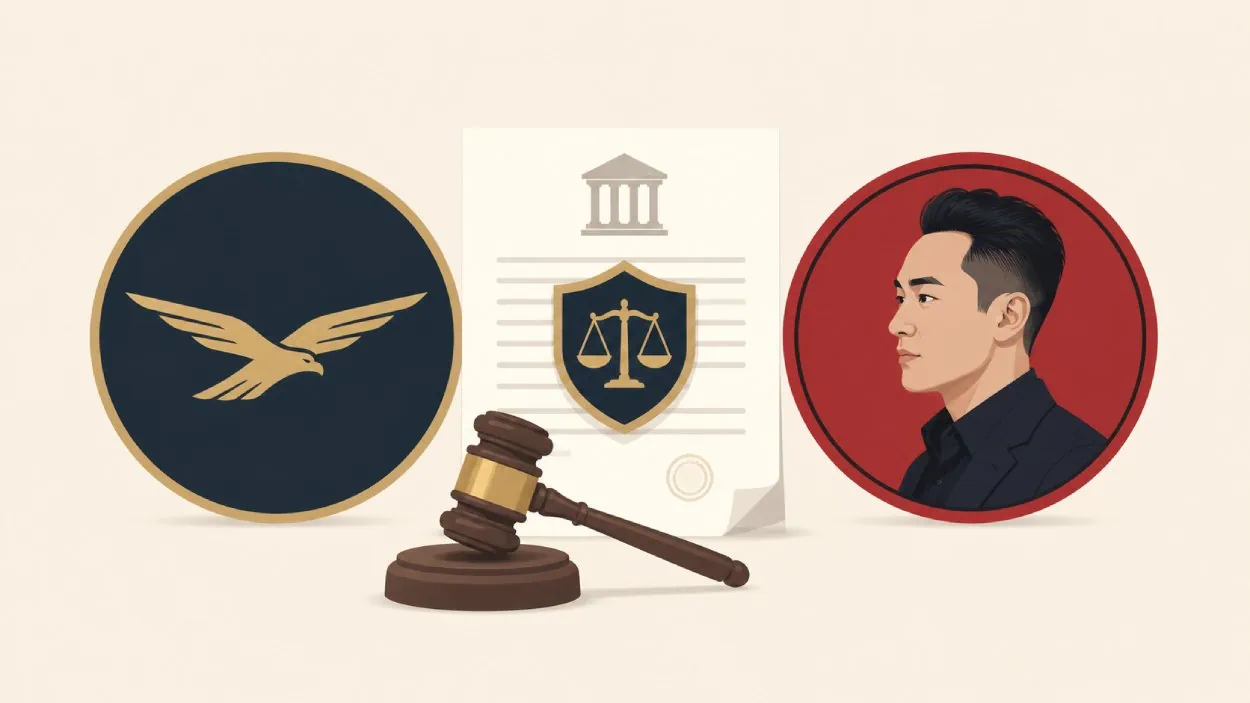






World Liberty Financial has filed a defamation lawsuit against Justin Sun, escalating an ongoing dispute over token freezes, governance rights, and alleged misconduct tied to its WLFI token.
Key Takeaways
- World Liberty Financial has sued Justin Sun in Florida, accusing him of running a coordinated defamation campaign.
- The dispute stems from frozen WLFI tokens linked to Sun’s entities after alleged violations of investment terms.
- Sun previously filed his own lawsuit claiming unfair treatment, including loss of governance rights.
- The conflict now includes allegations of short selling, misinformation, and governance manipulation, raising broader concerns in decentralized finance.
What Happened?
World Liberty Financial announced it has filed a defamation lawsuit against Justin Sun in a Florida state court, claiming he spread false and damaging statements about the project. The move comes shortly after Sun filed his own lawsuit in California, accusing the company of fraud and unfairly freezing his assets.
The legal battle highlights a growing conflict involving token ownership, governance rights, and public accusations that have drawn widespread attention in the crypto space.
Today, we are filing a lawsuit against Justin Sun for defamation. Sun has launched a coordinated media smear campaign against World Liberty Financial and refused to stop even when confronted with the truth.
— WLFI (@worldlibertyfi) May 4, 2026
Here’s the story.🧵
Lawsuit Centers on Alleged Defamation Campaign
World Liberty Financial claims that Justin Sun launched a deliberate and coordinated campaign to damage its reputation after the company froze tokens linked to his entities. According to the complaint, Sun used social media posts, influencers, and public statements to spread claims that the platform had hidden mechanisms and unfair governance practices.
Tom Clare, attorney for World Liberty Financial said:
The company alleges that these statements were false and misleading, and were made despite Sun’s prior knowledge of the platform’s rules and agreements.
Token Freeze and Alleged Violations
At the center of the dispute is World Liberty’s decision to freeze WLFI tokens associated with Sun-linked entities, including Blue Anthem. The company says the action was taken after discovering prohibited activities, including:
- Unauthorized transfers of WLFI tokens, including movements to Binance.
- Alleged straw purchases on behalf of undisclosed third parties.
- Suspected short selling of the WLFI token, which was restricted under agreements.
World Liberty maintains that its token freezing mechanism was clearly disclosed in its Terms of Sale and contractual agreements signed by Sun.
The company also emphasized that the move was intended to protect the ecosystem and its community, not to target any individual investor.

Contradicting Public Statements Raise Questions
A key argument in the lawsuit is that Sun’s public statements conflicted with his earlier support for the project. After the token freeze, Sun reportedly described WLFI as “one of the biggest and most important projects in crypto” and said he was “fully aligned with the mission.”
However, the company claims that behind the scenes, Sun made threats, warning that he could “light World Liberty on fire” and cause the token price to collapse if his demands were not met.
The lawsuit further alleges that Sun later reversed his stance publicly, accusing the platform of embedding a “backdoor blacklisting function in the smart contract” and calling its governance system a “dictatorship wearing the mask of a DAO.”
Sun’s Counter Lawsuit and Governance Claims
Justin Sun had earlier filed a lawsuit against World Liberty Financial, arguing that the company wrongfully froze his tokens and stripped him of governance rights.
“They wrongfully froze all of my tokens, stripped me of my right to vote on governance proposals, and have threatened to permanently destroy my tokens by ‘burning’ them,” Sun said in his complaint.
He also claimed that the platform included undisclosed features that could freeze or confiscate investor assets, raising concerns about transparency in decentralized finance systems.
World Liberty has strongly rejected these allegations, stating that all governance mechanisms remain transparent and community driven.
Broader Impact on Crypto Trust and Governance
The escalating legal battle has drawn attention to larger issues in the crypto industry, including:
- Trust in decentralized governance systems.
- Transparency of smart contract functions.
- Investor protections and enforcement mechanisms.
World Liberty claims that Sun’s actions have already caused real business damage, including the collapse of at least one potential partnership.
The company is now seeking compensatory and punitive damages, along with a court ordered retraction of Sun’s public statements.
CoinLaw’s Takeaway
In my experience, this case highlights a growing tension in crypto between decentralization and control. Projects promise openness, but situations like this show that contractual rules and enforcement still play a major role. I found it especially striking that both sides are using the same facts to tell completely different stories. That usually signals deeper issues in transparency and communication.
If this dispute continues to escalate, it could set an important precedent for how token freezes, governance rights, and public accountability are handled in the industry. For investors, it is a reminder to always read the fine print in token agreements, no matter how decentralized a project claims to be.