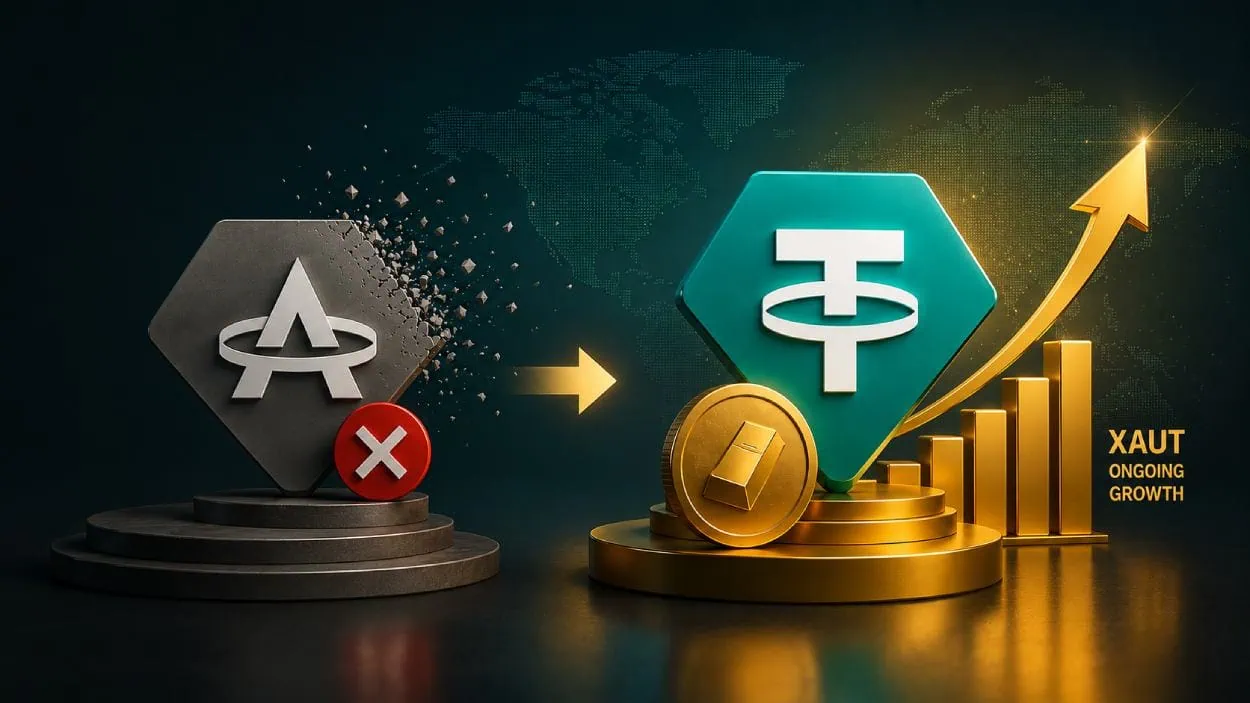






Tether is winding down its Alloy platform and aUSDT stablecoin as the company shifts resources toward products with stronger demand, including its gold backed token XAUT.
Key Takeaways
- Tether has begun a phased shutdown of Alloy by Tether and the aUSDT stablecoin.
- New position openings and new aUSDT minting have been disabled immediately.
- Users have until September 17, 2026, to redeem aUSDT and recover their XAUT collateral.
- Tether says it will focus on higher demand products such as XAUT, USDT, and other core ecosystem offerings.
What Happened?
Tether announced plans to discontinue Alloy by Tether and its gold backed derivative stablecoin aUSDT following a review of user activity, market demand, and the company’s broader business priorities. The move marks the end of an experiment that aimed to bring gold collateralized assets into decentralized finance while giving users access to dollar denominated liquidity.
As part of the wind down process, Tether has already disabled the creation of new positions and halted the minting of new aUSDT tokens. Existing users will have a three month window to unwind positions and redeem their collateral before the platform’s redemption process ends.
🔴 NEW: #Tether is shutting down Alloy by Tether and its gold-backed aUSDT #stablecoin.
— Coinpaper (@coinpapercom) June 18, 2026
The company says it is reallocating resources toward products with stronger demand, liquidity, and long-term growth potential. pic.twitter.com/m3rsF2dtby
Tether Begins Phased Shutdown of Alloy and aUSDT
The company said the shutdown will occur gradually to allow users sufficient time to exit their positions. Starting immediately, the Alloy by Tether interface no longer allows users to open new positions or mint new aUSDT.
Existing holders can continue returning aUSDT and withdrawing their XAUT collateral during the transition period. However, Tether warned that users who fail to return their aUSDT by September 17, 2026 will no longer be able to recover their XAUT through the Alloy platform.
According to the company, this approach is intended to provide an orderly transition while preventing additional exposure from being created during the wind down period.
What Was Alloy by Tether?
Launched in June 2024, Alloy by Tether was designed as an open platform focused on tokenized assets backed by Tether Gold (XAUT). Through Ethereum smart contracts, users could deposit XAUT as collateral and mint aUSDT, a dollar pegged digital asset backed by gold reserves.
The structure allowed investors to maintain exposure to gold while accessing dollar like liquidity without selling their underlying holdings. Tether also used the platform to study how users interact with tokenized real world assets, collateralized products, and gold backed digital instruments.
The company said the project provided valuable insights into market demand and user behavior, even though adoption remained relatively limited compared with its flagship products.

XAUT Remains Central to Tether’s Gold Strategy
While aUSDT is being discontinued, Tether emphasized that it remains committed to tokenized gold through XAUT.
The company described XAUT as a core product that continues to see stronger user demand, deeper liquidity, and broader long term opportunities. According to figures cited by Tether, XAUT has grown into a significantly larger business with an estimated market value of around $3 billion, backed by more than 22,000 kilograms of physical gold.
By comparison, Alloy and aUSDT remained relatively small. The platform reportedly held a market capitalization of roughly $1.2 million and was backed by approximately 14.73 kilograms of gold valued at about $2.2 million.
The substantial difference in scale appears to have played a major role in Tether’s decision to focus on XAUT while retiring the smaller derivative product.
Part of a Broader Product Strategy
The Alloy shutdown is not the first time Tether has trimmed products with limited adoption. The company previously discontinued support for CNHT, its Chinese yuan stablecoin, and EURT, its euro denominated stablecoin, citing weak demand and changing market conditions.
At the same time, Tether has expanded its focus beyond stablecoins. The company has invested in areas including Bitcoin mining, artificial intelligence, robotics, cloud infrastructure, and tokenization services.
Tether has also developed its Hadron tokenization platform and pursued partnerships aimed at advancing blockchain adoption and tokenized asset projects. These initiatives reflect a broader strategy centered on products and sectors that offer larger addressable markets and stronger growth potential.
Why the Decision Matters?
The closure of Alloy and aUSDT highlights a challenge faced by many specialized crypto products. While innovative concepts can attract attention, achieving meaningful liquidity and mainstream adoption remains difficult.
For Tether, the move represents a strategic consolidation around products that have already demonstrated significant market demand. Rather than continuing to support a niche offering, the company is redirecting resources toward assets and infrastructure that can scale more effectively.
The decision also underscores the growing importance of tokenized gold products like XAUT, which continue to attract interest from users seeking blockchain based exposure to physical assets.
CoinLaw’s Takeaway
In my experience, this looks less like a failure and more like a practical business decision. Tether tested a unique gold collateralized stablecoin model, gathered market data, and then chose to focus on products that users actually adopted at scale. I found the most important part of this announcement is that Tether is not abandoning tokenized gold. Instead, it is concentrating on XAUT, a product that already has significant liquidity and market traction. As crypto companies mature, we are likely to see more firms streamline their product portfolios and prioritize offerings with clear demand and sustainable growth.