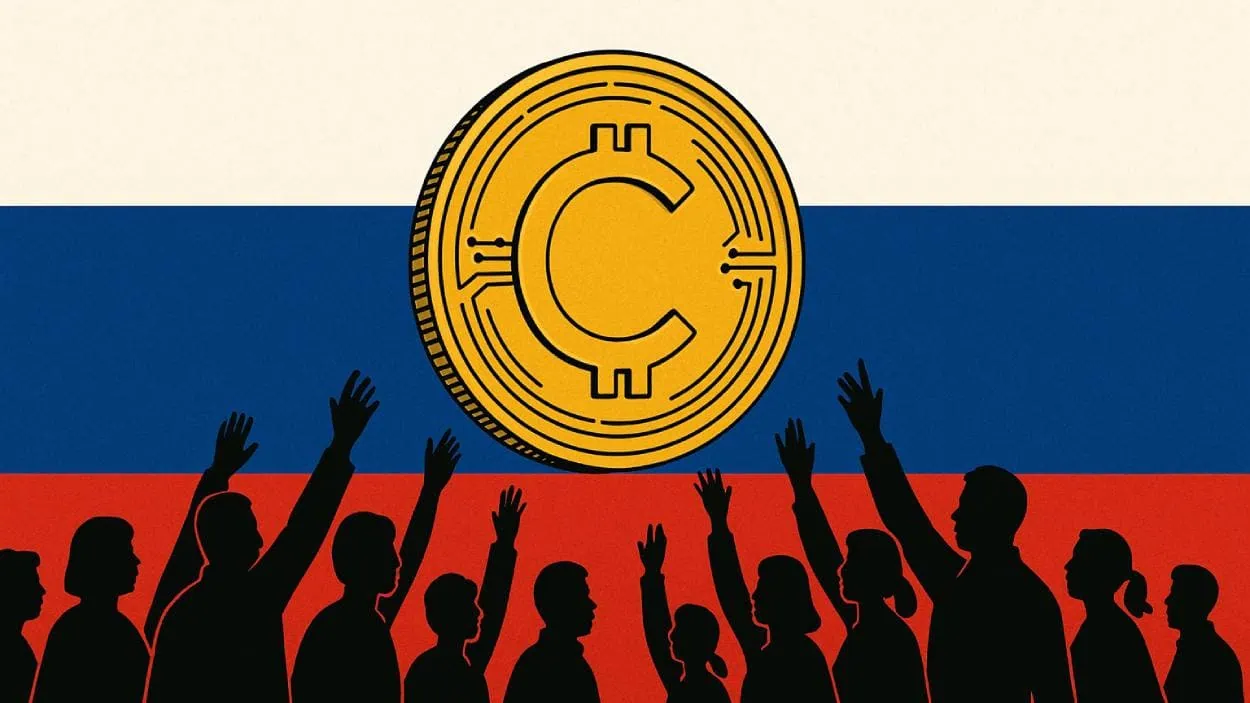






On July 6, 2026, Sberbank, Russia’s largest bank, said it plans to introduce the wallet through Sberbank Online and SberInvestments by December. Kirill Tsarev, first deputy chairman at Sberbank, outlined the plan during the Bank of Russia Financial Congress.
Key Takeaways
- Sberbank plans a digital depository that stores and records crypto holdings by year-end, built into its Sberbank Online and SberInvestments apps.
- Bank of Russia deputy Vladimir Chistyukhin, first deputy governor of the Central Bank of Russia, told RBC that the law will take effect on Sept. 1, the effective date for the “On Digital Currency and Digital Rights” bill governing the rollout.
- Retail traders face a testing regime and an annual limit of about 300,000 rubles ($3,800).
- Market participants must complete official registration by July 1, 2027 under the bill.
- Moscow Exchange also plans to launch crypto operations by the end of 2026, with VTB and T-Bank moving in parallel.
What Happened?
Sberbank confirmed the December plan hinges on passage of the digital-asset bill, according to CoinCentral. Tsarev said the bank would be ready to offer the service once regulations are in place. The licensing regime, not the launch, is the binding timeline.
That framing hands a state-controlled, Western-sanctioned bank a legal path into crypto rails. The same bill caps retail trading and sets a registry deadline, the two guardrails that shape how regulators read the move.
Sberbank stages the rollout across its main apps. Sberbank plans to introduce crypto wallets in stages through its Sberbank Online and SberInvestments apps, with a launch scheduled for December. The bank targets December 1 for a digital depository that stores and records crypto holdings.
NEW: Russia’s largest bank Sberbank plans to launch a crypto wallet and digital depository by December, pending passage of new digital asset legislation expected to take effect September 1. pic.twitter.com/oyEB4nKjXj
— CoinDesk (@CoinDesk) July 6, 2026
The Licensing Structure Behind the Launch
The bill creates four license categories, not a single crypto-legalization switch. The bill sets out a licensing framework for crypto trading, custody, fiat exchange and cross-border payments. Each requires separate authorization, and Sberbank’s December target covers only custody and depository, not cross-border settlement.
Retail exposure is capped tightly. Non-qualified investors face a testing regime and an annual limit of about 300,000 rubles ($3,800), the most consumer-relevant figure. That level sits closer to a testing sandbox than an open market.
Under the bill, market participants must complete official registration before the registry deadline lapses.
That roughly eighteen-month runway is the real compliance clock in this story. The wallet’s December debut is a headline. The registry deadline forces every bank and exchange in Russia to register or exit the licensed market.
Sanctions frame the stakes. Since early 2022, sanctions tied to Russia’s invasion of Ukraine cut Russian banks off from global payment networks, and Sberbank remains state-controlled. A bank-run crypto rail carrying a license category explicitly named for cross-border settlements is likely to draw scrutiny beyond Russia’s borders.
Russia had already moved once before, when Russia legalized crypto mining and experimental cross-border crypto settlements in 2024.
Read next to that 2024 carve-out, the 2026 bill suggests a state building parallel, pre-approved settlement rails rather than opening a free market. Nothing in the reported bill text or the cited coverage asserts an intent to evade sanctions.
Banks and MOEX Are Moving Together
Rival banks are building the same rails, per CoinCentral. Meanwhile, VTB and T-Bank plan to create their own digital depositories. Separately, Moscow Exchange also plans to launch crypto operations by the end of 2026. That puts a bank-run wallet, a bank-run custody platform, and a national exchange’s crypto desk live within months of each other.
Sberbank could also broker foreign access. It may also consider acting as a domestic intermediary for foreign crypto exchanges, letting Russians reach overseas venues through an approved local firm. With Sberbank serves over 100 million retail customers, that scale would make it the default on-ramp once the wallet ships.

From Ban to Licensed Market
Russia’s posture has reversed twice. It began as a hardline stance: The Bank of Russia pushed for broad restrictions in 2022 because of financial stability concerns. The split ran through the government, because However, the Finance Ministry supported regulation instead of a full market ban.
The Kremlin then tightened one part directly. President Vladimir Putin later signed rules that restricted crypto payments for goods and services. Sanctions reversed the wider calculus, and Russia legalized crypto mining and experimental cross-border crypto settlements in 2024.
CoinLaw’s Takeaway
This reads less like a bank launching a product and more like a state finishing a licensing regime it started building in 2022. The wallet is the visible piece. The load-bearing piece is the four-category license structure plus the registry deadline, which converts “crypto is now legal” into “crypto is now supervised.“
The retail cap is the detail worth watching for ordinary Russians. A roughly $3,800 annual limit under testing conditions is a guardrail, not an opening. It signals Moscow wants adoption slow and identifiable, not fast and anonymous.
Sberbank, VTB, MOEX and T-Bank are all moving in the same window. Whether that produces real competition or a state-aligned oligopoly in Russian crypto custody depends on details the bill’s final text has not yet settled.