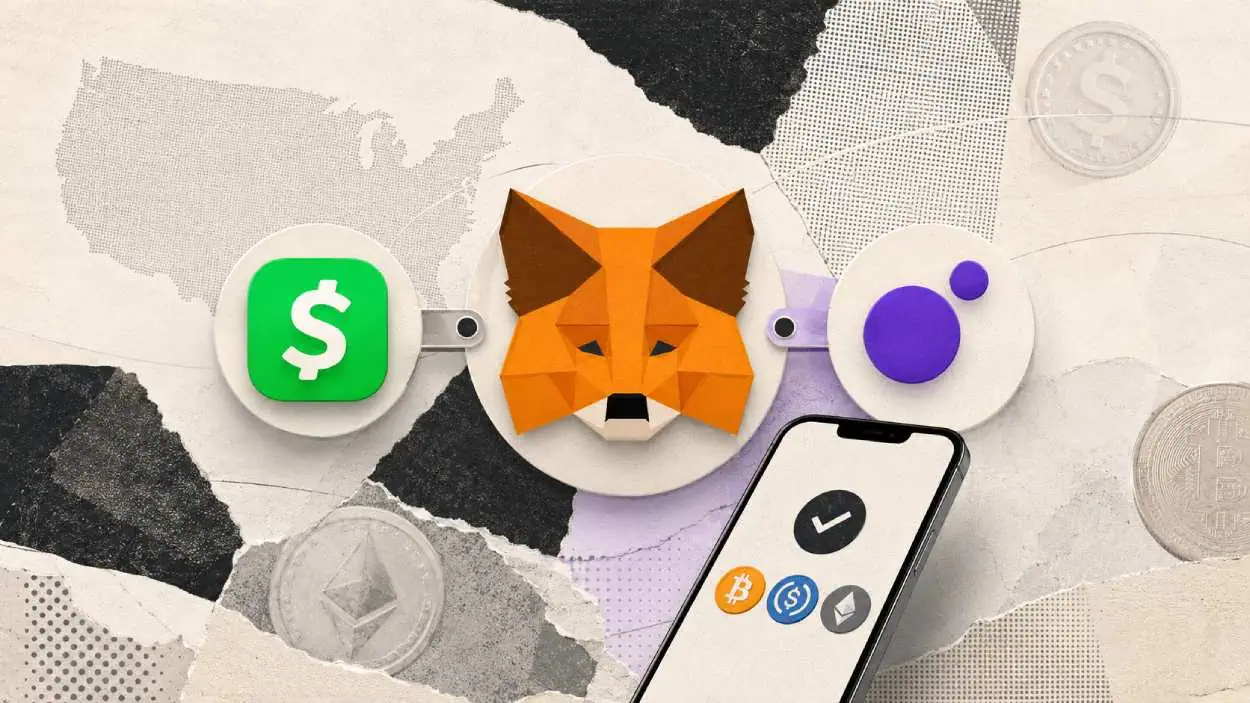






MetaMask switched on Cash App Pay for US crypto purchases on August 20, 2026, through MoonPay’s checkout. Eligible users can now fund buys directly from their Cash App balance, with no card details or separate logins required.
The Big Picture
- MoonPay added Cash App Pay as a payment method for digital assets, and the option is live inside MetaMask for eligible US customers.
- Cash App counts roughly 57 to 59 million monthly active users, a sizable new pool of potential crypto buyers.
- Cash App’s own crypto menu previously stopped at Bitcoin and USDC. MoonPay’s checkout opens a much wider set of assets.
- Purchases settle into self-custody wallets such as MetaMask and Trust Wallet, so buyers hold their own keys.
- MoonPay says it is the first platform to offer Cash App Pay for digital asset transactions.
Cash App balances now fund crypto inside MetaMask
MetaMask announced the rollout on its official X account, and MoonPay confirmed the payment option is live for eligible US customers. Buyers select Cash App Pay at checkout, confirm the transaction, and funds move from their Cash App balance into the token they are purchasing.
Cash App Pay joins PayPal and Venmo on MoonPay’s payment roster, part of the company’s broader crypto deposit expansion. The flow removes card entry and separate account logins entirely.
Existing users can look for Cash App Pay among the payment options in MetaMask’s buy flow. The announcement leaves three questions open: which US customers count as eligible, what fees apply at checkout, and exactly which assets are covered.
Cash App Pay is now available through @MoonPay on MetaMask! 🦊
— MetaMask 🦊 (@MetaMask) August 20, 2026
Eligible US customers can use their @CashApp balance at checkout when buying digital assets with MoonPay. https://t.co/57xJYide3D
A bigger menu than Bitcoin and USDC
Cash App users buying crypto inside the app were previously limited to those two assets. Routing purchases through MoonPay changes that math, letting the same balances acquire a far wider range of tokens amid broader digital wallet adoption in the US.
The destination matters as much as the menu. Coinbase and Robinhood make buying simple, but purchased assets typically sit in custodial accounts. This integration sends funds straight into wallets where the buyer controls the keys, which also shifts security and recovery responsibility onto the buyer.
Parent company Block, formerly Square, extends Cash App’s crypto footprint here without building new infrastructure. Cash App Pay becomes another rail that third parties can plug into, backed by Cash App’s standing as a licensed, regulated money services business.
CoinLaw’s Takeaway
The integration solves a distribution problem for self-custody crypto. A stubborn obstacle to moving a mainstream payments user into a wallet has been funding it, and tapping an existing Cash App balance removes that step for tens of millions of accounts. It also hands MetaMask a cleaner US on-ramp a decade into its open money platform push.
The competitive read favors coverage over novelty. PayPal and Venmo already sat in MoonPay’s checkout, so adding Cash App Pay rounds out the big US peer-to-peer payment apps on a single crypto rail. Block gains reach at little cost, since third parties do the building. The evidence so far shows a live payment option, not adoption. How many of those users actually move balances into crypto is the number to watch.