





A US court has blocked the transfer of millions in Ethereum tied to the Kelp DAO hack, creating a legal clash over who rightfully owns the frozen funds.
Key Takeaways
- A US court ordered a freeze on 30,766 ETH worth over $70 million linked to the Kelp DAO exploit.
- A law firm claims $877 million in unpaid damages from North Korea, seeking access to the frozen crypto assets.
- The freeze could delay compensation for Kelp DAO victims, especially rsETH holders.
- Aave led recovery plan faces uncertainty despite strong DAO support and pledged funds.
What Happened?
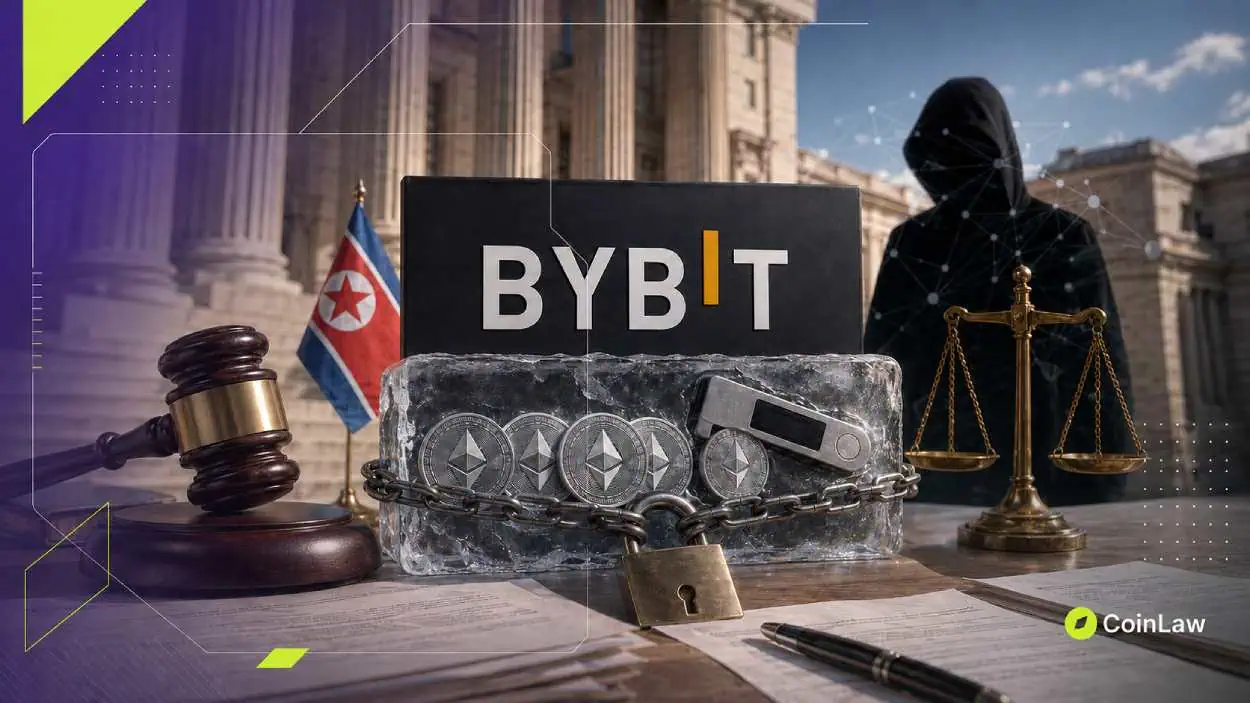
A New York district court approved a restraining order preventing the movement of Ethereum frozen after the Kelp DAO hack. The legal action introduces a competing claim over the funds, potentially delaying recovery efforts for affected users.
If courts can freeze DAO funds… how decentralized is it really? 🤔$ARB just got hit with a $71M $ETH freeze.
— Wise Advice (@wiseadvicesumit) May 3, 2026
Context:
• Funds were already frozen by the Security Council after the KelpDAO exploit
• U.S. court now blocks any movement
• DAO treated as a legal entity
•… pic.twitter.com/js5S4h579C
Court Order Freezes Kelp DAO Hack Funds
A US District Court in New York has issued a restraining order blocking the transfer of 30,766 ETH, valued between $71 million and $73 million, tied to the $292 million Kelp DAO exploit. The assets were previously frozen by the Arbitrum Security Council following the April 18 breach.
The court also approved three writs of execution, which legally prevent the Arbitrum DAO from moving the funds under threat of contempt. This decision came after Gerstein Harrow LLP, a US based law firm, filed a claim asserting rights over the frozen Ethereum.
Lawyer Charlie Gerstein stated in a forum post that the court order prohibits any transfer of the assets. He argued that the stolen Ethereum qualifies as property linked to North Korea, as investigators tied the hack to the Lazarus Group, a state backed cyber unit.
$877 Million Claim Against North Korea
The legal claim stems from three separate US court judgments issued in 2010, 2015, and 2016. These rulings awarded over $877 million in damages to families affected by acts attributed to North Korea.
Among the plaintiffs are families of victims of terrorism, including individuals such as Han Kim and Yong Seok Kim, who secured significant compensation in earlier rulings. Their lawyers argue that the frozen ETH can be treated as DPRK property under US law.
The claim relies on legal frameworks like the Foreign Sovereign Immunities Act and the Terrorism Risk Insurance Act, which allow creditors to pursue assets connected to state sponsored terrorism. If successful, the law firm could redirect the frozen funds to satisfy these long standing judgments.

Recovery Efforts Face Uncertainty
The court order arrives at a critical time for the DeFi United recovery initiative, a coordinated effort involving Aave Labs, Kelp DAO, and LayerZero. The initiative had gathered more than $311 million in pledged support, including major contributions from industry players.
A proposal submitted by Aave Labs suggested unfreezing the ETH and redirecting it to a recovery fund aimed at compensating rsETH holders. A Snapshot vote showed 99 percent support, with a decision deadline set for early May.
However, the legal freeze now puts this plan in doubt. Without access to the frozen ETH, the recovery process could face delays, leaving affected users waiting longer for compensation.
Debate Within the Arbitrum Community
The situation has sparked debate within the Arbitrum DAO. A community member known as Zeptimus argued that blocking the funds could harm victims of the hack. He said:
Zeptimus also warned that diverting the funds to unrelated claims would shift losses onto new victims rather than resolving past ones.
Legal experts have also weighed in. Attorney Gabriel Shapiro noted that the court order carries significant authority, stating:
Meanwhile, on chain investigator ZachXBT criticized the legal approach, calling it “predatory,” and raising concerns about how blockchain data is being used in such claims.
Broader Implications for DeFi Governance
The case highlights a growing tension between decentralized finance systems and traditional legal frameworks. When the Arbitrum Security Council froze the assets as an emergency measure, it effectively placed them within reach of US jurisdiction.
This move allowed plaintiffs to pursue legal claims, raising questions about how decentralized platforms handle governance during crises.
The final outcome will likely depend on an upcoming divestiture hearing, which will determine whether the funds go to hack victims or to creditors pursuing claims against North Korea.
CoinLaw’s Takeaway
In my experience, this situation shows how fragile DeFi recovery systems can become when they intersect with traditional law. I found it striking that a move meant to protect users has now opened the door to a completely different legal battle.
If courts begin prioritizing external claims over protocol level recovery, it could shake confidence in how decentralized platforms handle crises. At the same time, the legal argument is not weak, and it reflects real world claims that cannot be ignored.
This is more than just a hack story. It is a turning point for how crypto assets are treated in global legal systems.