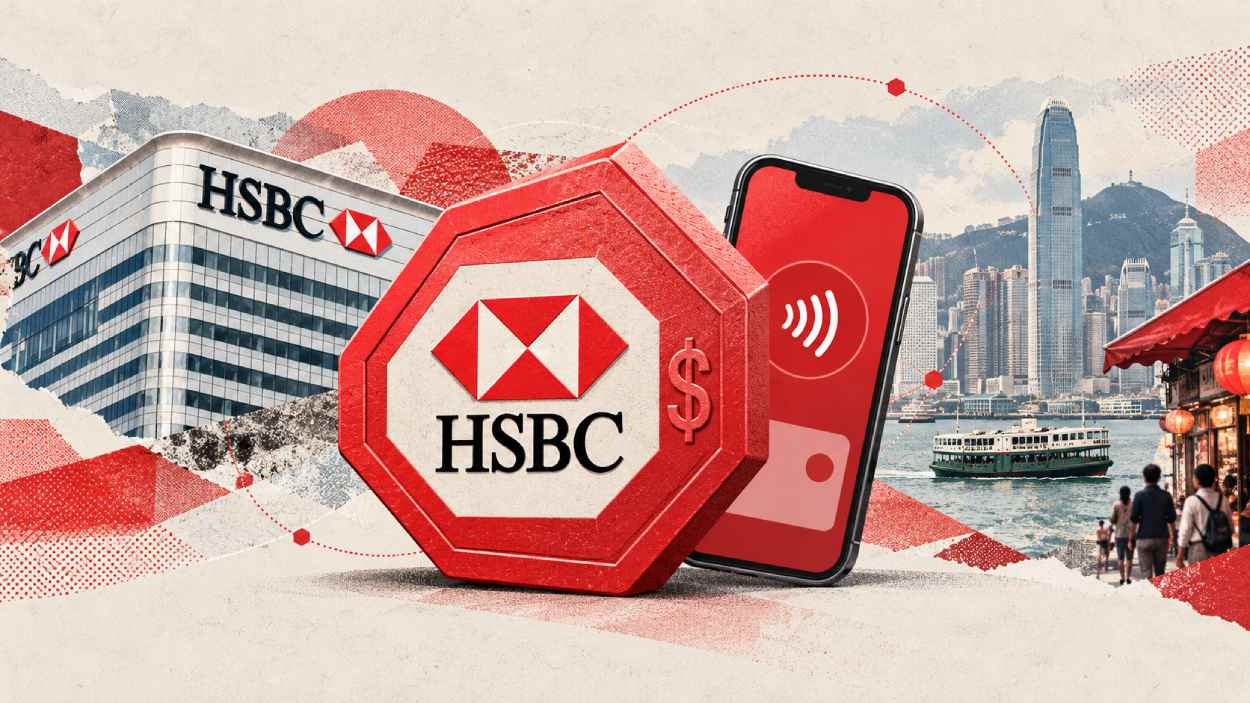





HSBC launched RedCoin (RCHKD), a Hong Kong dollar stablecoin, in its PayMe app on October 23, 2026. The token now sits in front of more than 3.3 million PayMe users.
The Brief
- RedCoin is the first bank-issued retail stablecoin in Hong Kong, licensed under the city’s Stablecoins Ordinance.
- PayMe users can send the token to friends and family and spend it at more than 100,000 merchants.
- HSBC plans to let customers use RedCoin to buy into a new share class of its Hong Kong dollar money market fund.
- Hong Kong requires every stablecoin holder to be identified, a rule that suits HSBC’s already-verified PayMe customers.
RedCoin lands inside an app customers already use
PayMe users will be able to switch on a stablecoin wallet in the app over the coming days, HSBC said. Once it’s active, they can send RedCoin to contacts or spend it at participating merchants without leaving the app.
HSBC has said the token is fully backed by high-quality liquid assets held in separate accounts. The HKMA (Hong Kong Monetary Authority) regulates the coin. The regulator granted its first stablecoin issuer licenses in April to HSBC and to Anchorpoint Financial, a venture led by Standard Chartered (LSE: STAN).
THE BLOCK: Hong Kong’s HSBC has launched its HKD stablecoin "RedCoin," available from today via PayMe. Users will be able to activate a stablecoin wallet in-app in the coming days for peer-to-peer and peer-to-merchant payments. https://t.co/k0SQB2z18a
— The Block (@TheBlockCo) October 23, 2026
Payments are only the opening act. HSBC plans to add a RedCoin wallet to its Hong Kong mobile banking app later this year. Customers will then be able to use the token to subscribe to tokenized investment products, starting with the money market fund share class. HSBC didn’t mention that capability when it introduced the RedCoin brand in September.
John O’Neill, HSBC’s managing director for digital assets and currencies said:
Vincent Chok, CEO of FDUSD issuer First Digital, made the case for this model in emailed comments to CoinDesk. Putting stablecoins inside apps people already use, he said, means nobody has to open a separate wallet or exchange account. Over time, he added, that routine contact could build comfort with stablecoins across the wider market.
Hong Kong’s ID rule favors HSBC’s closed loop
The identification requirement goes a long way toward explaining why HSBC reached retail users first. Its closed-loop model largely settles the problem, because PayMe users have already cleared the bank’s KYC checks.
Anchorpoint took the narrower path under the same rule. Its HKDAP stablecoin entered beta in August as a limited rollout for institutional payments and settlement. Access was initially restricted to institutional and professional investors, a group that is simpler to clear under the ID rule.
In effect, an existing customer base became a licensing shortcut. HSBC could go straight to the public because its users were verified long before RedCoin existed.
Open Questions
The launch still leaves questions that HSBC’s announcement doesn’t answer:
- What can a PayMe user do with RedCoin that the app’s existing transfers and merchant payments can’t already do?
- Will RedCoin be able to move outside HSBC’s own apps, given the closed-loop design?
- When exactly will the banking-app wallet and the fund share class go live?
- What will the wholesale corporate and institutional products O’Neill described look like?
PayMe users weighing whether to activate the wallet can test that first question against what the app already does for them today.
The next marker HSBC has set is the banking-app wallet, due before the end of the year. Until it arrives with the fund share class, RedCoin’s retail pitch rests on payments PayMe users could already make.