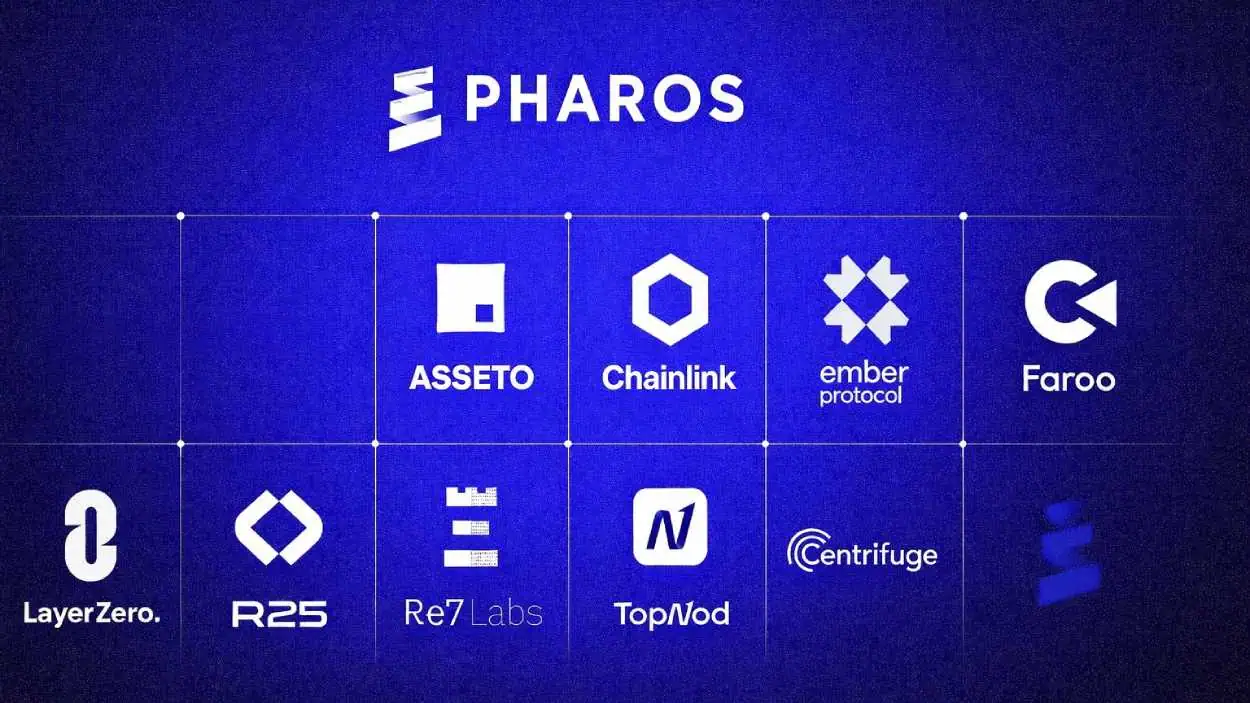





Faroo, the native liquid staking protocol for the Pharos network, launched its stPROS liquid staking token on October 28, 2026, with its dApp live inside Binance Web3 Wallet and OKX Web3 Wallet from day one.
Key Facts
- Faroo’s stPROS lets PROS holders earn network validation yield while holding a token they can transfer or deploy on-chain.
- Binance Web3 Wallet and OKX Web3 Wallet both host the Faroo dApp natively, so staking takes one click in either.
- Pharos picked Faroo as the first project in its $10 million incubation initiative, at a $10 million post-investment valuation.
- Faroo plans to add tbPROS, a real-world asset (RWA) yield token, and a points incentive program by late November 2026.
What Happened?
Standard proof-of-stake staking ties tokens up for long lockups, and that capital sits idle until the unbonding period ends. Faroo uses the familiar liquid staking model. Users stake PROS, receive stPROS, and can move that token on-chain while the stake keeps earning.
Distribution may matter as much as design. Shipping inside two exchange-run wallets removes a common hurdle on a young chain, because users don’t have to add the Pharos network by hand. They sign transactions and manage positions without leaving the wallet they already use.
$PROS liquid staking is now live with @Farooxyz. Pharos holders now have a new way to participate in network security, earn native staking rewards, and keep their staking position liquid. Through Faroo, you can stake PROS and receive stPROS, a liquid staking token representing your position. Your PROS helps secure the Pharos network, while your stPROS remains transferable.
— Pharos | Agent-Native (@pharos_network) October 28, 2026
stPROS counts its rewards in the exchange rate
Faroo built stPROS on an exchange-rate model rather than a rebase. A holder’s balance stays fixed while consensus rewards compound into the stPROS-to-PROS rate. Each token redeems for more PROS over time.
That choice is aimed at DeFi plumbing. Rebasing tokens change balances inside wallets and contracts. Faroo says that creates accounting distortions and slippage risk when positions settle across DEXs and lending protocols.
The exit path holds the most telling detail. Faroo said that when new minting overlaps with queued redemptions, the system “prioritizes newly minted shares to fulfill unstaking requests immediately.” Those users skip the standard unbonding wait.
Fresh deposits are the catch. Instant exits depend on new money arriving at the same moment. The launch announcement doesn’t say how long normal unbonding takes on Pharos, or what happens to the queue when minting dries up. Anyone already holding stPROS should track the stPROS-to-PROS rate, since that number moves while the token count stays put.
The RWA module still lacks key disclosures
Faroo said tbPROS will pair native PoS staking with tokenized real-world assets under a Hybrid Yield framework. The goal is yield backed by underlying cash flows, and the company describes that work as exploratory. Its points system will score users on asset retention, product interaction and ecosystem expansion, rewarding long-term holders and active early participants.
Under the hood, Faroo runs on Bifrost’s SLPx cross-chain staking technology, which the team customized for Pharos. The release calls that stack battle-tested but cites no audit of the Pharos-specific changes. Several gaps remain open:
- How long is the standard unbonding period that fast redemption bypasses?
- What yield rate and validator set sit behind stPROS today?
- Who sources, holds and verifies the cash flows meant to back tbPROS?
- How much capital did Faroo actually receive from the Pharos incubation pool?
The next marker is the tbPROS rollout Faroo has slated for late November. Until then, stPROS is a staking wrapper with two big wallet storefronts, and its fast exit depends on new deposits arriving.