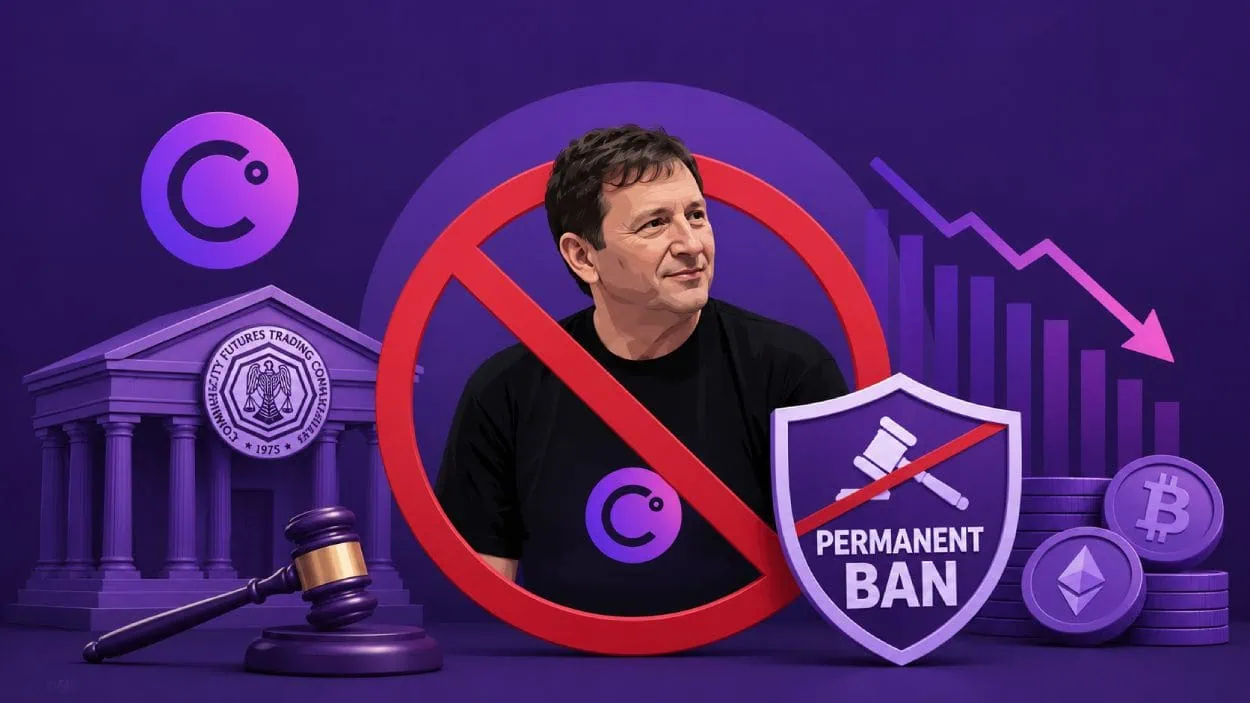






The CFTC has permanently barred former Celsius CEO Alex Mashinsky from trading in regulated commodities markets, marking the final resolution of the agency’s enforcement action tied to the crypto lender’s collapse.
Key Takeaways
- Alex Mashinsky has received a lifetime trading and registration ban from the Commodity Futures Trading Commission.
- The order closes the CFTC’s enforcement case against Mashinsky and Celsius Network, which began in 2023.
- Mashinsky is already serving a 12 year prison sentence after pleading guilty to commodities and securities fraud.
- The case stems from allegations that Celsius misled customers about the safety and profitability of its crypto lending business.
What Happened?
A federal court in New York has approved a consent order permanently banning Celsius founder Alex Mashinsky from trading in markets regulated by the Commodity Futures Trading Commission. The order also prevents him from registering with the agency in any capacity and brings the regulator’s long running enforcement case to a close.
The decision adds to a growing list of legal penalties facing Mashinsky following the dramatic collapse of Celsius, one of the largest crypto lending platforms to fail during the 2022 market downturn.
.@CFTC Resolves Action Against Celsius Founder: https://t.co/lArMbvBJyo
— CFTC (@CFTC) June 18, 2026
CFTC Closes Its Case Against Mashinsky
The Commodity Futures Trading Commission announced that a federal court in the Southern District of New York entered a consent order resolving its July 2023 lawsuit against Mashinsky and Celsius.
According to the regulator, the order permanently prohibits Mashinsky from participating in commodities, futures, and derivatives markets under CFTC oversight. He is also barred from violating certain anti-fraud provisions under the Commodity Exchange Act and related agency regulations.
The settlement represents the final chapter of the CFTC’s enforcement action, which the agency described as its first case against a digital asset lending platform operator.
Celsius had previously resolved its portion of the case, leaving Mashinsky as the last remaining defendant.
Allegations of Customer Deception
The CFTC accused Mashinsky and Celsius of running a scheme that misled hundreds of thousands of customers about the company’s financial condition, risk exposure, and business practices.
According to the complaint, Celsius encouraged customers to deposit digital assets into the platform, promising attractive weekly rewards and portraying itself as a safer alternative to traditional banking services.
Regulators alleged that while customers were told their assets were secure, Celsius was taking increasingly aggressive risks behind the scenes.
The agency claimed the company:
- Extended uncollateralized loans.
- Entered risky decentralized finance agreements.
- Misrepresented the safety of customer funds.
- Provided misleading statements regarding profitability and regulatory compliance.
The CFTC also stated that Celsius received approximately $20 billion in customer funds during the period covered by the enforcement action.

From Crypto Giant to Bankruptcy
Celsius became one of the most prominent casualties of the crypto market crisis in 2022.
The company operated a crypto lending platform that allowed users to earn interest on deposited digital assets and borrow against their crypto holdings.
However, mounting losses eventually forced Celsius to freeze customer withdrawals. The company filed for bankruptcy in July 2022, leaving many customers unable to access their funds.
The platform formally wound down operations in 2024. Some remaining assets were later used to establish Ionic Digital, a Bitcoin mining company created as part of the bankruptcy recovery process.
Celsius creditors have continued receiving distributions through the bankruptcy proceedings. In August 2025, the company announced a third creditor payout worth $220.6 million, bringing total recoveries to nearly 64.9% of approved claims.
Criminal and Civil Cases Continue
Mashinsky’s legal troubles extend beyond the CFTC case.
In December 2024, he pleaded guilty to one count of commodities fraud and one count of securities fraud. A federal judge sentenced him to 12 years in prison in May 2025. The court also imposed a $50,000 fine and ordered the forfeiture of approximately $48.39 million.
He also reached a $10 million settlement with the Federal Trade Commission over allegations that Celsius executives engaged in deceptive marketing practices. Separately, the FTC issued an order barring him from promoting or offering services related to deposits, investments, exchanges, or withdrawals of assets.
Meanwhile, the Securities and Exchange Commission’s civil lawsuit against Mashinsky remains active. The SEC alleges that he and Celsius conducted unregistered securities offerings, made false statements to investors, and manipulated the CEL token.
Mashinsky is also seeking to challenge his criminal sentence through federal court filings, though prosecutors have been ordered to respond to his request later this year.
CoinLaw’s Takeaway
In my experience, the CFTC’s lifetime ban sends a clear message that regulators are not finished pursuing accountability for the failures that defined the crypto lending boom. While Celsius collapsed years ago, the legal consequences continue to unfold. I found this decision significant because it closes one of the most important regulatory cases tied to the 2022 crypto crisis while reinforcing that executives who mislead customers can face long term consequences that extend far beyond financial penalties.