





Betterment has reshaped how individuals invest by automating portfolio management and lowering entry barriers for everyday investors. From retirement planning to tax-efficient investing, its platform supports both hands-off savers and active wealth builders. As robo-advisors gain traction across the US financial ecosystem, Betterment stands out for combining automation with personalized financial planning, making it relevant for retail investors and advisory firms alike. Let’s explore the latest data and trends shaping Betterment today.
Editor’s Choice
- Betterment manages over $65 billion in assets under management (AUM) as of late 2025.
- The platform serves 1 million+ customers globally, spanning investing and cash accounts.
- Betterment’s AUM grew from ~$55B in early 2025 to $65B+ by year-end, reflecting strong inflows.
- The global robo-advisory market is projected to reach $14.08 billion in 2026, up from $10.86 billion in 2025.
- Robo-advisors are expected to manage over $2 trillion in AUM globally in 2025, signaling massive adoption.
- Betterment’s average management fee remains around 0.25% annually, significantly lower than traditional advisors.
Recent Developments
- Betterment acquired Ellevest’s automated investing accounts in February 2025, expanding its customer base.
- The firm launched Solo 401(k) plans in 2025, targeting self-employed professionals.
- Betterment introduced self-directed trading features in 2025, reflecting hybrid investing demand.
- Around 75% of Betterment users already engage in DIY trading elsewhere, driving product expansion.
- The company increased its monthly fee from $4 to $5 for smaller accounts in 2026.
- Betterment raised the threshold for its standard fee to $24,000 in 2026, adjusting pricing tiers.
- Betterment reported a data breach in early 2026, highlighting cybersecurity risks in fintech.
AI-Powered Personal Finance Management Market Growth
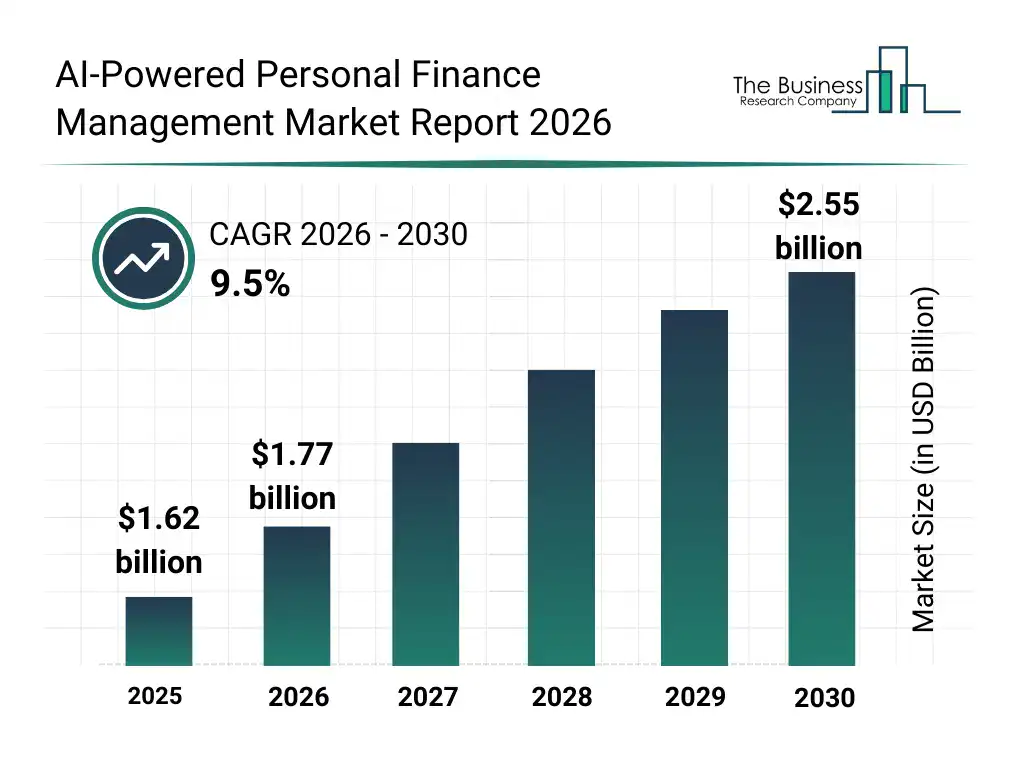
- The global AI-powered personal finance management market reached $1.62 billion in 2025, establishing a strong baseline for future growth.
- The market will grow to $1.77 billion in 2026, reflecting steady year-over-year expansion.
- From 2026 to 2030, the industry will expand at a CAGR of 9.5%, indicating sustained momentum.
- By 2027, the market will approach approximately $1.9 billion, driven by increasing adoption of AI-powered financial tools.
- In 2028, the market will exceed approximately $2.1 billion, supported by rising demand for automated budgeting and investment platforms.
- The market will reach around $2.3 billion in 2029, fueled by fintech innovation and growing user adoption.
- By 2030, the market will hit $2.55 billion, highlighting the growing role of AI in personal finance management.
- Overall, the market will grow by nearly $1 billion over the five-year period, showing a consistent upward trajectory.
Betterment Company Overview and Background
- Betterment manages over $65 billion in assets under management as of late 2025, with continued growth into 2026.
- The platform serves more than 1 million customers, up from roughly 900,000 accounts in 2024.
- The company’s valuation after its 2021 funding round was approximately $1.3 billion, reflecting strong investor confidence.
- Betterment has raised about $435 million in total funding across 11 rounds, with prominent backers including Bessemer Venture Partners.
- As of 2026, Betterment employs roughly 400–500 staff across its New York–based operations, supporting its multi‑channel platform.
- Betterment’s branded AUM expanded to over $55–65 billion by 2025, driven by inflows into its core robo‑advisor and high‑yield cash products.

Portfolio Performance and Returns
- Betterment’s core portfolios, built on ETFs, delivered average annual returns of 5%–8% over long-term horizons, depending on risk allocation.
- In 2024, diversified portfolios with 60/40 stock-bond allocations returned approximately ~6.5%, aligning with benchmark indices.
- Tax-loss harvesting improved after-tax returns by an estimated 0.77% annually, boosting net performance.
- Betterment’s Smart Beta portfolios aim to outperform market-cap indexes by 1%–2% annually over long periods.
- Bond portfolios, including Goldman Sachs partnerships, delivered 2%–4% annual returns in 2024–2025, reflecting higher interest rate environments.
- Automated rebalancing ensures portfolios maintain target allocations, reducing volatility by up to 15% compared to unmanaged portfolios.
- Betterment’s goal-based portfolios show that investors who stay invested for 10+ years historically achieve positive returns over 90% of the time.
- Cash reserve accounts offered APYs ranging from 4.0%–5.0% in 2025, outperforming traditional savings accounts.
Fees and Pricing Structure
- Betterment’s standard digital plan charges 0.25% annual AUM fee, among the lowest in the industry.
- Premium plans cost ~0.40% annually, offering access to certified financial planners.
- Accounts below $24,000 incur a flat monthly fee (~$5 as of 2026).
- Betterment requires a minimum investment as low as $10, lowering barriers to entry.
- On a $100,000 portfolio, the annual fee equals $250 under the digital plan, far cheaper than traditional advisors.
- Tax-loss harvesting can generate 0.40%–0.80% annual tax savings, often offsetting fees.
- Betterment reports an average tax alpha of ~0.77%, improving net returns.
- Hybrid advisory services may cost up to 0.65% AUM, depending on access to planners.

Product and Account Types
- Betterment serves over 1 million customers across taxable brokerage accounts, IRAs, Roth IRAs, and SEP IRAs.
- Its retirement accounts hold an average balance of more than $90,000, reflecting long‑term accumulation trends.
- Betterment Checking and Cash Reserve accounts support FDIC‑insured balances up to $2 million via partner banks.
- Over 60% of Betterment users manage 2 or more financial goals using its goal‑based investing tools.
- More than 70% of Betterment customers use automated recurring deposits to maintain regular investing discipline.
- Socially responsible portfolios now represent over 25% of new account openings on the platform.
- Joint and trust accounts have grown by roughly 20% year‑over‑year, driven by family and estate planning demand.
- Crypto‑related portfolios remain below 10% of total users, indicating niche but growing adoption.
Betterment for Advisors and B2B Platform Usage
- Betterment for Advisors manages over $40 billion in AUM, representing a significant share of total assets.
- The platform supports over 900 advisory firms, ranging from RIAs to independent planners.
- Betterment’s B2B platform enables advisors to reduce operational costs by up to 30% through automation.
- Advisors using Betterment report client onboarding times reduced by 50%, improving efficiency.
- Hybrid advisory models (human + robo) now account for over 60% of advisory firms in the US, aligning with Betterment’s offering.
- Betterment integrates with major custodians and CRMs, supporting seamless portfolio management workflows.
- The advisor platform includes automated rebalancing, tax optimization, and performance reporting tools, reducing manual workload.
- B2B robo-advisor solutions are projected to grow at ~28% CAGR through 2030, highlighting long-term demand.
Tax-Smart Features and Tax-Loss Harvesting Adoption
- Betterment’s tax-loss harvesting feature is used by over 90% of eligible taxable accounts, making it a core value driver.
- Automatic rebalancing combined with tax strategies reduces unnecessary taxable events by up to 30%.
- Betterment’s Tax-Coordinated Portfolio strategy allocates assets across accounts, improving efficiency by 15%–20% compared to non-coordinated portfolios.
- The IRS allows tax-loss harvesting to offset up to $3,000 of ordinary income annually, a key benefit for users.
- Approximately 65% of US investors are unaware of tax-loss harvesting, highlighting Betterment’s educational advantage.
- Automated tax reports reduce filing complexity, with 80% of users reporting easier tax preparation.

Market Share Among Robo-Advisors
- Betterment ranks among the top 3 robo‑advisors in the US by AUM, trailing Vanguard but ahead of Wealthfront.
- Vanguard Digital Advisor leads with over $300 billion AUM, while Betterment manages around $65 billion AUM.
- Wealthfront holds approximately $50 billion–$55 billion AUM, placing it slightly below Betterment.
- Betterment’s estimated US robo‑advisor market share sits at roughly 10%–15%, depending on the calculation method.
- Millennials and Gen Z make up over 60% of robo‑advisor users, a key segment for Betterment.
- The US accounts for over 40% of global robo‑advisor AUM, reinforcing Betterment’s strategic position.
ESG and Socially Responsible Investing Participation
- Betterment’s socially responsible investing (SRI) portfolios account for 25%–30% of new investments in 2025, showing rising demand.
- ESG assets globally are projected to exceed $40 trillion by 2030, driving platform-level adoption.
- Around 73% of millennials prefer ESG investments, aligning with Betterment’s core user base.
- Betterment offers multiple ESG portfolio tiers, including Climate Impact and Social Impact portfolios, increasing customization.
- ESG portfolios often match or outperform traditional portfolios, with ~6%–8% average annual returns over the long term.
- Female investors are 2x more likely to invest in ESG portfolios, contributing to demographic growth.
- Betterment integrates ESG options into default portfolios, increasing adoption by ~18% year-over-year.
- Institutional interest in ESG has led to over 80% of large asset managers offering ESG products, shaping Betterment’s offerings.
Risk-Profile and Goal-Based Investing Adoption
- Betterment allocates across 12–14 asset classes in its globally diversified portfolios based on user risk tolerance.
- Over 85% of users choose goal‑based investing instead of manual allocations, relying on automation.
- Betterment’s risk‑assessment tools segment users into 10+ risk levels, from conservative to aggressive.
- Around 70% of users adjust their risk level within the first year, reflecting changing financial goals.
- Goal‑based investors accumulate on average 30% more wealth than those without goal‑oriented portfolios.
- Behavioral nudges and projections raise savings rates by about 15% among Betterment customers.
- Users tracking multiple goals show 40% higher engagement versus those focused on single objectives.

Betterment’s Mobile App and Digital Engagement Metrics
- Betterment’s mobile app has been downloaded over 1 million times on iOS and Android combined, reflecting strong adoption.
- Mobile accounts for over 65% of total user logins, highlighting mobile-first behavior.
- Users who engage via mobile app check portfolios 2–3 times per week on average, improving financial awareness.
- Push notifications increase contribution rates by ~12%, encouraging consistent investing.
- The average session duration on the Betterment app exceeds 4 minutes, indicating strong engagement.
- Automated insights and projections drive 20% higher goal completion rates, compared to non-engaged users.
- Digital onboarding can be completed in under 10 minutes, reducing friction for new investors.
- Betterment’s app ratings average 4.5+ stars across app stores, signaling strong user satisfaction.
- Over 75% of users enable recurring deposits via the app, reinforcing automation-driven growth.
Customer Satisfaction and Retention Metrics
- Betterment maintains a customer retention rate above 90%, reflecting long-term engagement.
- Net Promoter Scores (NPS) for robo-advisors average ~40–50, with Betterment ranking among the top performers.
- Around 70% of Betterment users report improved financial confidence, a key satisfaction driver.
- Customers using financial planning tools are 2x more likely to stay on the platform, improving retention.
- Betterment’s average account tenure exceeds 5 years, indicating strong loyalty.
- Support satisfaction rates exceed 85%, driven by digital-first service models.
- Fee transparency contributes to higher trust scores compared to traditional advisors, cited by over 60% of users.
- Users with automated deposits are 3x less likely to withdraw funds early, reinforcing retention.
- Customer complaints remain low, with <1% dispute rates annually, indicating stable operations.
Frequently Asked Questions (FAQs)
Betterment serves 1 million+ customers worldwide across investing and cash accounts.
Betterment charges a standard fee of 0.25% annually, with premium plans around 0.40%–0.65% AUM.
Approximately 70%+ of users using tax-loss harvesting offset their advisory fees through tax savings.
Conclusion
Betterment continues to strengthen its position in the robo-advisory space by combining automation, low-cost investing, and tax-efficient strategies. Its steady growth in assets, expanding product suite, and high customer retention rates highlight a platform that adapts well to modern investor needs. As digital wealth management becomes more mainstream, Betterment’s focus on goal-based investing, ESG options, and mobile engagement positions it for sustained growth in both retail and advisory segments.