





Base activated its B20 native token standard on mainnet on July 8, 2026, at 18:00 UTC. The upgrade lets stablecoin and asset issuers build compliance controls directly into the token.
Key Takeaways
- Base activated the B20 native token standard on mainnet, replacing ERC-20 smart contracts with Rust precompiles for issuing tokens.
- B20 ships in two variants: an Asset type with 6 to 18 configurable decimals and a rebase multiplier, and a Stablecoin type fixed at 6 decimals with a self-declared fiat currency code.
- The standard’s `burnBlocked` function lets an authorized role burn tokens from a third-party account that a policy has already blocked, the freeze-and-seize path for regulated issuers.
- B20 activation follows the Beryl upgrade, which Base activated on mainnet on June 25, 2026, and which shortened the L1 withdrawal finalization window from seven to five days.
- Base logged two block-production halts of 116 and 20 minutes the same week, which the team’s post-mortem attributed to a sequencer logic bug.
What Happened?
B20 is the Base ecosystem’s own version of ERC-20, per Base’s own developer documentation. The two standards are not built the same way.
B20 tokens are implemented as Rust precompiles rather than EVM smart contracts, which the documentation says makes them faster, cheaper, and more native to the chain. Base is Coinbase’s layer-2 network, and ERC-20 traces back to Ethereum’s earliest token conventions, the standard most exchanges and wallets still support by default.
Every B20 token deploys through a singleton B20Factory precompile, a mechanism Base’s own developer documentation spells out in full. The Asset variant, according to Base, supports 6 to 18 configurable decimals, versus ERC-20’s near-universal fixed default, and the design targets the same Decentralized Finance markets that have relied on ERC-20 since Ethereum’s earliest days. It also competes directly with token frameworks other Crypto ecosystems have built for regulated issuance.
The precompile approach is a structural bet. Base standardizes the token logic at the protocol layer and leaves issuers to configure roles and policies on top of it, instead of asking every issuer to write and audit its own contract.
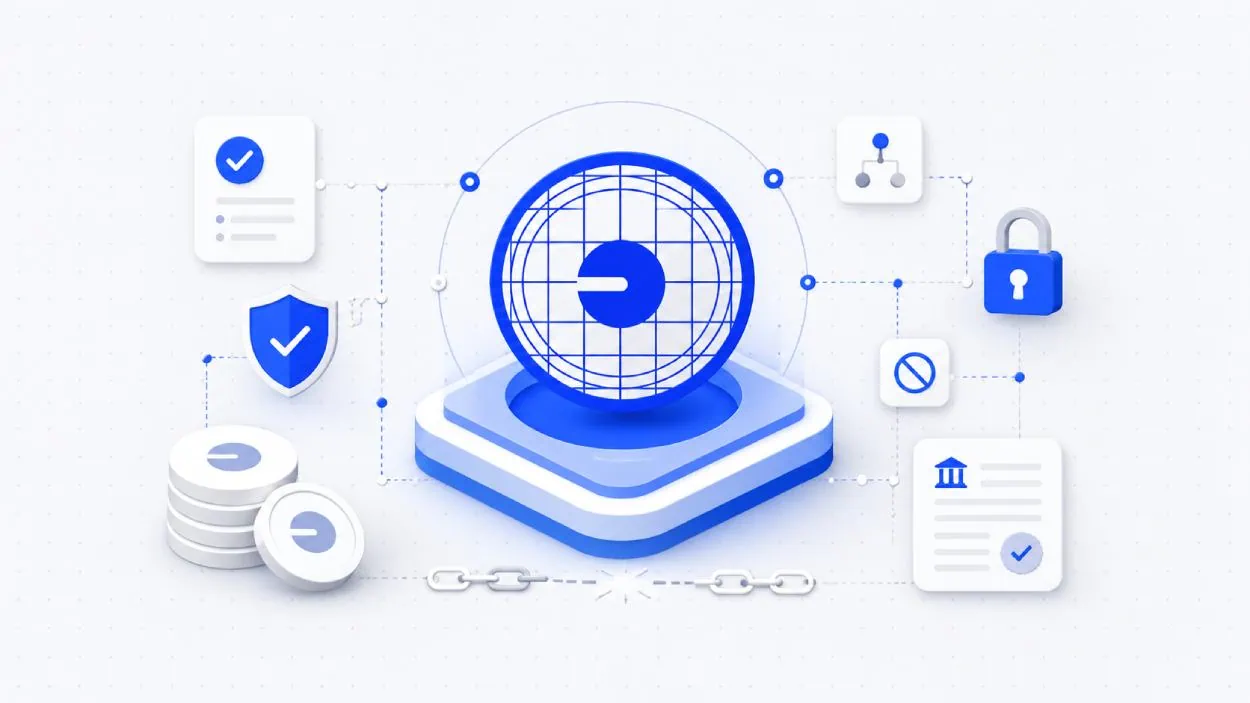
The standard ships with a compliance toolkit: transfer policies, freeze-and-seize, role-based access control, memos, and supply caps. That toolkit is the headline difference from plain ERC-20, which has none of it natively.
The B20 Native Token Standard is scheduled to go live on July 8, 2026 at 18:00 UTC pic.twitter.com/IjDU4KY9zC
— Base Build (@buildonbase) July 7, 2026
How the Compliance Controls Work?
B20’s role-based access control extends OpenZeppelin’s AccessControl model with a fixed set of roles, including `MINT_ROLE`, `BURN_ROLE`, `PAUSE_ROLE`, and `BURN_BLOCKED_ROLE`. The last of those is the one built for regulators and compliance teams, not everyday transfers.
- `MINT_ROLE` gates new supply creation and reverts if a mint would push total supply past a set cap.
- `BURN_ROLE` gates a holder burning tokens from their own balance.
- `BURN_BLOCKED_ROLE` gates burning tokens out of a third party’s balance, but only when that account is already denied by the token’s transfer-sender policy.
- `PAUSE_ROLE` and `UNPAUSE_ROLE` gate a granular pause system that can independently freeze transfers, minting, or burning.
Underneath the roles sits a PolicyRegistry, a singleton precompile that manages allowlists and blocklists issuers reference by a numeric policy ID. An issuer can point a token’s transfer, receive, or mint-recipient checks at a specific policy, and every gated operation reverts if the account fails that policy check.
Why This Matters for Issuers?
The `burnBlocked` mechanism is the clearest read on who B20 targets. A stablecoin or tokenized-asset issuer facing a sanctions order or a court-ordered freeze can seize funds from a specific address without redeploying a contract, provided that address already sits on the blocklist. Plain ERC-20 offers no equivalent path; that kind of seizure usually requires custom logic the issuer writes and audits on its own.
Baking freeze-and-seize into the token standard shifts compliance from an issuer-by-issuer engineering problem to a protocol-level default, the same direction most bank-grade tokenization pilots have pushed toward.
The Stablecoin variant adds a narrower constraint. Decimals are hard-wired to 6 and a currency code is set once at creation, restricted to letters and not verified against any external registry. B20 does not check that a “USD” stablecoin actually holds dollar reserves; the currency field is a label, not proof of backing.

A Rocky Runway to Launch
B20 did not arrive in isolation. It rides on the Beryl upgrade, which Base activated on mainnet, cutting the standard withdrawal finalization window from seven days to five and adding the Reth V2 client. That single change directly affects how fast funds can move off Base back to Ethereum’s base layer.
The rollout was not clean.
Base recorded two block-production halts, 116 minutes and 20 minutes long, that same week, which the team’s post-mortem traced to a bug in the sequencer’s logic. The timing put a brief reliability question mark over the same upgrade window that introduced B20’s compliance infrastructure.
Base’s developers separately announced in February a shift away from the Optimism technology stack toward their own architecture, a change still working through the network. That sequencing is worth naming directly: a chain marketing itself as the settlement layer for regulated stablecoins spent the same stretch proving out new compliance tooling and new failure modes in its own block production.
CoinLaw’s Takeaway
B20’s real pitch is not the token mechanics; it is who gets to stop a transaction and how. A protocol-level freeze-and-seize function, gated behind a role a bank or licensed issuer controls, answers a question regulators have asked stablecoin issuers for years: can an issuer comply with an enforcement order without shutting down the whole token?
B20 says yes, on Base, by default. Whether issuers trust that default enough to move real stablecoin float onto it will depend as much on Base’s post-Beryl operational record as on the standard’s design.
The extended read here is skepticism, not endorsement. A compliance toolkit is only as credible as the chain running it, and Base logged two outages inside the same upgrade window that shipped B20. Issuers weighing a native-token migration should treat the sequencer post-mortem as part of the same due diligence as the PolicyRegistry’s admin model, not a separate line item.